Historical Landmarks in Crown Heights
Located in the vibrant neighborhood of Crown Heights, Brooklyn, the statue of General Ulysses S. Grant stands as a prominent historical monument. Erected to honor the 18th President of the United States and renowned Civil War general, this statue is not only a testament to Grant’s legacy but also a reflection of the historical and cultural tapestry of Crown Heights.
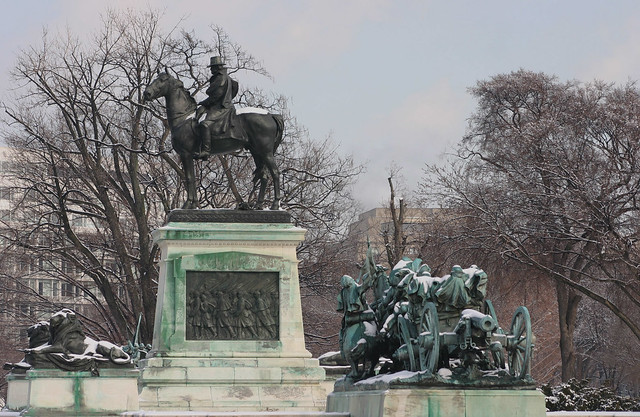
Image from David (Flickr)
Ulysses S. Grant: A Brief Biography
Ulysses S. Grant, born Hiram Ulysses Grant on April 27, 1822, in Point Pleasant, Ohio, rose to prominence during the American Civil War. Grant graduated from the United States Military Academy at West Point in 1843 and served with distinction in the Mexican-American War. However, it was his leadership during the Civil War that solidified his place in American history. As Commanding General of the United States Army, Grant played a crucial role in leading the Union forces to victory over the Confederacy. His strategic acumen, particularly in the campaigns of Vicksburg and Chattanooga, earned him a reputation as a tenacious and effective military leader. In 1864, President Abraham Lincoln appointed Grant as the General-in-Chief of the Union Army, and his relentless pursuit of Confederate forces ultimately led to the surrender of General Robert E. Lee at Appomattox Court House in April 1865.
Following the war, Grant was elected the 18th President of the United States, serving two terms from 1869 to 1877. His presidency focused on Reconstruction, civil rights, and efforts to stabilize the post-war economy. Despite facing numerous challenges, including political scandals and economic turmoil, Grant’s commitment to civil rights and his military legacy remained integral to his historical significance.
The Creation and Dedication of the Grant Statue
The statue of Ulysses S. Grant in Crown Heights was commissioned as part of a broader effort to commemorate significant figures in American history. The project was spearheaded by local historical societies and community leaders who recognized the importance of preserving Grant’s legacy for future generations. The statue, crafted by a notable sculptor, captures Grant in a contemplative pose, symbolizing his role as both a military leader and a statesman. The decision to place the statue in Crown Heights was influenced by the neighborhood’s historical connection to Brooklyn’s development and its diverse community.
The dedication ceremony, was a grand event attended by local dignitaries, historians, and residents. Speeches highlighted Grant’s contributions to American history, particularly his efforts to preserve the Union and promote civil rights. The statue was unveiled amidst applause and reverence, marking the beginning of its role as a historical landmark in Crown Heights.
Historical Context of Crown Heights
Crown Heights, situated in the central part of Brooklyn, is a neighborhood rich in history and cultural diversity. Originally known as Crow Hill, the area underwent significant transformation in the late 19th and early 20th centuries. The construction of the Eastern Parkway, designed by Frederick Law Olmsted and Calvert Vaux, played a crucial role in the neighborhood’s development, attracting affluent residents and leading to the construction of grand mansions and public buildings. Throughout the 20th century, Crown Heights became a melting pot of cultures and communities. It is home to a diverse population, including Caribbean, Jewish, African American, and Latino residents, each contributing to the neighborhood’s vibrant cultural landscape. The Grant Statue stands as a symbol of the neighborhood’s historical depth and its connection to broader American history.
The Significance of the Grant Statue
The Grant Statue in Crown Heights holds multifaceted significance. Firstly, it serves as a reminder of Ulysses S. Grant’s pivotal role in American history. His leadership during the Civil War and his presidency during the tumultuous Reconstruction era left an indelible mark on the nation. The statue commemorates his efforts to reunify the country and his commitment to civil rights, which resonate with the ongoing struggles for equality and justice. Secondly, the statue is a reflection of Crown Heights’ historical and cultural identity. By honoring a figure like Grant, the neighborhood acknowledges its place within the broader narrative of American history. The statue serves as an educational tool, providing residents and visitors with an opportunity to learn about Grant’s contributions and the historical context in which he lived.
Moreover, the statue is a testament to the power of community and collective memory. The efforts to commission, create, and maintain the statue highlight the community’s dedication to preserving its historical heritage. It stands as a symbol of pride and resilience, reminding future generations of the importance of remembering and honoring the past.
The Statue’s Role in Community Engagement
Beyond its historical significance, the Grant Statue plays a crucial role in community engagement and education. The statue is often the focal point for local history tours, school trips, and community events. Educational programs organized by local historical societies and schools use the statue as a starting point to explore the Civil War, Reconstruction, and Grant’s presidency. The statue also serves as a gathering place for commemorative events, such as Memorial Day and Veterans Day ceremonies. These events bring together diverse segments of the community to honor those who have served in the military and to reflect on the values of courage, sacrifice, and unity embodied by figures like Grant.
Preservation and Future Challenges
Maintaining and preserving the Grant Statue is an ongoing effort that requires community support and resources. Weathering and environmental factors pose challenges to the statue’s condition, necessitating regular maintenance and conservation work. Local historical societies and community organizations play a vital role in raising awareness and funds to ensure the statue’s preservation for future generations. Looking to the future, the Grant Statue continues to serve as a focal point for discussions about history, memory, and community identity. As Crown Heights evolves, the statue remains a steadfast reminder of the neighborhood’s historical roots and its connection to broader national narratives. Efforts to integrate the statue into educational curricula and community programs will ensure that its significance is recognized and appreciated by new generations of residents and visitors.
Conclusion
The Grant Statue in Crown Heights is more than a monument; it is a symbol of historical legacy, community pride, and cultural diversity. As a landmark in Crown Heights, the statue reflects the neighborhood’s rich history and serves as a focal point for community engagement and education.