Slip and Fall Defense: Protecting Your Business From Slip-and-Fall Claims in New York
Slip-and-fall claims are among the most common and costly personal injury lawsuits filed against businesses. Whether you operate a retail store, restaurant, office building, or commercial property, you have a legal responsibility to maintain reasonably safe premises for customers, employees, and visitors.
Under New York premises liability law, a business owner may be held liable for injuries caused by dangerous conditions that the owner knew about—or reasonably should have known about.
This article explains how New York law applies to slip-and-fall incidents, outlines practical steps businesses can take to reduce accidents, and discusses how premises liability claims are commonly defended.
By implementing strong safety procedures and maintaining thorough documentation, businesses can significantly reduce their exposure to liability and strengthen their defense against slip-and-fall claims.
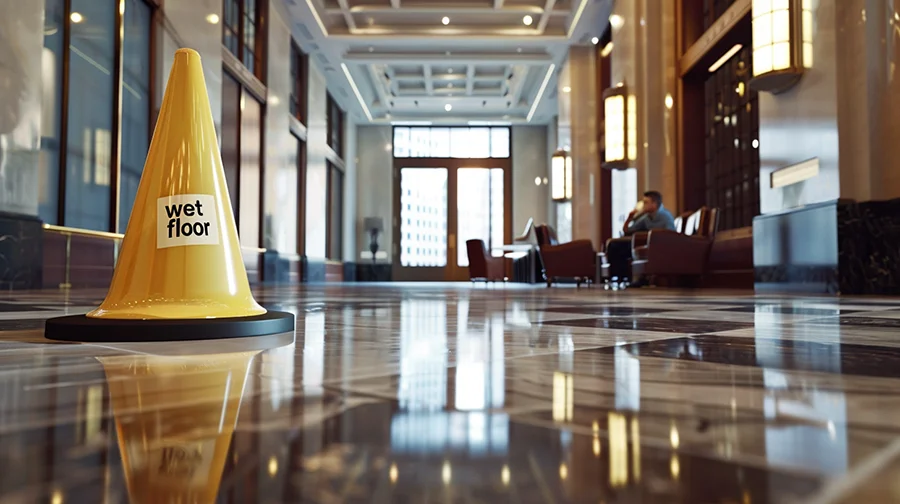
Premises Liability for Businesses
New York premises liability law generally holds property owners and tenants responsible for injuries caused by dangerous conditions on their property. For businesses, this may include hazards such as:
- Wet or slippery floors
- Uneven pavement or flooring
- Poor lighting
- Cluttered aisles or walkways
- Snow and ice accumulation
To establish liability in a slip-and-fall case, an injured party generally must prove:
- The business owed a duty of care to the injured person;
- The business created the dangerous condition or had notice of it;
- The condition was not corrected or properly warned about within a reasonable time; and
- The dangerous condition directly caused the injury.
For example, if an employee mops a floor but fails to place a warning sign and a customer slips, the business may be held liable. However, if a hazard appeared moments before the accident and staff had no reasonable opportunity to discover or correct it, liability may be more difficult to establish.
For additional information regarding premises liability claims, visit our premises liability lawyers page.
Common Hazards That Lead to Slip-and-Fall Claims
Slip-and-fall accidents can happen in nearly any commercial setting. Certain areas, however, tend to present greater risks.
Common hazards include:
- Entryways made slippery by rain or snow
- Leaking pipes or condensation in restrooms
- Uneven loading docks or debris-covered walkways
- Damaged carpeting or poorly lit staircases
- Cracked sidewalks, potholes, or icy parking lots
Businesses with heavy foot traffic—such as supermarkets, restaurants, and retail stores—often face increased exposure to these claims because conditions can change rapidly throughout the day.
Even a seemingly minor oversight, such as failing to clean a spill or repair loose flooring, can lead to a serious injury claim.
For related examples, visit our page regarding Brooklyn grocery store slip and fall accidents.
Proactive Steps Businesses Can Take to Prevent Claims
Preventing slip-and-fall accidents requires both consistent maintenance and proper employee training. A well-documented safety program can not only reduce accidents but also provide critical evidence in the event of litigation.
Recommended safety practices include:
- Routine Inspections: Conduct regular inspections of walkways, entrances, staircases, and restrooms using written checklists.
- Immediate Hazard Response: Train employees to quickly address spills, obstructions, and unsafe conditions while using warning signs when necessary.
- Lighting and Flooring Maintenance: Repair loose tiles, worn carpeting, damaged mats, and replace burned-out lighting promptly.
- Snow and Ice Removal: Maintain written records of salting, snow removal, and weather-related maintenance during winter months.
- Employee Training: Regularly educate staff on hazard recognition, accident reporting, and safety procedures.
Maintaining clear written policies and inspection logs can help demonstrate that the business exercised reasonable care.
What to Do If a Slip-and-Fall Incident Occurs
Even businesses with strong safety practices may still experience accidents. How the business responds afterward can significantly impact any future claim.
Important steps include:
- Assist the Injured Individual: Provide medical assistance or call emergency services if necessary.
- Document the Scene: Take photographs of the area, preserve surveillance footage, and document weather or floor conditions.
- Obtain Witness Statements: Collect names and contact information from anyone who witnessed the incident.
- Prepare an Incident Report: Record the date, time, location, and details surrounding the accident.
- Notify Your Insurance Carrier: Report the incident promptly to your commercial liability insurer.
Proper documentation and immediate action are essential when defending against premises liability claims.
At Gabo Law, we assist businesses throughout New York with the defense of premises liability claims.
How New York Law Determines Notice and Responsibility
One of the most important issues in a slip-and-fall lawsuit is whether the business had notice of the dangerous condition.
New York law generally recognizes two forms of notice:
- Actual Notice: The business or its employees were directly aware of the hazard.
- Constructive Notice: The dangerous condition existed long enough that the business reasonably should have discovered and corrected it.
To defend against constructive notice claims, businesses should maintain detailed inspection schedules, maintenance records, and cleaning logs.
For example, supermarkets may document floor inspections every 30 minutes, while hotels may maintain housekeeping logs showing hallway inspections and maintenance.
Additional information regarding liability can be found on our Brooklyn slip and fall liability resource page.
Insurance Coverage and Legal Defense
Commercial liability insurance is an important safeguard for businesses facing personal injury claims. General liability policies often provide coverage for bodily injury claims, including slip-and-fall accidents.
However, policyholders must comply with reporting requirements and cooperate with their insurance carriers during investigations.
If a lawsuit is filed, the insurer may appoint defense counsel to represent the business. Businesses may also consult private counsel to assist with litigation strategy and risk management.
At Gabo Law, we review maintenance records, surveillance footage, witness statements, and incident reports to build strong defenses for businesses facing premises liability lawsuits.
Businesses may also benefit from reviewing examples such as trip and fall accidents in stores to better understand how claims arise and how they may be prevented.
Building a Culture of Safety and Compliance
A strong workplace safety culture is one of the best long-term defenses against slip-and-fall claims.
Beyond routine cleaning and warning signage, businesses should encourage employees to actively identify and address hazards. Recognizing staff members who report unsafe conditions can reinforce the importance of safety throughout the workplace.
Businesses may also benefit from periodic risk management audits conducted by outside professionals. These audits can identify hazards such as poor lighting, damaged flooring, or improperly placed mats before injuries occur.
For additional safety guidance, visit our legal resources page.
Call us today at (800) 560-0214 for a free consultation or complete our contact form to schedule a consultation.
Frequently Asked Questions About Slip and Fall Defense
How can I prove my business was not negligent?
Detailed inspection logs, maintenance records, employee training documentation, and surveillance footage can help demonstrate that your business exercised reasonable care.
Does New York law treat customers and employees differently?
Yes. Customers are generally classified as invitees and are owed a high duty of care, while employee injuries may involve workers’ compensation laws rather than premises liability claims.
What should I do if my business receives a Notice of Claim?
Notify your insurance carrier immediately and contact legal counsel to preserve evidence and protect your legal rights.
Can surveillance footage help defend against a claim?
Yes. Surveillance footage showing safe conditions, inspections, or the actual incident can be extremely valuable in defending against exaggerated or false claims.
Should small businesses carry additional liability coverage?
Businesses with significant customer traffic may benefit from umbrella or excess liability coverage in addition to standard general liability insurance.
How can Gabo Law help if my business is sued?
Our attorneys can investigate the claim, analyze evidence, develop defense strategies, and represent your business throughout litigation.
Call us or contact our firm online today to discuss your situation.

Irene H. Gabo is a dedicated personal injury attorney based in Brooklyn, specializing in a wide range of personal injury cases. With over a decade of experience, she has successfully represented thousands of clients who have suffered injuries from motor vehicle accidents, construction incidents, dog bites, and medical malpractice. Known for her expertise and commitment, Ms. Gabo has recovered millions of dollars for her clients, ensuring they receive the justice and compensation they deserve. If you or a loved one has been injured in Brooklyn, reach out to Irene for a free consultation and expert guidance on your personal injury claim.