How Landlords Defend Themselves in Premises Liability Lawsuits
In New York, premises liability law holds landlords responsible for maintaining safe property conditions. But when a tenant, guest, or visitor sues after an injury – such as a slip, trip, or fall – landlords aren’t defenseless. There are several powerful legal strategies they can use to limit or even avoid liability altogether.
Our lawyers at Gabo Law have handled countless premises liability cases in Brooklyn, and we’ve seen how property owners can successfully defend against claims. Below, we explore the top five defenses landlords often use – and what tenants and injured parties should know about them.
1. Lack of Notice: The Landlord Didn’t Know About the Hazard
One of the most common defenses in a premises liability lawsuit is lack of notice. Under New York law, a landlord is only responsible if they knew, or reasonably should have known, about the dangerous condition that caused the injury. This is often referred to as “actual or constructive notice.”
For instance, if a tenant slips on a spill that appeared moments earlier in a building hallway, the landlord might argue there wasn’t enough time to discover or correct the hazard. Without proof of notice, liability is hard to establish.
Landlords can support this defense with maintenance logs, inspection schedules, or testimony showing regular property upkeep. Courts typically require evidence that the landlord acted reasonably under the circumstances.
For more insight into proving property owner negligence, see our page on Brooklyn trip and fall accidents.
2. The Tenant or Visitor Was Partly at Fault (Comparative Negligence)
New York follows a comparative negligence rule (CPLR § 1411), meaning that if the injured person was partly to blame for their accident, their recovery may be reduced by their percentage of fault. Landlords often use this defense to argue that the victim’s own carelessness contributed to their injury.
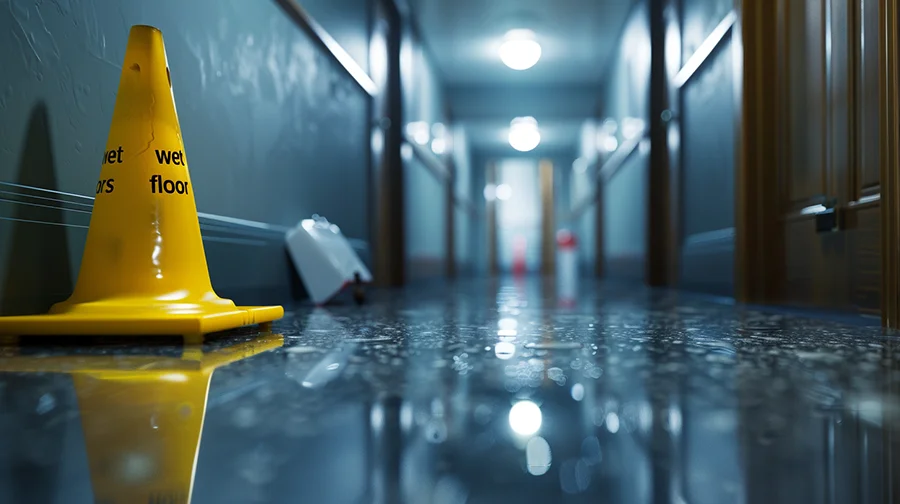
Imagine a tenant tripping over clutter they left in a shared hallway or ignoring a “Wet Floor” sign before slipping. Even if a hazard existed, the court could find the injured person partially responsible. A 50% share of fault, for example, would cut their compensation in half.
This defense is especially relevant in cases involving sidewalk slip and falls or apartment building accidents, where both landlords and tenants share maintenance duties.
3. The Condition Was Open and Obvious
Another key defense is that the dangerous condition was “open and obvious.” Under New York law, landlords are generally not required to warn about hazards that are readily visible and should be recognized by any reasonable person.
For example, a visitor who trips over a brightly painted step or a clearly visible curb may have difficulty arguing that the landlord failed to warn them. The court might rule that the condition was so obvious that it did not present an unreasonable risk.
However, the “open and obvious” defense is not absolute. If the condition was visible but still unreasonably dangerous (such as a steep, uneven stairway), the landlord could still be held responsible. Learn more about similar defenses used in Brooklyn slip and fall cases.
4. Assumption of Risk
The “assumption of risk” defense applies when the injured person knowingly encounters a dangerous situation. This often arises in recreational or voluntary activity cases – such as walking across an icy driveway the tenant was warned to avoid.
If the landlord can prove that the tenant understood the danger and voluntarily chose to proceed, the claim may be dismissed. Courts often consider whether warning signs were posted, or if the danger was so apparent that any reasonable person would have avoided it.
This defense overlaps with personal responsibility principles – it’s similar to arguments used in grocery store slip and fall cases where a customer ignores obvious spill warnings.
5. The Landlord Was Not in Control of the Area
Control is a crucial element in premises liability law. A landlord is only liable for areas they manage, maintain, or control. If the injury occurred in a part of the property controlled by the tenant or another party, the landlord can argue they weren’t responsible.
For example, if a tenant leaves debris in their private backyard and a guest is injured, the landlord can claim they had no control over that area. Similarly, if a property management company or maintenance contractor handled upkeep, responsibility might shift away from the landlord.
New York courts regularly examine lease terms, maintenance contracts, and inspection records to determine who had “control” of the premises. If the landlord can show that someone else was responsible for the hazard, they may be dismissed from the case.
For further examples, read our overview of premises liability in Brooklyn.
Additional Defenses Landlords May Use
- Statute of Limitations: In New York, personal injury claims generally must be filed within three years of the accident (CPLR § 214). Claims filed after that period can be dismissed automatically.
- Lack of Causation: The landlord may argue that the injury was caused by something unrelated to the alleged hazard, such as the plaintiff’s own medical condition or unrelated behavior.
- Independent Contractor Liability: If the hazard was created by a contractor, the landlord might shift blame to that third party – a common issue in construction-related property injuries.
How Our Lawyers Can Help Landlords and Property Owners
At Gabo Law, our team has deep experience handling Brooklyn personal injury defense cases, including those involving landlord liability. We analyze property records, maintenance logs, and legal agreements to identify the strongest possible defenses for our clients.
Our approach combines detailed legal strategy with compassion and understanding – whether you’re a landlord facing a lawsuit or an injured tenant seeking justice, we help you navigate every step of the process.
Practical Example Scenarios
Example 1: A tenant in a Brooklyn apartment complex slips on melted ice near the building entrance. The landlord proves that maintenance staff salted the area two hours before and that the storm continued – establishing reasonable care and lack of notice.
Example 2: A visitor trips on a large, bright yellow speed bump in a parking lot. Because the condition was open and obvious, the landlord successfully argues they weren’t required to post additional warnings.
Example 3: A tenant’s guest falls in a private patio area maintained by the tenant. The landlord presents the lease agreement showing the tenant’s control over that space – leading to dismissal of the claim.
When to Contact Our Lawyers
If you’re a landlord or property manager facing a premises liability lawsuit, the stakes are high. A successful defense can protect your financial stability and reputation. Our lawyers at Gabo Law are ready to evaluate your case, gather evidence, and build a defense tailored to your situation.
Call us at (800) 560-0214 or visit our Contact page today to schedule a consultation with our team.
Frequently Asked Questions About Defenses in Premises Liability Cases
What if the tenant caused the dangerous condition?
If the tenant created or controlled the hazard that caused the injury, the landlord can often shift liability to the tenant, especially if the lease places maintenance responsibilities on them.
Can landlords be sued for injuries in common areas?
Yes – landlords typically remain responsible for maintaining safe conditions in common areas such as hallways, stairwells, and entryways. However, they can still raise defenses like lack of notice or open and obvious conditions.
What if the injured person was trespassing?
Landlords generally owe limited duties to trespassers. Unless the trespasser was a child or the landlord created a trap-like hazard, liability is unlikely.
How can maintenance records help a landlord’s defense?
Maintenance logs, inspection schedules, and repair receipts can be powerful evidence showing the landlord acted reasonably. Consistent documentation often supports lack-of-notice or reasonable-care defenses.
Can insurance help cover legal defense costs?
Yes. Most landlord insurance policies include liability coverage that pays for defense attorneys and potential settlements, depending on policy terms.
What happens if a government-owned property is involved?
Claims against public housing authorities or city-owned buildings require a Notice of Claim within 90 days under General Municipal Law § 50-e. Failure to meet this deadline can bar the lawsuit entirely.
When should a landlord call a lawyer?
Immediately after receiving notice of an injury or lawsuit. Quick action allows your lawyer to preserve evidence, investigate the scene, and develop a strong legal defense from the start.

Irene H. Gabo is a dedicated personal injury attorney based in Brooklyn, specializing in a wide range of personal injury cases. With over a decade of experience, she has successfully represented thousands of clients who have suffered injuries from motor vehicle accidents, construction incidents, dog bites, and medical malpractice. Known for her expertise and commitment, Ms. Gabo has recovered millions of dollars for her clients, ensuring they receive the justice and compensation they deserve. If you or a loved one has been injured in Brooklyn, reach out to Irene for a free consultation and expert guidance on your personal injury claim.