







Midwood Trip and Fall Lawyer
Getting injured in Midwood can disrupt your day instantly. A raised sidewalk edge, broken curb, loose mat, or poorly lit walkway can turn a normal errand into a painful injury with legal questions that are hard to answer alone.
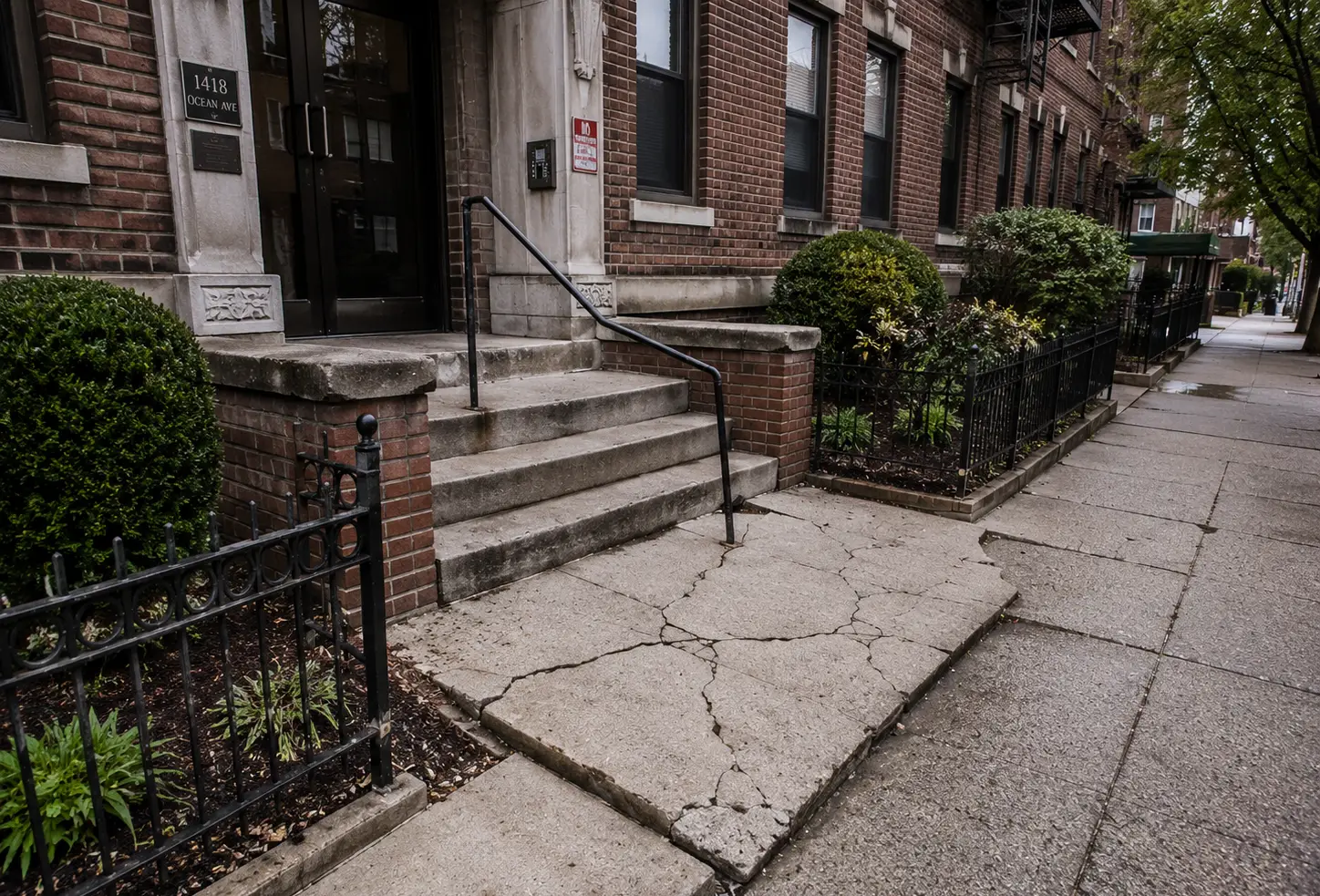
Trip and fall cases in Midwood often involve crowded sidewalks, apartment entrances, storefront corridors, parking areas, and transit-adjacent walkways. Important evidence can change or disappear quickly. If you were injured in Midwood, call Law Office of Irene H. Gabo, P.C. at 800-560-0214 to ask what steps may matter next.
How Trip and Fall Accidents Happen in Midwood
Midwood has a mix of residential buildings, small businesses, schools, medical offices, and busy pedestrian routes. That combination means sidewalks and entry areas are used heavily throughout the day. Even a small defect can become dangerous when people are moving around parked cars, delivery activity, and crowded storefronts.
Common trip hazards include raised sidewalk flags, cracked pavement, broken curbs, uneven cellar doors, loose floor mats, exposed wires, tree root uplift, and poorly marked surface changes. In apartment buildings, stair edges, hallway transitions, and dim lighting can also contribute to falls.
Local conditions matter because they help show whether a hazard was foreseeable. A property owner near a busy Midwood commercial strip may need more frequent inspections than an owner of a rarely used private walkway. For broader guidance, you can review our page for Brooklyn trip and fall accident lawyers.
Common Injuries After a Trip and Fall in Midwood
Trip and fall injuries often involve the hands, wrists, knees, shoulders, back, neck, hips, and head. Many people instinctively reach out to break the fall, which can cause fractures, ligament tears, or nerve injuries.
The legal value of a claim depends partly on how well the injury is documented. Emergency room records, orthopedic visits, imaging studies, physical therapy notes, and work restrictions help connect the fall to the harm that followed. Delays in treatment can give insurers an argument that the injury was not serious or was caused by something else.
In Midwood cases, lawyers also look at how the injury affects daily life. A knee injury may limit walking to stores or public transportation. A wrist fracture may interfere with work, childcare, cooking, or basic tasks at home.
Who May Be Legally Responsible for a Midwood Trip and Fall
New York law requires property owners and others who control property to maintain reasonably safe conditions. In a trip and fall case, responsibility often turns on whether the owner created the defect, knew about it, or should have discovered it through reasonable inspection.
For sidewalks in New York City, NYC Administrative Code §7-210 often places responsibility on the adjacent property owner. There is an important exception for one-, two-, or three-family owner-occupied residential properties. In those cases, the City may remain responsible, and different procedural rules can apply.
Surface height differences matter. NYC rules generally treat a sidewalk height differential over one-half inch as a potentially actionable defect. Measurements, photographs, and repair history can become central evidence. Our discussion of trip and fall accidents on sidewalks explains how sidewalk defects are evaluated.
What Happens After a Trip and Fall in Midwood
Most trip and fall cases begin with confusion. The injured person may not know who owns the sidewalk, who maintains the building entrance, or whether the condition had been reported before. Meanwhile, the scene can change quickly.
A store may repair a broken threshold. A landlord may replace a loose mat. A contractor may patch a sidewalk defect. Security footage from nearby businesses may be overwritten within weeks, sometimes sooner. That is why early photographs and witness names are so important.
Insurance companies often ask for recorded statements before the injured person understands the legal issues. They may focus on shoes, phone use, weather, lighting, or where the person was looking. These facts matter because New York uses pure comparative negligence. Even if the defense argues you were partly at fault, you may still recover damages, reduced by your percentage of fault.
Special New York Rules That May Apply
Most New York personal injury cases must be filed within three years from the date of injury. That deadline can feel long, but waiting can weaken a Midwood trip and fall claim because the condition may be repaired and witnesses may become harder to locate.
Municipal cases are different. If the fall involved a city-owned sidewalk, public school, park property, NYCHA property, or another New York City agency, a Notice of Claim may need to be filed within 90 days. The lawsuit deadline is also shorter: one year and 90 days.
City-owned sidewalk defects may also involve prior written notice rules. Lawyers often review 311 complaints, DOT records, permits, repair records, and prior accident history. When records must be requested from an agency, FOIL requests may be needed. These procedural details can decide whether a claim survives.
What To Do After a Trip and Fall in Midwood
Start by getting medical care and reporting the incident to the property owner, building manager, store, or appropriate agency. Ask for a copy of any incident report. If the fall happened outside, photograph the defect from several angles before it is repaired.
Use a clear object for scale, such as a ruler, coin, or shoe, when photographing a raised sidewalk or broken curb. Take wider photos showing nearby addresses, storefronts, cross streets, and landmarks. This helps identify the exact location later.
Try to preserve names and contact information for witnesses. Nearby businesses may have cameras facing sidewalks or entrances, but footage is often overwritten. For a practical checklist, see our guide on how to respond after a trip and fall accident.
A strong claim often depends on early evidence preservation. Call Law Office of Irene H. Gabo, P.C. at 800-560-0214 to discuss what records, photos, or deadlines may matter in your case.
How Our Lawyers at Law Office of Irene H. Gabo, P.C. Can Help You
Trip and fall cases require careful fact development. Our lawyers review where the fall happened, who controlled the area, whether the defect violated safety rules, and whether the owner had actual or constructive notice.
In Midwood, this may mean checking property records, sidewalk ownership, prior complaints, building maintenance logs, and surveillance sources. We also look for contractors, tenants, managing agents, and other parties who may have shared responsibility for repairs or inspections.
When litigation is needed, discovery can uncover inspection schedules, work orders, cleaning procedures, repair invoices, and prior complaints. These records help show whether the hazard was ignored, missed, or created by the defendant.
Compensation You May Recover
The damages available depend on the nature of your injuries and how they have affected your life. Common categories include medical expenses, lost wages, pain and suffering, and reduced earning capacity.
Economic damages may include emergency care, follow-up visits, surgery, physical therapy, medication, transportation to appointments, and income lost while recovering. If your injury affects your ability to work long term, future earning losses may also be considered.
Non-economic damages address the physical pain, emotional strain, and loss of enjoyment caused by the injury. A fall that limits walking, climbing stairs, working, or caring for family can have consequences that go beyond medical bills.
Limits and Case Viability
Not every fall leads to a viable legal claim. A case usually depends on proving that a dangerous condition existed, that the proper party was responsible for it, and that the condition caused the injury.
Proof problems can limit a case. If the defect was repaired before photographs were taken, if the location cannot be identified, or if medical treatment was delayed, the defense may dispute liability or causation. Insurance coverage and municipal deadlines can also affect recovery.
The stronger cases usually have clear photographs, prompt medical records, witness support, and evidence showing the defect existed long enough to be discovered. A detailed review can help separate weak claims from claims worth pursuing.
Contact a Midwood Trip and Fall Lawyer
If you were injured and need guidance, Law Office of Irene H. Gabo, P.C. is available at 800-560-0214.
Frequently Asked Questions About Midwood Trip and Fall Claims
What Makes a Midwood Trip and Fall Case Stronger?
Clear proof of the defect is important. Photos with measurements, witness names, incident reports, medical records, and proof of prior complaints can all strengthen a claim. The case is usually stronger when the defect was visible and existed long enough for the owner to address it.
Who Is Responsible for a Broken Sidewalk in Midwood?
Many New York City sidewalk claims are brought against the adjacent property owner under NYC Administrative Code §7-210. The City may remain responsible for certain owner-occupied one-, two-, or three-family homes. The correct defendant depends on ownership, control, and the exact location of the defect.
Do I Still Have a Claim If I Was Looking at My Phone?
You may still have a claim. New York follows pure comparative negligence, so your recovery can be reduced if you share fault, but it is not automatically barred. The key question is whether a dangerous condition also contributed to the fall.
How Quickly Should I Act After a Trip and Fall?
Acting quickly helps preserve the evidence. Surveillance footage can be overwritten, defects can be repaired, and witnesses may be hard to find later. If a public entity may be involved, a 90-day Notice of Claim deadline may apply.
Can I Recover Compensation for Pain and Suffering?
Yes, if liability and damages can be proven. Pain and suffering may include physical pain, limited mobility, emotional distress, and loss of enjoyment of daily activities. Medical records and treatment history help support this part of the claim.