







Manhattan Beach Trip and Fall Lawyer
A raised sidewalk edge, broken curb, loose mat, or poorly lit walkway in Manhattan Beach can turn a routine walk into a serious injury. This neighborhood has residential blocks, beach-area foot traffic, storefronts, parking areas, and public walkways where surface defects may create preventable risks.
Trip and fall cases are not just about proving that someone fell. Under New York law, the claim often depends on who controlled the location, how long the defect existed, whether it was visible, and whether the responsible party had a fair chance to fix it. For questions about evidence, deadlines, or who may be responsible, call Law Office of Irene H. Gabo, P.C. at 800-560-0214.
How Trip and Fall Accidents Happen in Manhattan Beach
Trip and fall accidents in Manhattan Beach often involve uneven walking surfaces. Sidewalk slabs can shift from tree roots, weather, settling, or repeated use. Curbs, driveway aprons, cellar doors, utility covers, and parking lot transitions may also create height differences that catch a person’s foot.
Weather and coastal conditions can make these hazards harder to manage. Rain, sand, leaves, snow, and ice can hide cracks or make uneven pavement harder to see. In colder months, freeze-thaw cycles can worsen small sidewalk defects and create new raised edges near homes, stores, and beach-adjacent paths.
These cases also arise indoors. Apartment buildings, restaurants, medical offices, and retail spaces in and around Manhattan Beach may have loose carpeting, bunched mats, poor lighting, broken stairs, or cluttered entryways. A trip hazard does not need to be dramatic to cause a fracture, back injury, or head impact.
For broader information about these claims, visit our page on Brooklyn trip and fall accident lawyers.
Common Injuries After a Trip and Fall in Manhattan Beach
Trip and fall injuries often depend on how the body lands. Many people reach out with their hands, which can lead to wrist, hand, elbow, or shoulder fractures. Others fall forward or sideways and suffer knee injuries, hip injuries, facial trauma, or dental damage.
Back and neck injuries are also common. A sudden fall can aggravate existing disc problems or cause new herniations, nerve symptoms, and chronic pain. Diagnostic testing, medical follow-up, and clear treatment records often matter because insurance companies may argue that the injury was minor or unrelated.
Severity matters for both medical recovery and case value. A person who needs surgery, physical therapy, injections, or time away from work has a different damages picture than someone who heals quickly. Lawyers review medical records, imaging, work restrictions, and daily limitations to understand how the fall changed the person’s life.
Who Is Legally Responsible for a Manhattan Beach Trip and Fall?
New York premises liability law generally requires proof that a dangerous condition existed and that the responsible party knew about it, should have known about it, or created it. In a Manhattan Beach trip and fall case, this often means identifying who owned, leased, managed, maintained, or controlled the specific area where the fall occurred.
For private property, liable parties may include a homeowner, landlord, commercial tenant, property management company, maintenance contractor, or business operator. For sidewalks in New York City, NYC Administrative Code §7-210 generally places responsibility on the adjacent property owner. A key exception applies to one-, two-, or three-family owner-occupied residential properties, where the City may remain responsible in certain sidewalk defect cases.
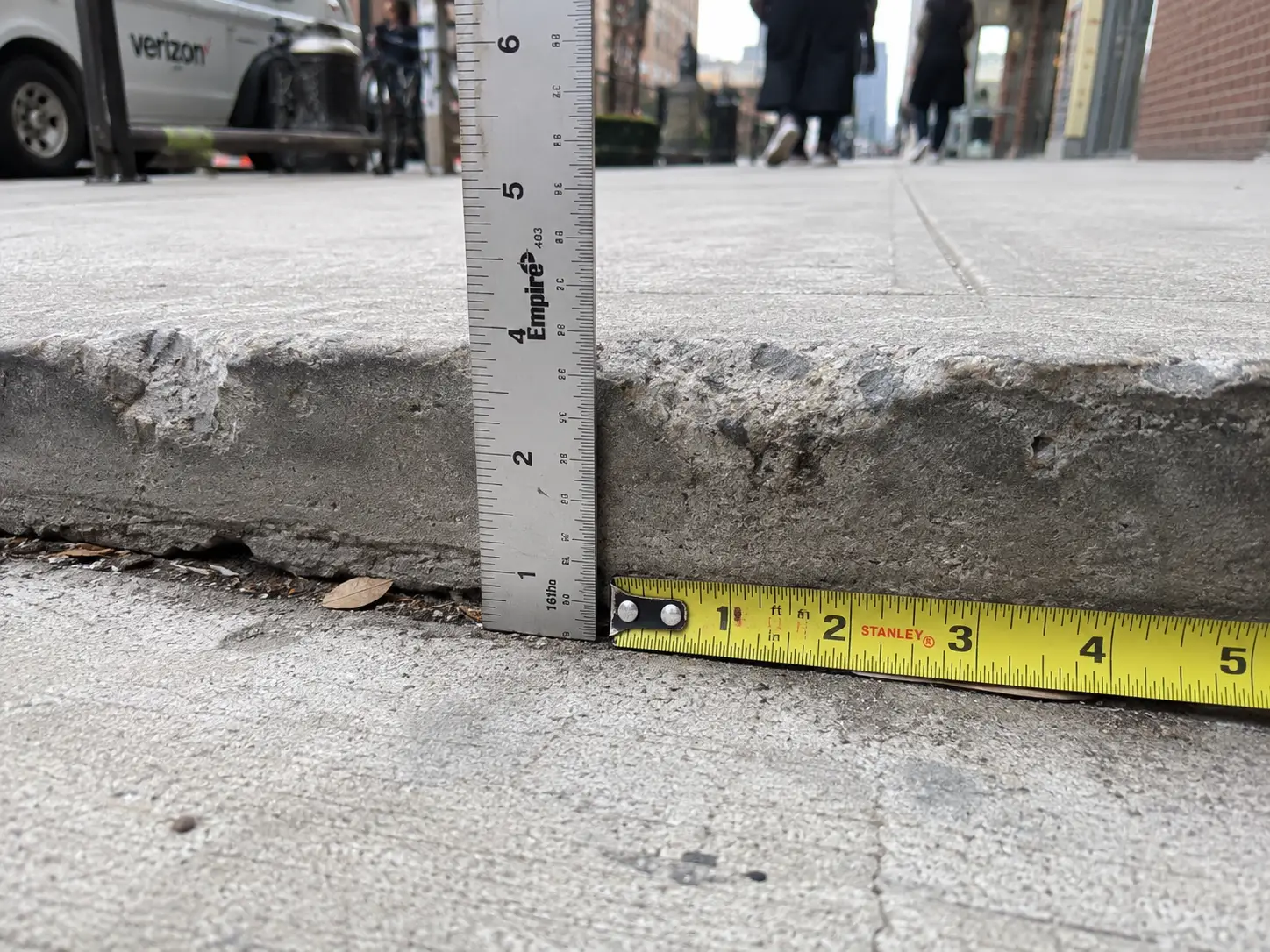
Height differences can be important. NYC rules generally treat sidewalk surface variations greater than one-half inch as defects that may require repair. Even then, a lawyer still evaluates visibility, lighting, photos, measurements, prior complaints, and whether the defect existed long enough for the responsible party to discover it.
Public property requires special attention. If the fall happened on City-owned property, in a public park area, near a municipal facility, or on a roadway feature controlled by a public agency, a 90-day Notice of Claim may apply. Our firm also reviews prior written notice issues, because many claims involving City-owned defects require proof that the City received written notice before the injury.
You can also read about shared fault on our guide to comparative negligence in New York.
What Happens After a Trip and Fall in Manhattan Beach
The first days after a fall often shape the entire claim. The property owner may repair the defect, replace the mat, clean the area, or move objects before anyone takes measurements. Witnesses may leave the area and become hard to find. Video from nearby buildings or stores may be erased within weeks.
Reporting the incident matters because it creates a timeline. In a store, apartment building, restaurant, or office, an incident report may identify the location, employees on duty, witnesses, and immediate conditions. In an outdoor Manhattan Beach sidewalk case, photos taken before repairs can be more valuable than later descriptions.
Medical treatment should also start promptly. Delays allow insurers to argue that the injury was not serious or was caused by something else. Clear records from urgent care, emergency rooms, orthopedists, neurologists, and physical therapists help connect the fall to the injury.
Local procedure can affect strategy. NYPD reports may not be created for every fall. 311 complaints, Department of Transportation records, building records, and prior repair permits may need to be requested. If a municipal agency may be involved, a lawyer must move quickly because missing a Notice of Claim deadline can end the case before liability is fully investigated.
Special New York Rules That May Apply
Most New York personal injury cases have a three-year statute of limitations. Trip and fall claims are no different when the defendant is a private property owner or business. Waiting is still risky because the strongest evidence is often collected long before the deadline approaches.
Municipal claims follow different rules. Claims against New York City, NYC agencies, public schools, parks, NYCHA, or certain transit-related entities generally require a Notice of Claim within 90 days. The lawsuit deadline is usually one year and 90 days. These shortened deadlines can apply even when the injury is severe.
Snow and ice cases have their own issues. In New York City, property owners generally must clear snow and ice within four hours after snowfall ends, or by 11 a.m. if snow ends overnight. The storm-in-progress doctrine may protect an owner during active precipitation, but it does not excuse failure to address hazards after a reasonable cleanup period.
Comparative negligence also matters. A property owner may argue that the defect was open and obvious, that the injured person was looking at a phone, or that safer walking paths were available. New York follows pure comparative negligence, so a person may still recover even if partly at fault, but damages are reduced by the assigned percentage of responsibility.
What To Do After a Trip and Fall in Manhattan Beach
Start by getting medical care and reporting the incident to the person or business in control of the area. Ask for a copy of any incident report if one is prepared. If the fall happened outside, write down the nearest address, cross street, building, driveway, tree well, utility cover, or storefront.
Photos can be decisive. Take wide photos showing where the fall happened and close-up photos showing the defect. Use a ruler, coin, shoe, or other clear reference to show the height difference. If lighting played a role, document the time of day and whether any lights were broken or blocked.
Preserve footwear and clothing. Do not repair or throw away shoes worn during the fall, especially if the defense may claim footwear caused the incident. Get names and phone numbers for witnesses before they leave the area.
For more practical next steps, see our guide on how to respond after a trip and fall accident.
A strong claim often depends on early evidence preservation. Call Law Office of Irene H. Gabo, P.C. at 800-560-0214 to discuss what records, photos, or deadlines may matter in your case.
How Our Lawyers at Law Office of Irene H. Gabo, P.C. Can Help You
Our lawyers begin by identifying the exact location and the parties that controlled it. That can be straightforward inside a store, but more complex on a sidewalk, driveway, parking lot, or public walkway in Manhattan Beach. Ownership records, leases, maintenance contracts, and agency records may all matter.
We also focus on evidence before it disappears. That may include sending preservation letters, requesting surveillance footage, checking 311 and DOT records, obtaining repair histories, and reviewing photographs with measurements. In municipal cases, we evaluate whether a Notice of Claim must be filed within 90 days.
Trip and fall claims are often defended aggressively. Property owners may argue they had no notice, that the condition was too minor, or that the injured person caused the fall. We prepare cases with those defenses in mind by building a record around visibility, duration, maintenance practices, and medical proof.
Compensation You May Recover
The damages available depend on the nature of your injuries and how they have affected your life. Common categories include medical expenses, lost wages, pain and suffering, and reduced earning capacity. Future medical care may also be included when the injury requires long-term treatment.
Economic damages focus on financial loss. These may include emergency care, surgery, physical therapy, diagnostic testing, medication, transportation to appointments, and income lost while recovering. If a Manhattan Beach fall affects your ability to return to the same work, reduced earning capacity may become part of the claim.
Non-economic damages address the human impact. Pain, limited mobility, sleep problems, anxiety about falling again, and loss of normal activities can all matter. The strength of this part of the case often depends on consistent medical documentation and credible examples of how the injury changed daily life.
Limits and Case Viability
Not every trip and fall leads to a viable lawsuit. The law requires more than proof of injury. There must be a dangerous condition, a responsible party, proof connecting that condition to the fall, and damages that can be documented.
Some cases are limited by timing, missing evidence, or unclear ownership. Others become stronger when photos, measurements, prior complaints, inspection logs, and witness statements show that the hazard should have been fixed. A careful early review helps separate weak claims from cases that can be pursued effectively.
Frequently Asked Questions
What Makes a Manhattan Beach Trip and Fall Case Strong?
A strong case usually includes clear photos, measurements, witness information, medical records, and proof of who controlled the area. It also helps when the defect was visible, existed long enough to be discovered, or was created by the property owner or its workers.
Do I Need To Prove the Owner Knew About the Exact Defect?
Often, yes. New York law usually requires actual notice, constructive notice, or proof that the owner created the condition. Constructive notice means the defect was visible and present long enough that a reasonable owner should have found and fixed it.
What If I Tripped on a Sidewalk Near a Manhattan Beach Home?
Sidewalk responsibility in New York City often falls on the adjacent property owner under NYC Administrative Code §7-210. There is an important exception for one-, two-, or three-family owner-occupied residential properties. A lawyer must check ownership and property use before deciding who may be responsible.
How Quickly Should I Act After a Fall on Public Property?
Very quickly. If New York City or another public entity may be responsible, a Notice of Claim may be due within 90 days. This is much shorter than the usual three-year deadline for private personal injury claims.
Can I Still Recover If I Was Not Looking Down When I Fell?
Possibly. New York uses pure comparative negligence, so shared fault reduces damages but does not automatically bar recovery. The key question is how responsibility should be divided based on the defect, lighting, visibility, and surrounding conditions.
What Compensation Can Be Included in a Trip and Fall Claim?
Compensation may include medical bills, lost income, future care, pain and suffering, and reduced earning capacity. The exact value depends on injury severity, treatment history, long-term limitations, and the strength of the liability evidence.
If you have questions about your rights, contact Law Office of Irene H. Gabo, P.C. at 800-560-0214.