







Homecrest Train Accident Lawsuits
While Homecrest is primarily served by the B/Q subway line, its residents also access the broader commuter rail network for work and travel. Train accidents — including commuter rail crashes, grade crossing collisions, platform injuries, and derailments — are governed by specialized rules involving government transit authorities, federal railroad safety regulations, and strict filing deadlines that differ from standard personal injury claims.
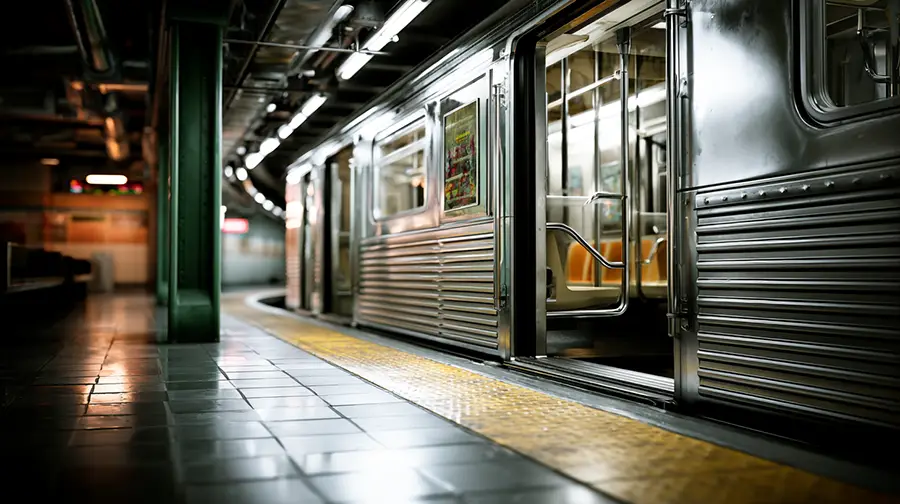
Rail Access Near Homecrest
Transit Connections From Homecrest
Homecrest residents access the broader commuter rail network through connections at Atlantic Terminal in Downtown Brooklyn (LIRR) and Penn Station in Manhattan (LIRR, Amtrak, NJ Transit). The B/Q subway line, which runs through the center of the neighborhood with stations at Kings Highway, Avenue U, and Neck Road, provides direct connections to Atlantic Terminal. Residents commuting to Long Island, New Jersey, or destinations along Amtrak’s Northeast Corridor use these transfer points daily. Grade crossings, platform conditions, and station infrastructure at these facilities all present potential injury risks.
Types of Train Accidents
Platform Slip and Fall Injuries
Wet, icy, or poorly maintained platforms, inadequate lighting, uneven surfaces, and the gap between the platform edge and the train car are common causes of injuries at train stations. These are premises liability claims against the operating authority.
Derailments and Collisions
Train derailments and collisions with other trains or vehicles at grade crossings can cause catastrophic injuries. These incidents often involve equipment failure, operator error, or signal malfunctions that create multiple layers of liability.
Door and Gap Injuries
Passengers caught in closing train doors, struck by doors that malfunction, or who fall into the gap between the platform and the train can suffer crush injuries, amputations, and severe lacerations.
Sudden Stop and Onboard Injuries
Passengers thrown from their seats or against interior surfaces during sudden stops, emergency braking, or train-to-train impacts can sustain traumatic brain injuries, spinal injuries, and broken bones.
Liability in Train Accidents
Train operators — including the MTA, LIRR, Amtrak, and NJ Transit — are common carriers that owe passengers the highest degree of care. When a transit authority’s negligence causes a passenger injury, the authority can be held liable. However, claims against these government or quasi-government entities require compliance with specific notice and filing requirements.
For Amtrak, which is a federally chartered corporation, claims are governed by the Federal Tort Claims Act (FTCA), which has its own procedural requirements. For the LIRR (an MTA subsidiary), the same 90-day Notice of Claim requirement applies as for other MTA entities.
Common Train Accident Injuries
Train accident injuries range from platform slip-and-fall injuries (fractures, head trauma) to catastrophic injuries from derailments and collisions (traumatic brain injury, spinal cord damage, crush injuries, amputations, severe burns, and death). The massive forces involved in train incidents mean that survivors often face permanent disabilities, lifelong medical needs, and substantial loss of earning capacity.
Filing Deadlines and Special Rules
Shortened Deadlines for Transit Authority Claims
Claims against the MTA, LIRR, and NYCTA require a Notice of Claim within 90 days under General Municipal Law § 50-e, with the lawsuit filed within one year and 90 days. Claims against Amtrak under the FTCA require an administrative claim within two years, but the specific procedures differ. Missing any applicable deadline can permanently bar the claim. Consult an attorney as soon as possible after a train accident to ensure all filing requirements are identified and met.
Injured in a Train Accident?
Train accident claims involve government entities and specialized filing requirements. The Law Office of Irene H. Gabo, P.C. represents train accident victims throughout Brooklyn. Contact us for a free case evaluation at (800) 560-0214 or click the button below to submit your information..
Get a Free ConsultationFrequently Asked Questions
Yes, but you must file a Notice of Claim within 90 days of the accident. The MTA, LIRR, and NYCTA are government entities with special procedural requirements. Missing the 90-day deadline will likely bar your claim entirely.
The transit authority responsible for maintaining the station has a duty to keep platforms reasonably safe. If a wet, icy, or defective condition on the platform caused your fall, the authority may be liable. You must file a Notice of Claim within 90 days and may need to demonstrate that the authority had notice of the hazardous condition.
The legal framework is similar — both involve government transit authorities and require a Notice of Claim within 90 days. The primary differences relate to which entity operates the service (MTA/NYCTA for subways, LIRR for Long Island commuter rail, Amtrak for intercity rail) and which specific regulations apply. The injury types may also differ based on the speed and configuration of the trains involved.