







Homecrest Bus Accident Lawsuits
Homecrest is served by seven local bus routes — B3, B7, B36, B49, B68, B82, and B82 SBS — that run along its boundary roads and connect residents to subway stations, commercial corridors, and destinations throughout southern Brooklyn. When a bus accident injures a passenger, pedestrian, or other motorist, the claims process is more complex than a typical car accident because bus operators are often government entities with special filing requirements and shortened deadlines.
Bus Routes Through Homecrest
Homecrest Bus Service
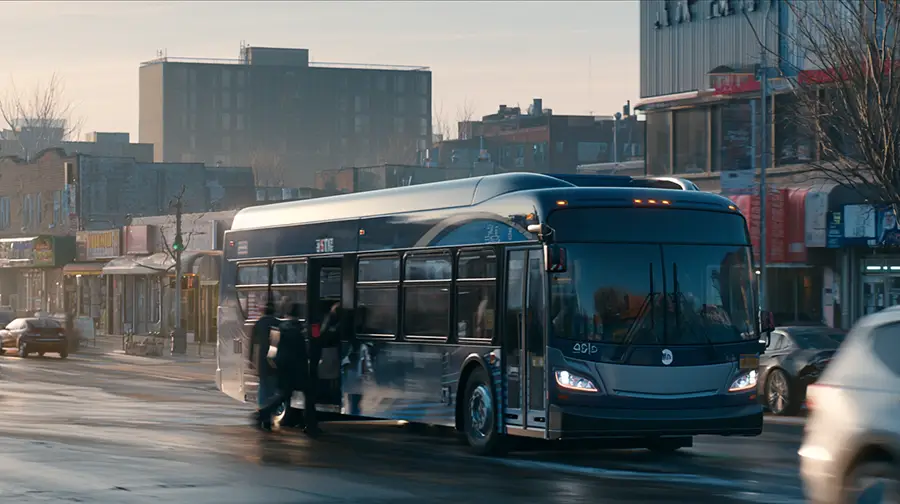
Multiple MTA bus routes traverse Homecrest’s commercial corridors. The B68 runs along Coney Island Avenue (the western border), the B82 and B82 SBS run along Kings Highway (the northern border), and the B49 runs along Ocean Avenue (the eastern border). The B3 serves Avenue U, linking Homecrest to Bensonhurst and the F, N, and D trains. The B7 and B36 provide additional east-west service. These routes carry significant daily ridership through intersections with documented crash histories — including Kings Highway between Coney Island Avenue and East 21st Street, where bus stops are positioned in a curbside lane already narrowed by parked cars.
Liability in Bus Accidents
Bus accident liability depends on who operates the bus and what caused the crash. MTA and NYCTA buses are operated by public authorities, making them government entities subject to special rules. Private bus companies, charter buses, and school buses are subject to standard negligence rules but may have different insurance structures.
Common carriers — including city buses — owe passengers a heightened duty of care. Under New York law, a common carrier must exercise the highest degree of care that human prudence and foresight can suggest to protect passengers. This means that a bus driver who brakes suddenly, accelerates erratically, or fails to wait for passengers to be seated before moving may be liable for injuries even if no collision with another vehicle occurred.
Key Fact: Bus passengers who are injured when the bus makes a sudden stop, sharp turn, or hard acceleration can pursue a claim even without a collision with another vehicle. Falls inside the bus, particularly among elderly passengers and those standing, are a common source of serious injuries.
The 90-Day Notice of Claim
Critical: 90-Day Notice of Claim Requirement
If you are injured in an accident involving an MTA or NYCTA bus, you must file a Notice of Claim with the appropriate government entity within 90 days of the accident under General Municipal Law § 50-e. The lawsuit must then be filed within one year and 90 days. Missing the 90-day Notice of Claim deadline will likely bar your claim entirely. This deadline applies whether you were a bus passenger, a pedestrian struck by the bus, or an occupant of another vehicle involved in the collision.
Common Bus Accident Injuries
Falls Inside the Bus
Standing passengers and elderly riders are particularly vulnerable to falls caused by sudden stops, hard braking, or sharp turns. Hip fractures, head injuries, and shoulder dislocations are common results of falls inside a moving bus.
Collision Injuries
When a bus collides with another vehicle, the passengers inside the bus — who typically lack seatbelts — can be thrown from their seats or slammed against hard interior surfaces, causing traumatic brain injuries, spinal injuries, and broken bones.
Pedestrian Strikes
Buses making right turns at intersections are a significant hazard to pedestrians. The large blind spots on city buses, combined with wide turning radiuses, make it difficult for drivers to see pedestrians in crosswalks.
What to Do After a Bus Accident in Homecrest
- Report the incident to the bus driver and call 911. If the bus driver does not stop or does not call for assistance, report the incident to the MTA and to the 61st Precinct directly.
- Note the bus number and route. Every MTA bus has a four-digit identification number displayed on the front and side. Record this number along with the route, direction, and approximate time of the incident.
- Seek medical attention immediately. Bus accident injuries — especially falls and whiplash-type injuries — may not produce full symptoms for hours or days. Go to the emergency room the same day.
- Photograph everything. The interior of the bus (if still on board), the exterior, the road conditions, and any visible injuries. If the accident involved another vehicle, photograph both vehicles and the intersection.
- Contact an attorney within days, not weeks. The 90-day Notice of Claim deadline is inflexible. An attorney must investigate the crash, identify the correct government entity, and prepare the Notice of Claim well before the deadline.
Injured in a Bus Accident in Homecrest?
Bus accident claims involve strict government filing deadlines. The Law Office of Irene H. Gabo, P.C. handles bus accident claims against the MTA and private carriers throughout Homecrest and Brooklyn. Contact us immediately for a free consultation at (800) 560-0214 or click the button below to submit your information.
Get a Free ConsultationFrequently Asked Questions
Yes, but you must file a Notice of Claim within 90 days of the accident under General Municipal Law § 50-e. The lawsuit must be filed within one year and 90 days. Missing these deadlines will likely bar your claim. The MTA and NYCTA are government entities, so the standard three-year statute of limitations does not apply.
Bus operators owe passengers a heightened duty of care. If the driver braked abruptly, accelerated erratically, or moved the bus before you were seated, the transit authority may be liable for your injuries — even without a collision with another vehicle.
Pedestrians struck by MTA or NYCTA buses must also file a Notice of Claim within 90 days. The same heightened duty of care applies — the bus driver is required to exercise extreme caution around pedestrians, particularly at intersections and near bus stops. An attorney can help preserve surveillance footage and bus camera recordings that may capture the incident.