







Slip and Fall Accidents in Coney Island
Places like Coney Island see constant activity. Beach visitors, boardwalk crowds, apartment residents, shoppers, transit riders, and restaurant guests all move through the area each day. When wet floors, uneven surfaces, poor lighting, or snow and ice are not handled properly, a normal outing can turn into a serious injury claim.
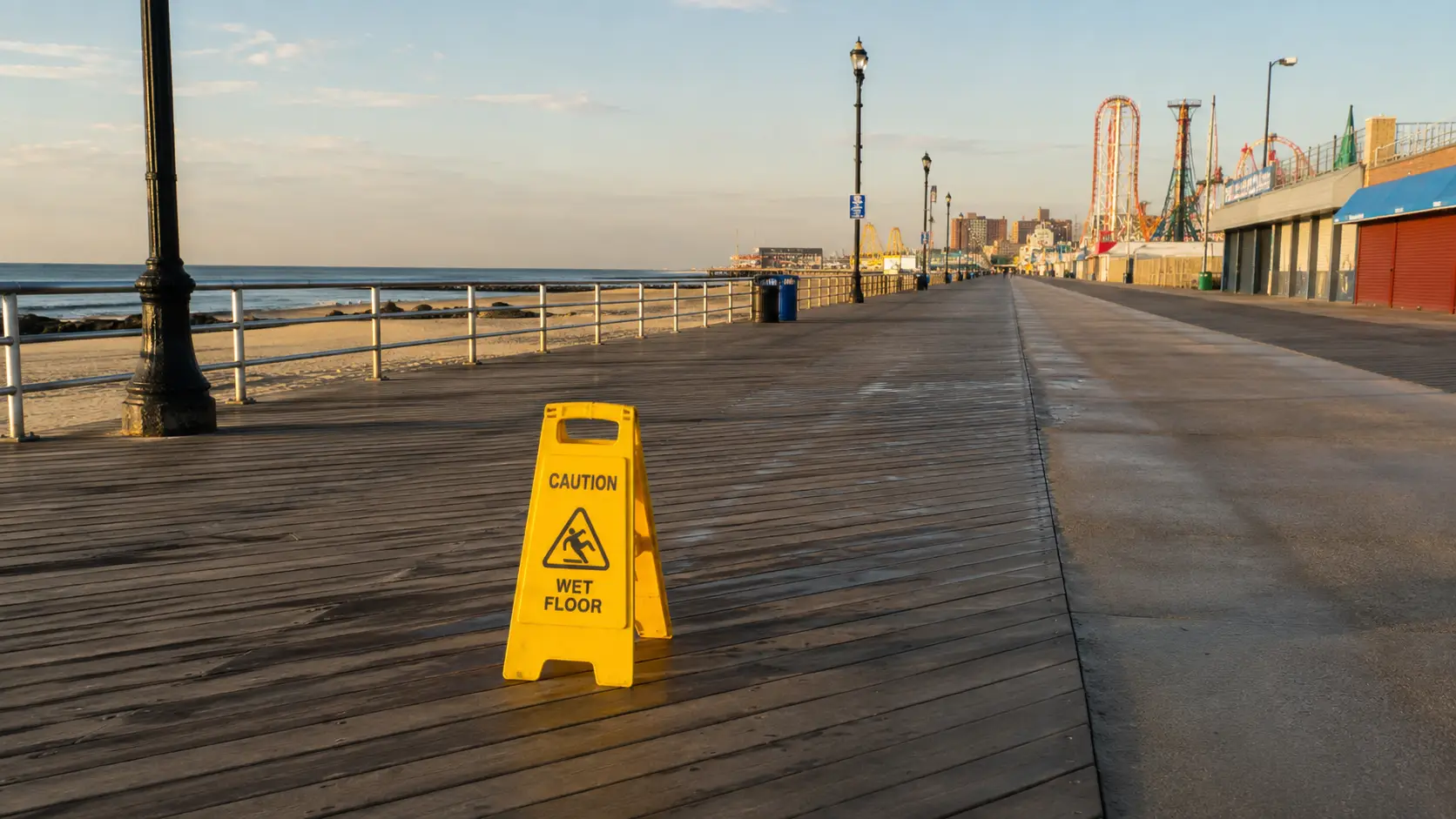
A Coney Island slip and fall case often depends on details that are easily overlooked. The exact surface condition, how long it existed, who controlled the area, and whether anyone reported the hazard can all affect liability. Important evidence can change or disappear quickly. If you were injured at Coney Island, call Law Office of Irene H. Gabo, P.C. at 800-560-0214 to ask what steps may matter next.
Our firm helps injured New Yorkers understand how premises liability rules apply to busy Brooklyn locations. You can also review our broader Coney Island personal injury resources for more local legal information.
How Slip and Fall Accidents Happen at Coney Island
Coney Island has a mix of public walkways, private businesses, apartment buildings, amusement areas, restaurants, parking lots, and transit-adjacent spaces. That variety matters because different people or entities may be responsible for different areas. A fall near a storefront entrance is handled differently from a fall on a city-controlled boardwalk or sidewalk.
Common hazards include tracked-in rainwater, spilled drinks, greasy restaurant floors, loose mats, defective stairs, poor drainage, and uneven pavement. During winter, snow and slush can create slick entrance areas. In warmer months, heavy pedestrian traffic can spread sand, water, and food spills across walking surfaces before staff notice the danger.
Slip and fall accidents in Coney Island are not limited to one type of property. They may happen inside retail stores, near subway stations, around apartment lobbies, in parking areas, or along outdoor paths. For more information on broader Brooklyn fall claims, visit our page for Brooklyn slip and fall accident lawyers.
Common Injuries After a Fall in Coney Island
Falls often cause wrist, hip, ankle, shoulder, knee, back, and head injuries. A person may reach out to stop the fall and fracture a wrist. Another person may land on a hip or strike their head on tile, concrete, or stairs. These injuries can require imaging, therapy, injections, surgery, or long recovery periods.
The medical timeline is important in a New York slip and fall case. Emergency room records, orthopedic visits, MRI results, and physical therapy notes help show how the fall affected your daily life. Delays in treatment may give an insurance company room to argue that the injury was minor or unrelated.
Functional limits also matter. A Coney Island restaurant worker who cannot stand for long periods may suffer a different financial loss than a retiree who can no longer walk the boardwalk without pain. Lawyers review both the diagnosis and the way the injury changed the person’s routine.
Who Is Legally Responsible for a Coney Island Slip and Fall?
New York premises liability law requires property owners and those who control property to maintain reasonably safe conditions. In a slip and fall claim, the key issue is usually whether the responsible party created the hazard, knew about it, or should have known about it through reasonable inspections.
Actual notice means the owner or staff knew about the danger before the fall. Constructive notice means the condition was visible and existed long enough that a reasonable owner should have found and fixed it. If employees caused the problem, such as by mopping without warnings or leaving a loose mat in place, a separate notice argument may not be needed.
Responsibility in Coney Island can involve a property owner, tenant, management company, maintenance contractor, restaurant operator, store owner, or public agency. The first strategic step is identifying who controlled the exact location where the fall happened. Our page on who may be responsible for a slip and fall in Brooklyn explains this issue in more detail.
What Happens After a Slip and Fall in Coney Island
The first days after a fall are often confusing. The injured person may report the incident to a manager, seek medical care, speak with witnesses, and try to understand whether insurance will get involved. Meanwhile, the property condition may be cleaned, repaired, resurfaced, or photographed by someone else before the injured person can document it.
Surveillance footage is one of the most important forms of proof. Many businesses and public facilities overwrite video within days or weeks. In NYC cases, footage may be gone in 30 days or less. A lawyer may send preservation letters quickly so the owner, management company, or agency is told not to destroy relevant video.
Incident reports also matter, but they are not always complete. A store report may leave out the condition, the witness names, or the length of time the hazard was present. In public locations, agency records may require a FOIL request. These local procedures can affect how fast a claim must be investigated.
Common mistakes include throwing away shoes, failing to photograph the area, giving a recorded statement too soon, or assuming a property owner will voluntarily preserve evidence. A careful early investigation helps show what happened before memories fade and conditions change.
Special New York Rules That May Apply
Most New York personal injury cases must be filed within three years from the date of injury. That rule applies to many private-property slip and fall claims in Coney Island, including falls in stores, restaurants, apartment buildings, and other privately controlled spaces.
Different rules apply when a New York City agency or other public entity is involved. If the fall happened on city-owned property, a public sidewalk controlled by the City, a park area, a school, NYCHA property, or a transit-related location, a Notice of Claim may be required within 90 days. The lawsuit deadline is usually one year and 90 days for those municipal claims.
New York also follows pure comparative negligence under CPLR §1411. This means you can still recover damages even if you were partly at fault, but your compensation is reduced by your percentage of fault. In Coney Island cases, defendants may argue that a hazard was open and obvious, that footwear contributed, or that the injured person should have avoided a wet or crowded area.
Snow and ice rules may also affect liability. NYC property owners generally must clear snow and ice within four hours after snowfall ends, or by 11 a.m. if snow ends overnight. During active precipitation, the storm-in-progress doctrine may protect an owner until there has been a reasonable chance to clean the area.
What to Do After a Slip and Fall at Coney Island
Report the fall to the property owner, manager, security office, landlord, or agency as soon as possible. Ask for a written incident report and request a copy if one is available. If the fall happened on public property, note the exact location, nearby address, landmark, or cross street.
Take photos of the hazard before it changes. Include wide shots showing where the fall happened and close-up photos showing the liquid, ice, mat, broken tile, uneven surface, or other danger. If there was snow, rain, sand, poor lighting, or crowding, document that too.
Get witness names and phone numbers. People who saw the fall, noticed the hazard earlier, or heard staff discuss the condition may help prove notice. Preserve your shoes and clothing because defense lawyers sometimes examine footwear and visibility issues.
Seek medical care promptly and follow treatment instructions. Medical records connect the fall to the injury and help prove damages. You may also find our guide on how to respond after a fall accident helpful after an incident in Brooklyn.
How Our Lawyers at Law Office of Irene H. Gabo, P.C. Can Help You
Our lawyers begin by identifying who controlled the location where the fall occurred. In Coney Island, that may require reviewing leases, management contracts, maintenance agreements, agency responsibility, or sidewalk ownership. This step is important because suing the wrong party can delay the case and weaken leverage.
We also work to preserve and obtain evidence. That may include surveillance footage, incident reports, cleaning logs, inspection schedules, weather records, 311 complaints, prior reports, and witness statements. If a municipal entity may be involved, we evaluate the Notice of Claim deadline immediately.
After the facts are developed, we assess liability, medical proof, damages, and likely defenses. Insurance companies often focus on gaps in treatment, lack of notice, or comparative fault. A prepared case answers those arguments with documents, testimony, and a clear timeline.
A strong claim often depends on early evidence preservation. Call Law Office of Irene H. Gabo, P.C. at 800-560-0214 to discuss what records, photos, or deadlines may matter in your case.
Compensation You May Recover
The damages available depend on the nature of your injuries and how they have affected your life. Common categories include medical expenses, lost wages, pain and suffering, and reduced earning capacity. Future damages may also apply if you need ongoing care or cannot return to the same work.
Economic damages may include emergency care, specialist visits, surgery, medication, physical therapy, medical devices, and transportation to appointments. Lost income can include missed work during recovery and reduced earning ability if the injury causes lasting limits.
Non-economic damages address the human impact of the fall. Pain, sleep disruption, anxiety while walking, loss of independence, and loss of enjoyment of daily activities can be part of the claim. These losses are often proven through medical records, personal testimony, and evidence from family or coworkers.
Serious falls in Coney Island can affect people differently. A broken ankle may keep one person out of work for months. A back injury may prevent another person from lifting, standing, or walking long distances. The value of a claim depends on the full picture, not just the accident location.
Limits and Case Viability
Not every fall leads to a successful claim. A case is stronger when the hazardous condition can be documented, the responsible party can be identified, and the medical evidence connects the fall to the injury. A case is harder when the condition disappeared before anyone photographed it or when there is no proof of notice.
Open and obvious hazards can also create disputes, but they do not automatically defeat a claim. New York’s comparative negligence rule allows fault to be divided. The practical question is whether the property owner still failed to act reasonably under the circumstances.
Insurance coverage, municipal deadlines, witness availability, and medical proof all affect case viability. A lawyer’s job is to evaluate these issues early so the injured person can make informed decisions.
Contact a Coney Island Slip and Fall Lawyer
A slip and fall in Coney Island can involve private property rules, city property deadlines, weather issues, maintenance records, and disputed facts. Getting advice early can help protect evidence and avoid timing problems.
To discuss your case, call Law Office of Irene H. Gabo, P.C. at 800-560-0214.
Frequently Asked Questions
How Quickly Should I Act After Falling in Coney Island?
You should act as soon as you can safely do so. Photos, witness information, incident reports, and surveillance footage can disappear quickly. If a city agency may be involved, a 90-day Notice of Claim deadline may apply.
Does a Coney Island Property Owner Need Prior Notice of the Hazard?
Usually, you must show the owner created the condition, knew about it, or should have known about it. Constructive notice can exist when a hazard was visible and present long enough to be found through reasonable inspections. Cleaning logs and video can be important proof.
What if I Fell on a Public Sidewalk or Boardwalk Area?
Public-location claims require careful review of who controlled the exact area. Some cases may involve New York City or another public entity, which can trigger a 90-day Notice of Claim requirement. The location details should be documented as precisely as possible.
Can I Still Recover if I Was Not Watching the Ground?
Yes, depending on the facts. New York allows recovery even when an injured person is partly at fault, but damages are reduced by the percentage of responsibility. The condition, lighting, crowding, warnings, and visibility all matter.
What Evidence Helps Prove a Slip and Fall Claim?
Helpful evidence includes photographs, surveillance footage, witness statements, incident reports, inspection logs, weather records, and medical records. In Coney Island, nearby businesses or buildings may have cameras that captured the area. The sooner evidence is requested, the better.
What Compensation Is Available After a Serious Fall?
Compensation may include medical bills, lost wages, reduced earning capacity, pain and suffering, and future treatment needs. The amount depends on liability proof, injury severity, recovery time, and long-term limits. No lawyer can guarantee a result before reviewing the evidence.