






Coney Island Premises Liability Lawyer
Across Brooklyn, locations like Coney Island experience heavy use. Boardwalk areas, stores, restaurants, apartment buildings, amusement areas, sidewalks, parking lots, and transit-adjacent walkways can all create safety issues when maintenance falls behind.
A premises liability claim asks whether the person or business controlling the area acted reasonably before someone got hurt. That question can be simple in theory but difficult in practice, especially in Coney Island, where private property and public spaces often sit close together. If you are unsure who controlled the area or what deadline applies, Law Office of Irene H. Gabo, P.C. can help you understand your options. Call 800-560-0214 to discuss what happened.
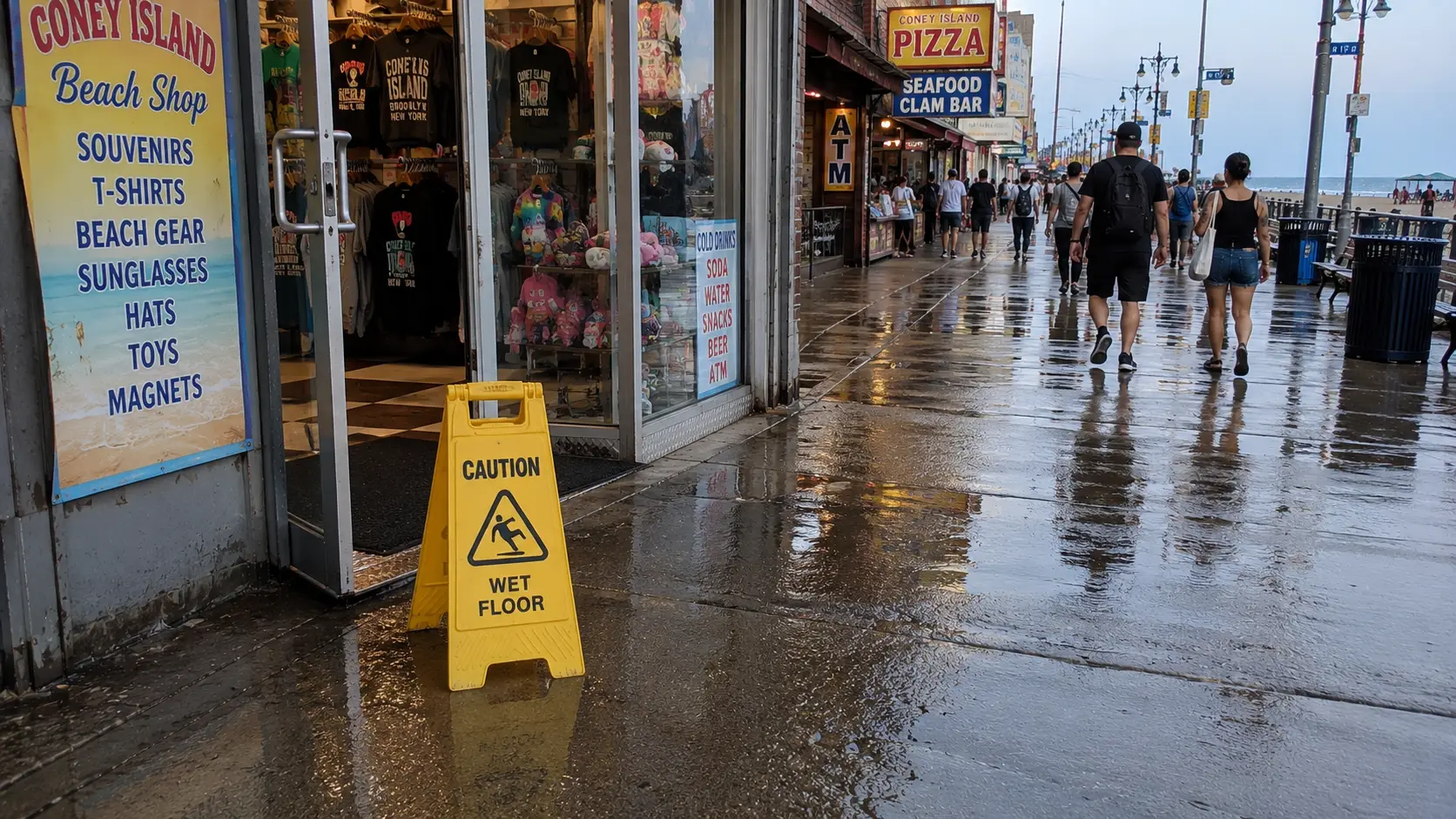
These cases often turn on details that are easy to miss. A wet entrance, broken stair, unsafe railing, poor lighting, loose flooring, or cracked walkway may look obvious after the fact. The legal issue is whether the responsible party knew, should have known, or created the danger before the injury occurred.
How Premises Liability Accidents Happen at Coney Island
Coney Island has a mix of outdoor attractions, beach access, commercial storefronts, apartment buildings, parking areas, and crowded pedestrian paths. Heavy foot traffic can make even a small hazard more dangerous if the property owner does not inspect and correct it in time.
Common premises hazards in Coney Island include wet floors near entrances, uneven pavement, broken steps, loose mats, poor lighting, spills in restaurants, and unsafe handrails. Rain, ocean air, sand, slush, and freeze-thaw cycles can also affect outdoor surfaces. These conditions matter because they can show whether the hazard was predictable rather than sudden.
For example, a business near the beach may know that customers track water and sand inside during busy periods. A landlord may know that a lobby floor becomes slippery during storms. A store may know that a freezer aisle collects condensation. When those risks are routine, owners are expected to use reasonable cleaning, warning, and inspection practices.
Our site includes more information about Brooklyn premises liability claims and how unsafe property conditions may support a case.
Common Injuries After a Premises Accident in Coney Island
Premises liability cases often involve falls, impacts, or injuries caused by unsafe property conditions. People may suffer wrist fractures, ankle injuries, knee damage, hip fractures, shoulder injuries, back injuries, neck injuries, concussions, or soft tissue damage. Some injuries appear minor at first but become more serious after diagnostic testing.
The medical timeline matters. If someone delays treatment, an insurance company may argue the injury came from another cause. Clear records from urgent care, an emergency room, imaging studies, orthopedic visits, and physical therapy can help connect the Coney Island incident to the injury.
Severity also affects the value and viability of a claim. A short-term bruise will be handled differently than a fracture requiring surgery or a back injury that limits work. Lawyers look closely at whether the injury caused missed work, long-term pain, permanent limitations, or future medical needs.
Who Is Legally Responsible for Unsafe Property in Coney Island?
Property owners, tenants, management companies, maintenance contractors, security companies, and public agencies may all have responsibility depending on who controlled the unsafe area. In Coney Island, this control question can be important because a single block may include private businesses, public sidewalks, beach-related areas, and transit access points.
New York premises liability law generally requires proof that a dangerous condition existed, that the responsible party created it or had notice of it, and that the condition caused the injury. Notice can be actual, meaning someone knew about the problem, or constructive, meaning the hazard was visible and existed long enough that it should have been found.
Owner-created hazards are different. If an employee mopped a floor and left it wet without warning signs, the injured person may not need to prove prior complaints. The focus becomes what the owner or employee did and whether that conduct created the unsafe condition.
Sidewalk cases require careful review. Under NYC Admin Code §7-210, many adjacent property owners are responsible for maintaining sidewalks next to their buildings. One-, two-, or three-family owner-occupied residential properties are treated differently, and city-owned defects may involve special notice rules.
For a broader discussion of shared fault and liability, see our guide on comparative negligence in New York.
What Happens After a Premises Accident in Coney Island
Events often move faster than injured people expect. A spill gets cleaned. A broken mat is replaced. A loose stair tread is repaired. A camera system records over footage before anyone requests it.
The first days after a Coney Island premises accident are important because the scene may change quickly. Businesses may create incident reports, employees may give statements, and surveillance footage may be saved or lost. In some locations, video may be overwritten in about 30 days or less.
Early mistakes can reduce claim value. Giving an incomplete statement, failing to identify the exact location, not reporting the incident, or waiting too long for medical care can all create problems later. Insurance companies often use those gaps to argue that the property owner had no notice or that the injury happened somewhere else.
A practical investigation usually starts by identifying who controlled the area. Then the lawyer looks for photos, video, witness names, maintenance logs, cleaning schedules, repair records, prior complaints, and medical documentation. In busy Coney Island areas, that evidence may come from nearby stores, building cameras, city agencies, or witnesses who were only briefly present.
Special New York Rules That May Apply
Most New York premises liability claims must be filed within three years from the date of injury. That general deadline applies to many claims against private businesses, landlords, restaurants, stores, and property owners in Coney Island.
Different rules apply when a city agency, public authority, or other government entity is involved. If the injury happened on city-controlled property, a public beach area, a park-related location, a city sidewalk defect, or property controlled by an agency such as NYC Parks or the MTA, a Notice of Claim may be required within 90 days. The lawsuit deadline may be as short as one year and 90 days.
Municipal cases also require different evidence steps. FOIL requests may be needed to obtain inspection records, incident reports, prior complaints, or maintenance logs. This is why identifying whether the Coney Island location was private or public can change the entire legal strategy.
New York also follows pure comparative negligence under CPLR §1411. This means an injured person can still recover damages even if they were partly at fault. The recovery is reduced by the percentage of fault assigned to that person.
What to Do After an Accident at Coney Island
The process typically works best when the injured person preserves facts before the scene changes. Report the incident to the business, building owner, property manager, security office, or public agency responsible for the area. Ask for a copy of any incident report if one is prepared.
Take photos from several angles. Include the hazard, nearby landmarks, lighting, warning signs, weather conditions, and the exact walking path. If the issue involved a raised sidewalk, broken curb, loose flooring, or uneven surface, use an object for scale so the defect can be measured later.
Get names and contact information for witnesses. In crowded areas of Coney Island, bystanders may leave quickly, and their accounts may be difficult to recover later. Also preserve shoes, clothing, receipts, ride tickets, parking records, or phone photos that help place you at the scene.
Seek medical treatment promptly and explain how the injury happened. This creates a medical record that connects the unsafe condition to your symptoms. Our page on what to do after a trip and fall accident explains additional steps that can protect a claim.
A strong claim often depends on early evidence preservation. Call Law Office of Irene H. Gabo, P.C. at 800-560-0214 to discuss what records, photos, or deadlines may matter in your case.
How Our Lawyers at Law Office of Irene H. Gabo, P.C. Can Help
Premises cases require more than proving someone got hurt. Our lawyers work to identify who controlled the Coney Island location, what safety practices existed, whether prior complaints were made, and whether the hazard should have been corrected earlier.
We may send preservation letters, request surveillance footage, investigate ownership records, review leases or maintenance agreements, and look for prior reports about the same condition. When public property may be involved, we evaluate Notice of Claim requirements and whether FOIL requests are needed.
Insurance companies often argue that a hazard was open and obvious, too minor, recently created, or caused by the injured person’s own carelessness. We prepare for those defenses by building a clear timeline. The stronger the timeline, the harder it becomes for the defense to avoid the central safety question.
For neighborhood-specific legal information, you can also review our Coney Island personal injury lawyer page.
Compensation You May Recover
The damages available depend on the nature of your injuries and how they have affected your life. Common categories include medical expenses, lost wages, pain and suffering, and reduced earning capacity.
Economic damages may include emergency care, doctor visits, surgery, physical therapy, medication, medical equipment, transportation to treatment, and income lost while recovering. If the injury affects future work ability, reduced earning capacity may also be part of the claim.
Non-economic damages address the human impact of the injury. This may include pain, physical limitations, emotional distress, loss of enjoyment of daily activities, and the frustration of living with a condition that changes how you move, work, or care for your family.
Future damages can be important in serious premises liability cases. A fall at Coney Island that causes a fracture, spinal injury, or permanent mobility problem may require long-term treatment. Medical opinions and life impact evidence help show whether those future losses are reasonably expected.
Limits and Case Viability
Not every injury at Coney Island leads to a viable premises liability claim. A claim depends on liability, evidence, damages, and timing. The property owner must have done something wrong or failed to address a danger that should have been handled.
Some cases are limited by proof. If no one knows where the fall happened, no photos exist, no report was made, and the condition disappeared, the case becomes harder. That does not mean the claim is impossible, but it does make early investigation more important.
Other cases are limited by ownership or deadlines. A claim against a private restaurant may follow the three-year rule, while a claim involving city property may require action within 90 days. The correct path depends on the facts.
Talk With a Coney Island Premises Liability Lawyer
A Coney Island premises liability lawyer can help sort out ownership, evidence, deadlines, and insurance issues before important proof disappears. The goal is to understand what happened and whether New York law supports a claim.
To discuss your case, call Law Office of Irene H. Gabo, P.C. at 800-560-0214.
Frequently Asked Questions About Coney Island Premises Liability Claims
How Do I Know Whether My Coney Island Injury Happened on Public or Private Property?
The exact location matters. A storefront, restaurant, apartment building, boardwalk area, beach access point, or sidewalk may be controlled by different parties. A lawyer can review property records, agency responsibility, leases, and maintenance agreements to determine who may be responsible.
What Makes a Hazard Legally Actionable in a Premises Liability Case?
A hazard usually must be connected to unreasonable conduct by the property owner or controlling party. This may mean the owner created the danger, knew about it, or should have discovered it through reasonable inspections. The injury must also be linked to that specific condition.
Does Coney Island Foot Traffic Affect Liability?
Yes, heavy foot traffic can affect what a property owner should anticipate. Busy areas may require more frequent inspections, faster cleanup, better lighting, or clearer warnings. The more predictable the risk, the harder it may be for an owner to claim surprise.
What if I Was Looking at My Phone or Not Watching the Ground?
New York’s comparative negligence rule allows recovery even when the injured person shares some fault. The defense may argue you should have noticed the hazard. If that argument succeeds, your damages may be reduced by your percentage of responsibility.
How Quickly Should Surveillance Footage Be Requested?
Footage should be requested as soon as possible. Many camera systems overwrite video within about 30 days or less, and some overwrite sooner. Early preservation letters can help prevent important evidence from being lost.
What Deadline Applies to a Coney Island Premises Liability Claim?
Most private-property premises liability claims in New York have a three-year filing deadline. Claims involving New York City, NYC Parks, the MTA, or another public entity may require a Notice of Claim within 90 days and a lawsuit within one year and 90 days. The safest approach is to identify the responsible party early.
Can I Recover Compensation for Pain and Suffering?
Yes, if liability and damages can be proven, pain and suffering may be part of the claim. The amount depends on injury severity, recovery time, permanent limitations, and how the injury affects daily life. Medical records and personal impact evidence both matter.