Historical Landmarks in Prospect Heights
Grand Army Plaza, located at the northern corner of Prospect Park in Brooklyn, New York, is an iconic public space known for its historical significance and architectural grandeur. Designed by the renowned landscape architects Frederick Law Olmsted and Calvert Vaux, who also designed Central Park, the plaza serves as the ceremonial entrance to Prospect Park. It is a prominent feature in Brooklyn, symbolizing the borough’s rich history and its contributions to the American Civil War.
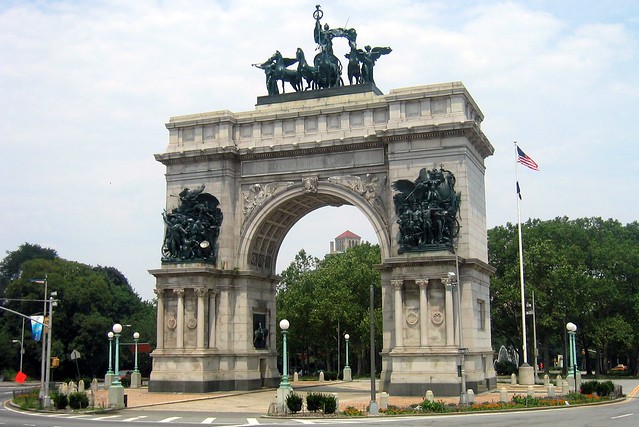
Image from Wally Gobetz (Flickr)
Historical Background
Grand Army Plaza was conceived in the late 19th century, during a period of rapid urbanization and development in New York City. The plaza was part of the larger plan for Prospect Park, which Olmsted and Vaux designed to provide urban dwellers with a pastoral retreat from the city’s hustle and bustle. The park and its surrounding areas, including Grand Army Plaza, were intended to reflect the democratic ideals of the era, providing accessible green space for all citizens. The name “Grand Army Plaza” commemorates the Grand Army of the Republic, a fraternal organization of Union Army veterans founded after the Civil War. The centerpiece of the plaza, the Soldiers’ and Sailors’ Arch, was constructed to honor the Union soldiers who fought in the Civil War. The arch is reminiscent of the Arc de Triomphe in Paris, symbolizing victory and the sacrifices made during the war.
Architectural Design
Grand Army Plaza is a masterful example of Beaux-Arts design, characterized by its grand scale, symmetry, and classical elements. The plaza’s layout is circular, with concentric rings of roadways and pathways radiating from the central arch. This design facilitates both vehicular and pedestrian traffic, making the plaza a bustling hub of activity. The Soldiers’ and Sailors’ Arch, designed by John H. Duncan and completed in 1892, stands at the heart of the plaza. The arch is adorned with intricate sculptures and bas-reliefs that depict key figures and events from the Civil War. On top of the arch, a majestic bronze quadriga, sculpted by Frederick MacMonnies, features the goddess Columbia, symbolizing the United States, riding in a chariot pulled by horses. Flanking the arch are two smaller pedestals, each topped with bronze statues of Union generals, including Ulysses S. Grant and Abraham Lincoln.
Surrounding the arch are various other monuments and sculptures that contribute to the plaza’s historical and artistic significance. Notable among these is the Bailey Fountain, a large and ornate fountain named after Brooklyn philanthropist Frank Bailey. The fountain, designed by sculptor Eugene Savage and architect Edgerton Swarthout, features allegorical figures representing wisdom and felicity, adding a touch of classical elegance to the plaza.
Cultural and Social Significance
Grand Army Plaza is more than just an architectural marvel; it is a cultural and social landmark that has played a significant role in Brooklyn’s history. The plaza has been a site for numerous public events, from political rallies and parades to concerts and community gatherings. Its central location and spacious design make it an ideal venue for large-scale events that bring together diverse groups of people. One of the most notable events associated with Grand Army Plaza is the annual New York City Marathon. The marathon route passes through the plaza, and the arch serves as a symbolic gateway for runners as they enter the final stages of the race. The marathon is a celebration of endurance and community spirit, and the plaza’s historic backdrop adds to the event’s significance.
The plaza is also a focal point for cultural activities and public art installations. Throughout the year, various art exhibits and performances take place in and around the plaza, showcasing the talents of local artists and performers. These events highlight Brooklyn’s vibrant arts scene and its commitment to fostering creativity and cultural expression.
Modern Developments and Preservation Efforts
In recent years, Grand Army Plaza has undergone several renovations and improvements aimed at preserving its historical integrity while enhancing its functionality as a public space. These efforts have been spearheaded by various civic organizations, including the Prospect Park Alliance and the New York City Department of Parks and Recreation. One of the key initiatives has been the restoration of the Soldiers’ and Sailors’ Arch. Over time, the arch had suffered from weathering and pollution, necessitating extensive cleaning and repair work. The restoration project, completed in phases, involved the meticulous cleaning of the arch’s stone surfaces, the repair of damaged sculptures, and the installation of new lighting to highlight the arch’s architectural features at night.
In addition to the arch, other elements of the plaza have been revitalized to improve accessibility and safety for pedestrians and cyclists. The introduction of dedicated bike lanes, enhanced crosswalks, and improved signage has made the plaza more navigable and user-friendly. These upgrades reflect the city’s commitment to creating a more inclusive and sustainable urban environment.
Grand Army Plaza in the Community
Grand Army Plaza serves as a communal gathering spot for the residents of Brooklyn and visitors from around the world. Its central location, at the intersection of several major thoroughfares, makes it easily accessible and a natural meeting point for various community activities. The Greenmarket at Grand Army Plaza, held every Saturday, is one of the largest and most popular farmers’ markets in New York City. The market features a wide variety of locally grown produce, artisanal goods, and fresh baked goods, drawing visitors from across the city. The Greenmarket not only supports local farmers and vendors but also fosters a sense of community and connection among residents.
Educational and Historical Tours
Given its rich history and architectural significance, Grand Army Plaza is a popular destination for educational tours and historical walks. Local schools, historical societies, and tour groups frequently organize visits to the plaza, offering participants a chance to learn about its historical context and significance. These tours often include detailed explanations of the monuments and sculptures, providing deeper insights into the stories and figures they commemorate. In addition to organized tours, the plaza features informational plaques and markers that provide historical context for visitors. These markers detail the history of the Soldiers’ and Sailors’ Arch, the significance of the various sculptures, and the broader historical background of Prospect Park and Brooklyn.
Conclusion
From its origins as part of the vision of Olmsted and Vaux to its role as a vibrant public space today, the plaza has remained a central feature of Brooklyn’s cultural and architectural landscape. Its monuments and sculptures honor the past, while its bustling activities and events reflect the dynamic and diverse nature of the borough.