Historical Landmarks in Marine Park
The neighborhood of Marine Park in Brooklyn, New York, has a rich history that reflects the transformation of rural farmland into suburban residential areas. At the heart of this history lies the Lott Farm, a significant landmark that played a central role in the development of the area.
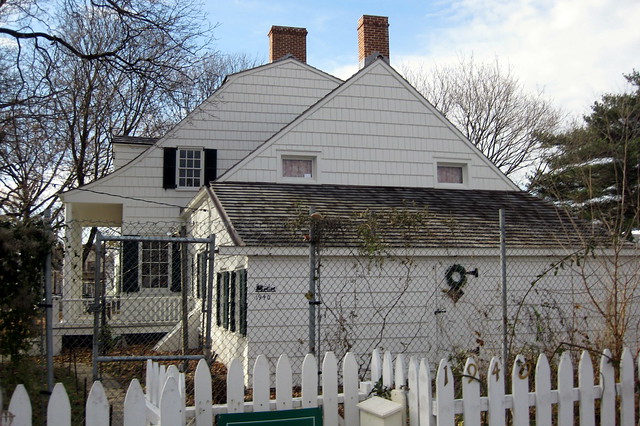
Image from Wally Gobetz (Flickr)
Early Beginnings: The Lott Family and Their Farm
In the historic town of Flatlands, Colonel Johannes H. Lott purchased a 220-acre farm property from Coert Voorhies on December 12, 1719. This expansive property was strategically located between what are now Kings Highway to the north, Flatbush Avenue to the east, Gerritsen’s Creek to the west, and the Atlantic Ocean to the south. The location near a tidal creek, known by various names over the centuries such as Strome Kill, Ryder Pond, Gerritsen’s Creek, and now Marine Park Creek, was ideal for farming and milling activities. Johannes H. Lott prospered in this fertile area, growing staple crops such as wheat, rye, buckwheat, oats, corn, flax, and barley. The farm also produced fruits and vegetables primarily for family consumption. The proximity to water and the salt hay that grew along the marshy banks provided excellent fodder for grazing livestock, including cows and cattle. The farm’s output was supplemented by raising cows, hogs, and chickens.
Agricultural Prosperity and Use of Enslaved Labor
Kings County, where Flatlands was located, was the second largest agricultural producer in the region, surpassed only by Queens County. The extensive network of large family farms in this area made significant use of enslaved labor for both house and farm work. The Lott family was no exception. Johannes E. Lott’s 1803 probate listed twelve enslaved individuals, highlighting the reliance on enslaved labor for the farm’s operations.
The focal point of the Lott farm was the house, built around 1800 by Hendrick I. Lott, incorporating an earlier 1720 structure built by his grandfather, Colonel Johannes H. Lott. This vernacular Dutch-American farmhouse stood as a testament to the architectural and cultural heritage of the area. The surrounding farm complex included several barns and outbuildings, constructed with the help of local residents, as recorded in the diary of Flatlands farmer John Baxter in the summer of 1796.
The Transformation from Farmland to Suburbia
The neighborhood of Marine Park and its surrounding communities were among the last areas in New York City to transition from rural farms to residential suburbia. An aerial photographic mosaic of New York City compiled in 1924 shows the vast extent of agriculture still present in the area on the eve of its development. The early 20th century brought significant changes. Waves of immigration, population growth, and a booming economy spurred residential development throughout New York City. Agricultural areas, particularly in the outer boroughs, struggled to compete with larger farms in Long Island and New Jersey. Developers began acquiring vast tracts of rural land, including portions of the Lott farm, as deep-south Brooklyn became a target for suburban development.
The promise of a new “marine park” around Gerritsen Creek fueled interest in the area, leading to the development that was well underway by the time Marine Park finally opened. The extension of municipal water and sewer infrastructure around 1926 catalyzed a construction boom on the new blocks surrounding the Lott House. Modest, well-crafted homes were built to accommodate the city’s expanding middle class. Marine Park developed initially as a rapid-transit suburb, connected to the city by a network of trolley, bus, and subway lines. This connectivity offered residents the best of both worlds—village charm and urban amenities, complemented by the natural beauty of Jamaica Bay. The post-World War II era saw further growth spurred by the construction of the Belt Parkway, enhancing accessibility to the area.
The Lott House: Architectural and Historical Significance
The exterior of the Lott House, a traditional Dutch-American vernacular farmhouse, conceals a much grander interior. High ceilings, decorative fireplace mantles, and moldings reflect Hendrick I. Lott’s skill as a professional house carpenter in Manhattan during the late 18th century. The house features architectural elements dating from the 18th through early 20th centuries, although its interior remains un-restored. The eastern wing of the Lott House is the original 1720 structure. It is theorized that this house was originally located along Kimball’s Road, which roughly followed the path of present-day East 38th Street, though it is more likely the house stood where East 36th Street is now. A driveway once turned off East 38th Street onto the Lott property.
Preservation and Legacy
The Lott House is listed on the National Register of Historic Places and is a designated New York City landmark. In 2002, New York City purchased the house from the estate of Ella Suydam, a direct descendant of Hendrick I. Lott and Colonel Johannes H. Lott. The preservation of the Lott House and its history is a tribute to the agricultural roots of Marine Park and the broader Flatlands area. The farm, with its rich history of family farming and reliance on enslaved labor, provides a window into the past and a reminder of the transformation that has shaped the neighborhood.
Come Visit This Top Landmark in Marine Park
The story of Marine Park and the Lott Farm is one of evolution and change, from rural farmlands to suburban residential neighborhoods. The Lott family’s legacy is preserved in the Lott House, a symbol of the area’s Dutch-American heritage and the agricultural history that once defined the region.