







Trip and Fall Injuries at WNYC Transmitter Park in Greenpoint
Places like WNYC Transmitter Park see constant activity from walkers, cyclists, families, commuters, and visitors enjoying the Greenpoint shoreline. When a raised edge, broken walking surface, uneven paver, poor lighting, or waterfront maintenance issue is not corrected, a normal visit can turn into a serious trip and fall injury.
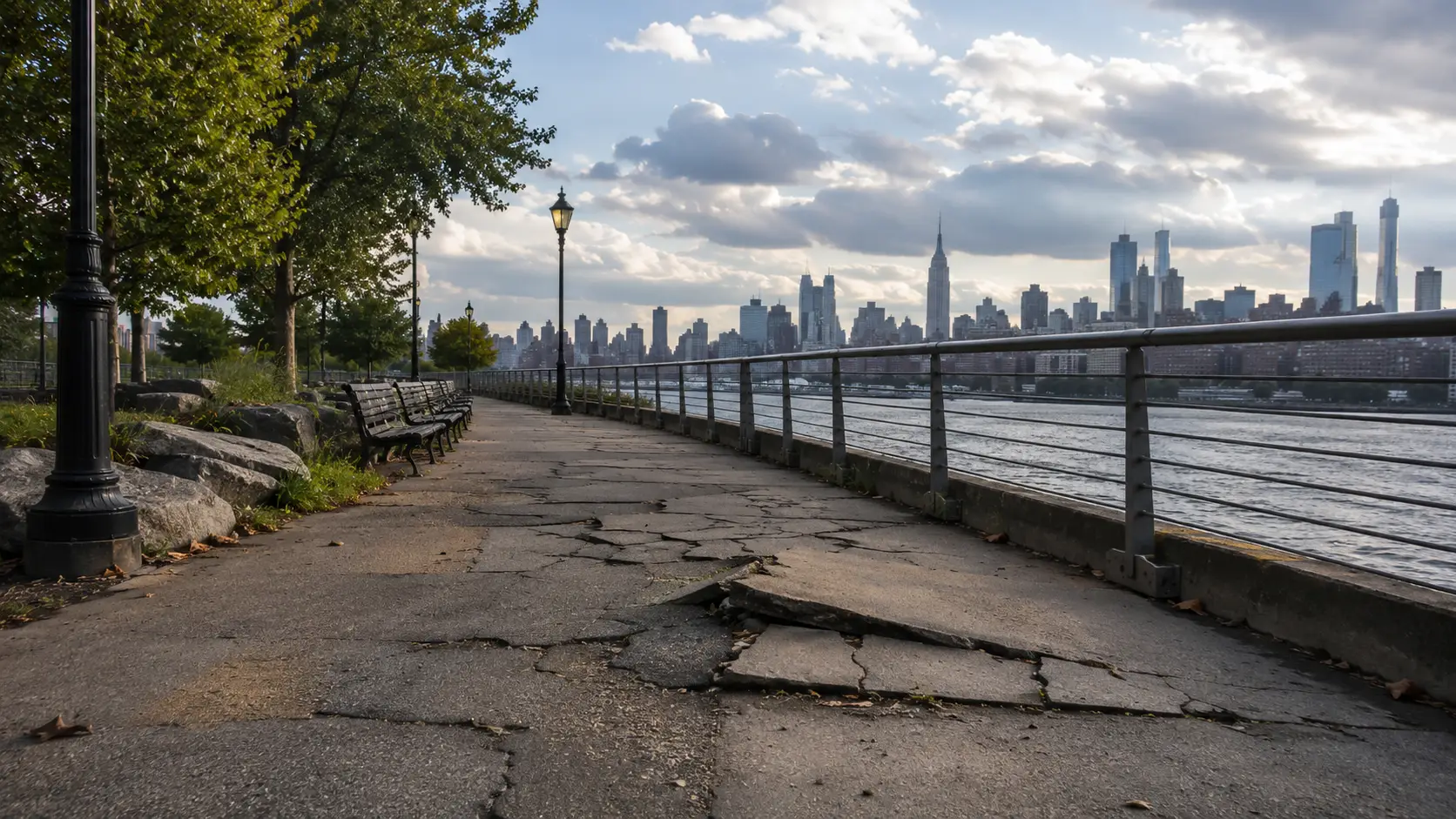
A trip and fall at WNYC Transmitter Park raises important questions about who controlled the area, how long the defect existed, whether the City or another entity had notice, and whether evidence can still be preserved. Public waterfront spaces in Brooklyn often involve different procedures than private stores or apartment buildings.
If the injury happened in a public place or may involve a city agency, deadlines can be shorter than expected. Contact Law Office of Irene H. Gabo, P.C. at 800-560-0214 for guidance.
How Trip and Fall Accidents Happen at WNYC Transmitter Park Waterfront
WNYC Transmitter Park includes walking paths, waterfront viewing areas, seating zones, entrances, and pier-like surfaces where people may move between different materials and elevations. In a park setting, small defects can matter because visitors are often watching the water, looking for children, or moving around other pedestrians.
Common trip hazards at a Greenpoint waterfront park may include raised pavement, cracked concrete, uneven boards, loose metal edges, poorly marked transitions, exposed utility covers, and tree-root upheaval near paths. Rain, snow, river moisture, and freeze-thaw cycles can also worsen surface defects along waterfront walkways.
These facts affect more than safety. They help show whether the condition was foreseeable and whether responsible parties had a reasonable chance to fix it. For broader guidance on similar Brooklyn cases, see our page on Brooklyn trip and fall accident claims.
Common Injuries After a Greenpoint Waterfront Fall
Trip and fall injuries often involve wrists, shoulders, knees, ankles, hips, neck, back, and head trauma. A person who trips on a raised surface may fall forward without time to brace safely. On hard waterfront pavement or pier-style surfaces, even a short fall can cause lasting harm.
Fractures, torn ligaments, herniated discs, concussions, and knee injuries are common in these cases. Diagnostic testing matters because X-rays, MRIs, CT scans, and orthopedic evaluations help connect the fall to the injury. Delayed treatment can give defendants an opening to argue that the injury came from something else.
Functional limits also matter. A broken wrist may affect work, childcare, driving, or daily tasks. A knee injury may make stairs, subway platforms, and Greenpoint sidewalks difficult. Lawyers evaluate not only the diagnosis, but how the injury changed the person’s normal life.
Who May Be Legally Responsible for a Trip and Fall at WNYC Transmitter Park?
New York premises liability law focuses on control, notice, causation, and damages. The responsible party may be the entity that owned, operated, maintained, inspected, or repaired the area where the fall occurred. At WNYC Transmitter Park, liability may fall on a municipal agency, a maintenance contractor, or another entity responsible for the specific area—such as a walkway, entrance, or railing—where the fall occurred.
For trip and fall claims, the injured person usually must show that a dangerous condition existed and that the responsible party knew or should have known about it. Constructive notice may exist when the defect was visible and present long enough that reasonable inspections should have found it. If workers created the hazard through repair work, poor maintenance, or an unsafe installation, separate notice may not be required.
NYC sidewalk and walkway cases can also involve special rules. NYC Admin Code §7-210 often places responsibility for sidewalks on adjacent property owners, but city-owned park property is different and may involve municipal claim rules. When the defect is on city-owned property, prior written notice may become an issue. These distinctions are why early investigation is important in public-space cases.
Comparative negligence may also be raised. The City or another defendant may argue that the defect was open and obvious, that the person was distracted, or that footwear contributed to the fall. New York follows pure comparative negligence, so shared fault reduces recovery by percentage but does not automatically bar a claim. Our guide to comparative negligence in New York explains how shared fault can affect damages.
What Usually Happens After a Fall at a Public Waterfront Park
Events often move faster than victims expect. In the first few days after a fall at WNYC Transmitter Park, the surface may be cleaned, repaired, covered, salted, or altered. Weather can change the scene, and regular park activity can make it difficult to show exactly where the fall happened.
Reporting the incident matters, but public park reporting is not always simple. A visitor may speak with park staff, call 311, contact NYC Parks, or receive help from EMS or NYPD. Each report can become important later because it helps establish the time, location, and nature of the dangerous condition.
Evidence can disappear quickly. Surveillance footage from nearby public areas, waterfront buildings, or surrounding businesses may be overwritten. Photos taken days later may not show the same lighting, crowding, water conditions, or surface defect. Witnesses may be tourists, dog walkers, parents, or residents who are hard to find once they leave the park.
Early decisions affect leverage. A vague incident report may make it harder to identify the exact defect. A late medical visit may create causation disputes. Repairing a defect before photos are taken can erase your best proof of prior notice. A lawyer looks for records that show the condition existed before the fall, not just after it.
Special New York Rules That May Apply to WNYC Transmitter Park Waterfront Claims
Most New York personal injury cases have a three-year statute of limitations. Public property cases can be much shorter. When a trip and fall claim involves New York City, NYC Parks, or another municipal entity, a Notice of Claim generally must be filed within 90 days.
The lawsuit deadline for many municipal cases is one year and 90 days. This shortened deadline can override the normal three-year rule. Missing the Notice of Claim deadline can severely limit or end the case, even when the injury is serious.
Municipal claims also require careful evidence requests. FOIL requests may be needed for maintenance logs, inspection records, prior complaints, work orders, repair records, and agency incident reports. For a waterfront park in Greenpoint, those records can show whether the City knew about recurring pavement defects, drainage problems, lighting issues, or prior fall reports.
Public entities are not immune from responsibility, but the process is stricter. The legal strategy must identify the exact location, the controlling agency, the defect, and the history of complaints or repairs. For public walkway issues, our New York sidewalk slip and fall resource provides additional background on how public surface cases are evaluated.
What To Do After a Trip and Fall at WNYC Transmitter Park
The most useful steps are practical. Take photos of the defect from several angles before it changes. Include a reference point, such as a shoe, coin, ruler, or nearby fixed object. Also photograph the broader area so the exact Greenpoint waterfront location can be identified later.
Report the fall as soon as possible. If park staff are present, ask how to create an incident report. If emergency services respond, save the EMS and hospital paperwork. If the condition involves a public walkway or park feature, a 311 complaint may also help document the issue.
Get witness names and phone numbers before they leave. A neutral witness can confirm that the defect was visible, that lighting was poor, or that others had trouble walking in the same area. Nearby residents or regular park users may also know whether the condition existed for weeks or months.
Seek medical care promptly and explain how the fall happened. Medical records should identify the fall location and the body parts injured. For a step-by-step overview, review our guide on what to do after a trip and fall accident.
A strong claim often depends on early evidence preservation. Call Law Office of Irene H. Gabo, P.C. at 800-560-0214 to discuss what records, photos, or deadlines may matter in your case.
How Our Lawyers at Law Office of Irene H. Gabo, P.C. Can Help You
Trip and fall cases at public waterfront parks require more than a general injury claim. Our lawyers investigate who controlled the exact area, whether the defect was part of a park path, pier-like surface, adjacent sidewalk, entrance, or maintenance zone, and whether municipal rules apply.
We work to preserve evidence before it disappears. That may include photos, witness statements, 311 records, FOIL requests, incident reports, inspection documents, repair histories, and records of prior complaints. In Greenpoint, where waterfront surfaces are exposed to weather and heavy use, maintenance history can be especially important.
We also prepare the case for the defenses that commonly arise. Property owners and public entities may argue that the condition was trivial, open and obvious, recently created, or not the cause of the injury. We evaluate measurements, lighting, surface contrast, weather, sightlines, and medical documentation to respond to those arguments.
When settlement discussions occur, careful preparation matters. Insurance carriers and municipal defendants look closely at proof of notice and injury causation. A well-documented file puts the injured person in a stronger position during negotiation or litigation.
Compensation You May Recover After a Greenpoint Trip and Fall
The damages available depend on the nature of your injuries and how they have affected your life. Common categories include medical expenses, lost wages, pain and suffering, and reduced earning capacity. Future damages may also apply when the injury causes ongoing limitations.
Economic damages can include emergency care, surgery, physical therapy, medication, diagnostic testing, transportation to appointments, and lost income. If the injury affects your ability to work in the future, reduced earning capacity may become part of the claim.
Non-economic damages address the human impact of the fall. This may include pain, loss of mobility, sleep disruption, anxiety about walking outdoors, and reduced enjoyment of normal activities. These losses are often supported by medical records, testimony, and clear documentation of daily limitations.
For additional background on fall-related harm, see our page on common injuries in Brooklyn trip and fall accidents.
Limits and Case Viability in Public Park Fall Claims
Limits and Case Viability in Public Park Fall Claims
Not every fall at WNYC Transmitter Park creates a viable claim. A case usually needs a meaningful defect, reliable proof, timely action, and a clear connection between the hazard and the injury. Small or hard-to-see defects can be disputed, especially if there are no photos or witnesses.
Timing is often a deciding factor. If the City or another public entity is involved, the 90-day Notice of Claim requirement must be addressed quickly. If the defect was repaired before it was documented, proving notice becomes harder.
Insurance coverage, municipal defenses, prior written notice rules, and comparative negligence can all affect case value. A careful legal review helps separate claims with strong evidence from those limited by proof, timing, or causation problems.
Frequently Asked Questions About WNYC Transmitter Park Trip and Fall Claims
Does a Greenpoint Waterfront Park Fall Automatically Mean the City Is Responsible?
No. Responsibility depends on who controlled the exact area and whether that party knew or should have known about the defect. In a public park setting, the investigation may involve NYC Parks, contractors, maintenance records, and prior complaints.
How Quickly Do I Need To Act After Falling at WNYC Transmitter Park?
If a municipal entity is involved, a Notice of Claim generally must be filed within 90 days. The lawsuit deadline may be one year and 90 days. Acting early also helps preserve photos, witness details, and agency records.
What Kind of Proof Helps Show the Walkway Was Unsafe?
Useful proof includes photos with measurements, witness statements, incident reports, 311 complaints, maintenance records, and prior repair documents. For a waterfront park, weather, lighting, surface material, and water exposure may also matter.
Can I Still Recover Compensation if I Was Looking at the Water When I Tripped?
Possibly. New York uses pure comparative negligence, so partial fault does not automatically prevent recovery. Your damages may be reduced if a court finds you shared responsibility for the fall.
What if the Defect Was Fixed Before I Could Take Photos?
A repair can make the case harder, but it does not always end the claim. Lawyers may look for 311 complaints, work orders, repair records, witness accounts, and photos from nearby cameras or visitors. The sooner the investigation begins, the better the chance of finding supporting proof.
What Damages Are Usually Available in a Trip and Fall Case?
Damages may include medical bills, lost income, future care needs, pain and suffering, and reduced quality of life. The value depends on the injury, recovery timeline, proof of liability, and long-term impact.
To discuss your case, call Law Office of Irene H. Gabo, P.C. at 800-560-0214.