







Greenpoint Waterfront Trip and Fall Lawyer
Across Brooklyn, waterfront spaces like the Greenpoint Waterfront draw residents, commuters, runners, cyclists, visitors, and families. When a raised pavement edge, broken path, uneven curb, loose utility cover, poor lighting, or construction-related surface defect causes a fall, the injury can raise difficult questions about ownership, maintenance, and timing.
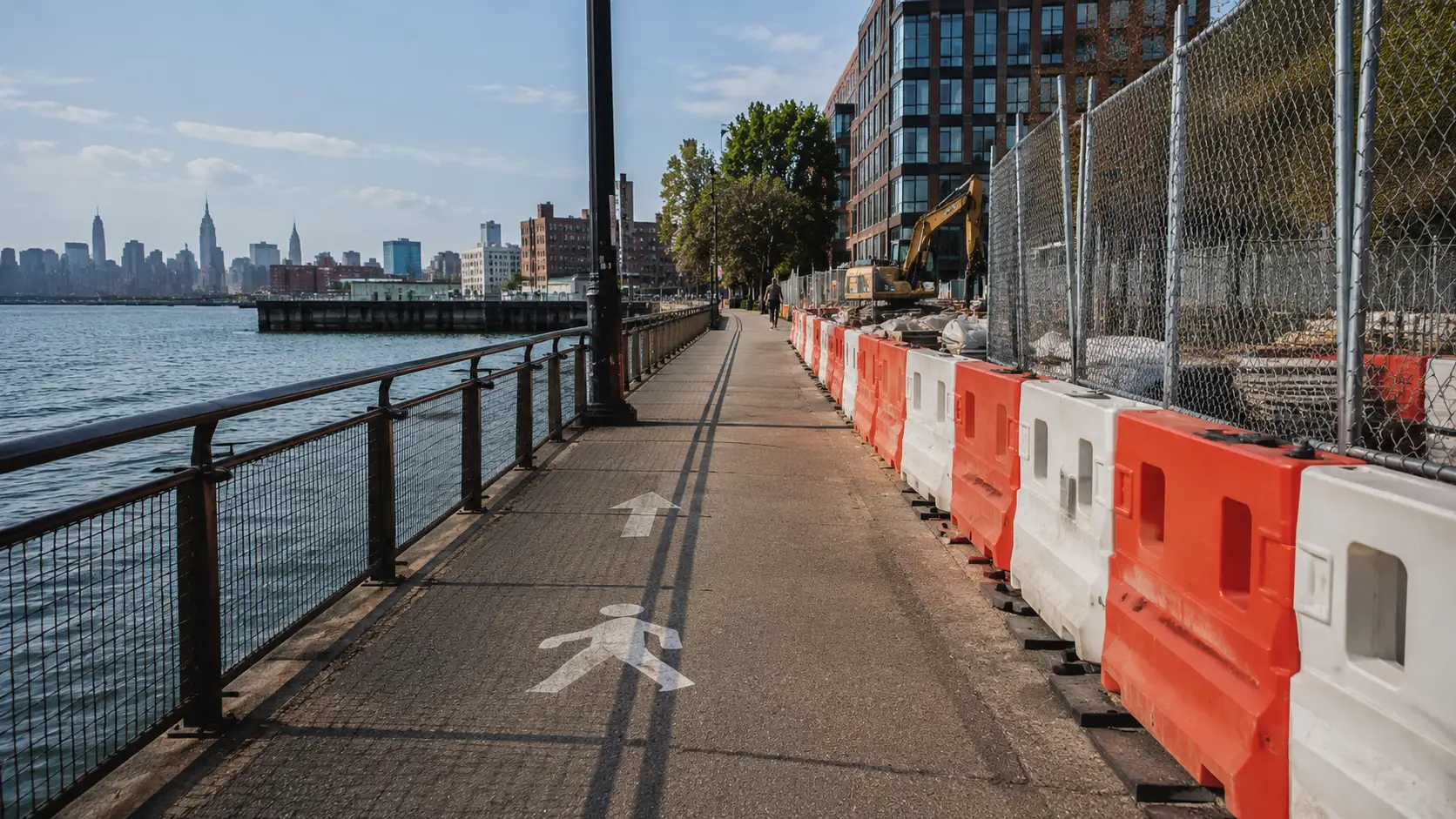
A trip and fall at the Greenpoint Waterfront is not always a simple property claim. Some areas may be city-controlled, some may be maintained by adjacent property owners, and some may involve contractors or private entities responsible for public access paths. Important evidence can change or disappear quickly. If you were hurt at Greenpoint Waterfront, call Law Office of Irene H. Gabo, P.C. at 800-560-0214 to ask what steps may matter next.
This page explains how New York trip and fall law applies to waterfront public spaces in Greenpoint, what evidence matters, and how early decisions can affect the strength of a claim. For broader information about similar claims, you can also review our page for Brooklyn trip and fall accident lawyers.
How Trip and Fall Accidents Happen at Greenpoint Waterfront
The Greenpoint Waterfront includes public walking areas, paths, entrances, curb transitions, nearby sidewalks, and waterfront access points. These areas often see heavy foot traffic during evenings, weekends, and warm-weather months. A defect that seems minor in a quiet area can become much more dangerous when crowds, shadows, bikes, strollers, and uneven surfaces all come together.
Trip and fall accidents often involve a foot catching on a raised or broken surface. Common hazards near waterfront public spaces include cracked pavement, uneven pavers, lifted concrete, raised metal plates, damaged curbs, loose mats, exposed utility covers, temporary construction plates, and tree-root upheaval near sidewalks. Poor lighting can make these conditions harder to see, especially near paths that transition from open waterfront areas to streets or building entrances.
Weather also affects waterfront safety. Rain can hide small elevation changes. Winter freeze-thaw cycles can widen cracks and lift pavement. Salt, slush, and refreezing water can make nearby walking areas unstable. Even when a case is technically a trip and fall rather than a slip and fall, weather records may still matter because they can explain how a defect developed or why visibility was reduced.
Construction and development around Greenpoint can also affect surface conditions. Temporary fencing, utility work, roadway plates, uneven pedestrian detours, and poorly marked transitions can create tripping hazards. When contractors perform work near a public path or sidewalk, a lawyer may need to determine whether the contractor created the defect or failed to restore the walking surface properly.
Common Injuries After a Fall Near the Greenpoint Waterfront
Falls often cause injuries to wrists, elbows, shoulders, knees, ankles, hips, backs, and heads. A person may reach out to break the fall and suffer a fracture or ligament tear. Others land on a knee, hip, or shoulder and later learn that imaging shows a more serious injury than expected.
Trip and fall injuries are legally important because the medical record connects the fall to the harm. Emergency room notes, orthopedic visits, diagnostic imaging, physical therapy records, and surgical recommendations can all show how the injury affected daily life. Gaps in treatment can create problems because insurance companies often argue that the injury was minor or unrelated.
Functional limitations also matter. A fracture, torn ligament, herniated disc, concussion, or chronic pain condition may affect walking, working, climbing stairs, caring for children, or enjoying normal activities around Greenpoint and Brooklyn. The more clearly those limits are documented, the easier it becomes to explain the real impact of the fall.
Some injuries do not feel severe right away. Adrenaline, embarrassment, and confusion can mask pain at the scene. That is why prompt medical care is important after a fall on a hard waterfront path or sidewalk. It protects your health and creates a timeline that connects the incident to the injury.
Who May Be Legally Responsible for a Greenpoint Waterfront Trip and Fall
Trip and fall liability in New York usually depends on control, notice, and causation. The responsible party may be the entity that owned the walking surface, maintained it, created the dangerous condition, or failed to correct it after having enough time to act. Near the Greenpoint Waterfront, that question can require more investigation than it first appears.
New York premises liability law requires showing that a hazardous condition existed and that the responsible party knew or should have known about it. Actual notice means the owner or manager knew about the specific defect. Constructive notice means the defect was visible and present long enough that a reasonable inspection should have found it. If the owner, contractor, or employee created the condition, separate notice may not be required.
Sidewalk and pathway cases in New York City can involve NYC Administrative Code §7-210. In many sidewalk cases, the adjacent property owner is responsible for maintaining the sidewalk in a reasonably safe condition. There is an important exception for one-, two-, or three-family owner-occupied residential properties. City-owned property may involve different rules, including prior written notice issues and short municipal deadlines.
At the Greenpoint Waterfront, responsibility may involve New York City, an adjacent building owner, a park-related agency, a property manager, a maintenance company, a construction contractor, or a utility contractor. The legal strategy depends on identifying the correct party early. If the wrong party is pursued while a deadline passes against the correct one, the claim can be harmed before the facts are fully developed.
Defendants also often argue comparative negligence. They may claim the defect was open and obvious, that the injured person was distracted, or that footwear contributed to the fall. New York follows pure comparative negligence, which means a person can still recover even if partly at fault. Any recovery is reduced by the percentage of responsibility assigned to the injured person. Our guide to comparative negligence in New York explains how shared fault can affect damages.
What Happens After a Trip and Fall at Greenpoint Waterfront
The first few days after a fall often shape the case. The defect may be repaired. Temporary cones or barriers may be removed. Construction plates may be moved. Lighting conditions may change. Rain, snow, or cleaning can alter the surface before anyone takes measurements.
Surveillance footage is especially time-sensitive. Nearby buildings, businesses, security cameras, city cameras, or construction-site cameras may capture the fall or the condition of the walkway. That footage is often overwritten within days or weeks. In NYC matters involving agencies or public authorities, footage can be difficult to obtain without prompt written requests, preservation letters, or FOIL requests.
Incident reports also matter. If the fall is reported to security, a property manager, park personnel, or a nearby business, the report may help prove when and where the incident happened. It may also identify witnesses or employees who saw the defect before the fall. A report is not required to have a claim, but not making one can make the facts easier to dispute later.
Local procedure can affect strategy. If the Greenpoint Waterfront location is city-owned or controlled by a municipal agency, a Notice of Claim may have to be filed within 90 days. If the surface is maintained by a private property owner or contractor, the standard three-year personal injury statute may apply. Sorting out that distinction quickly is one of the most important steps in a waterfront trip and fall case.
Common mistakes include leaving without photographing the defect, failing to measure the height difference, waiting too long to seek medical treatment, giving broad statements to insurers, or assuming the City is automatically responsible. In waterfront areas where public and private responsibilities overlap, assumptions can be dangerous.
Special New York Rules That May Apply
Most New York personal injury cases must be filed within three years from the date of injury. That general rule applies to many private property trip and fall claims. However, cases involving New York City, NYC Parks, DOT, or another municipal entity follow shorter and stricter rules.
Claims against New York City or certain public entities require a Notice of Claim within 90 days. The lawsuit deadline is generally one year and 90 days. These deadlines can apply when the fall occurred on city-owned or city-controlled property, including certain public paths, park areas, roadways, sidewalks, or infrastructure near the Greenpoint Waterfront.
City-owned sidewalk or public property defects may also raise prior written notice issues. In practical terms, the injured person may need proof that the City had written notice of the defect before the accident, unless an exception applies. Attorneys often review DOT records, 311 complaints, permits, repair histories, prior complaints, and work orders to determine whether notice can be proven.
For non-municipal defendants, the key question is usually whether the property owner or maintenance company had actual or constructive notice. Inspection logs, repair records, cleaning schedules, contractor records, and prior complaints can show whether the hazard should have been addressed earlier. For waterfront paths and public access areas, the maintenance agreement can be just as important as the accident photographs.
New York’s pure comparative negligence rule also applies. A person who was looking at a phone, walking at night, or distracted by crowds is not automatically barred from recovery. The issue is how responsibility should be divided after reviewing the defect, lighting, visibility, warnings, and maintenance history.
What To Do After a Trip and Fall at Greenpoint Waterfront
Start by getting medical attention. Even if you think the injury is minor, a doctor can evaluate fractures, head trauma, soft tissue damage, or back injuries. Medical records from the first visit help create a reliable timeline.
Next, document the scene. Take photos from close up and from a distance. Use a common object, ruler, coin, or phone for scale if there is a raised edge or height difference. Photograph lighting, nearby landmarks, signs, construction equipment, cones, utility covers, and the direction you were walking.
Report the incident to the appropriate person or entity if possible. That may be a property manager, security office, nearby business, construction supervisor, or city agency. Ask for a copy of any report or at least write down the name and title of the person who received it.
Collect witness information before people leave the area. Waterfront spaces can be busy, and witnesses may be tourists, runners, or residents who are difficult to find later. A short name and phone number can make a major difference if the condition is repaired before the case is investigated.
Preserve your footwear and clothing. Defense attorneys may later argue that shoes contributed to the fall. Keeping them in the condition they were in on the accident date helps answer that argument. You can also read our practical guide on what to do after a trip and fall accident for more steps.
A strong claim often depends on early evidence preservation. Call Law Office of Irene H. Gabo, P.C. at 800-560-0214 to discuss what records, photos, or deadlines may matter in your case.
How Our Lawyers at Law Office of Irene H. Gabo, P.C. Can Help You
Our lawyers begin by identifying who controlled the exact location of the fall. At the Greenpoint Waterfront, that may require reviewing property boundaries, public access arrangements, agency control, construction permits, and maintenance responsibilities. The goal is to avoid delay and focus the claim on the correct parties.
We also work to preserve evidence before it disappears. That may include sending preservation letters, requesting surveillance footage, obtaining incident reports, investigating nearby cameras, reviewing weather data, and checking whether prior complaints were made about the same defect. When a municipal entity may be involved, we evaluate Notice of Claim requirements and FOIL options quickly.
Trip and fall cases often turn on small details. A half-inch height differential, a missing warning sign, a prior repair request, or a history of complaints can change how liability is evaluated. We look at the condition itself, how long it likely existed, who should have inspected it, and whether the injured person had a fair chance to see and avoid it.
Litigation preparation begins early. Insurance companies and municipal defendants often dispute notice, visibility, and causation. Building the file with medical records, measurements, photographs, witness statements, and maintenance evidence gives the case a stronger foundation if negotiation does not resolve it.
For additional background on premises-related claims, visit our page for Brooklyn slip and fall premises liability lawyers.
Compensation You May Recover
The damages available depend on the nature of your injuries and how they have affected your life. In a Greenpoint Waterfront trip and fall case, compensation may include medical expenses, lost income, pain and suffering, future treatment, and reduced earning capacity.
Economic damages focus on measurable financial losses. These may include ambulance bills, emergency room care, orthopedic treatment, surgery, physical therapy, medication, assistive devices, and lost wages. If the injury affects your ability to work in the future, reduced earning capacity may also be part of the claim.
Non-economic damages address the human impact of the injury. This can include pain, physical limitations, loss of enjoyment of daily activities, difficulty walking around Greenpoint, and the stress of dealing with a long recovery. These losses are harder to measure, which makes consistent medical documentation and clear testimony important.
Future damages may be significant when the injury causes lasting limitations. A person with chronic back pain, post-surgical restrictions, balance problems, or permanent joint damage may need ongoing care. Lawyers often review medical opinions, work history, and daily limitations to explain why future losses should be considered.
Limits and Case Viability
Not every fall creates a viable legal claim. A case usually requires proof of a dangerous condition, proof that the correct defendant had notice or created the hazard, and medical evidence connecting the fall to the injury. When those pieces do not align, the claim may be limited.
Some Greenpoint Waterfront cases are difficult because ownership is unclear. Others are limited because the defect was repaired before photographs were taken or because no one can identify exactly where the fall occurred. These problems do not always end a case, but they make early investigation more important.
Insurance coverage can also affect practical recovery. A private contractor, property owner, or maintenance company may have coverage. Municipal defendants follow different procedures and defenses. Understanding these limits helps set realistic expectations while still protecting the claim.
Contact a Greenpoint Waterfront Trip and Fall Lawyer
A trip and fall near the Greenpoint Waterfront can involve property records, city procedures, contractor responsibility, and disputed evidence. The sooner those issues are reviewed, the easier it is to protect photos, footage, reports, and deadlines.
To discuss your case, call Law Office of Irene H. Gabo, P.C. at 800-560-0214.
Frequently Asked Questions
Who Is Responsible for a Raised or Broken Walking Surface at the Greenpoint Waterfront?
Responsibility depends on who owned, controlled, maintained, or created the defect. In Greenpoint waterfront areas, that may be a city agency, adjacent property owner, contractor, property manager, or private entity responsible for public access maintenance.
Does a Greenpoint Waterfront Trip and Fall Require a Notice of Claim?
It may. If New York City or another public entity controlled the area where you fell, a Notice of Claim may be required within 90 days. If the area was privately maintained, different deadlines may apply.
What Proof Helps Show That the Defect Existed Long Enough To Be Fixed?
Photos, measurements, prior complaints, repair records, inspection logs, 311 records, permits, and witness statements can help. The goal is to show the condition was visible and present long enough that a responsible party should have addressed it.
What If I Was Looking Away or Distracted When I Fell?
New York uses pure comparative negligence. That means partial fault does not automatically bar recovery. Your damages may be reduced if a jury finds you shared responsibility.
How Soon Should I Photograph the Location?
As soon as safely possible. Waterfront paths, sidewalks, and construction-related defects can be repaired, covered, or changed quickly. Photos with measurements are often stronger than photos taken from only one angle.
Can I Bring a Claim If the Fall Happened Near Construction or Utility Work?
Possibly. Contractors may be responsible if their work created a dangerous walking surface or unsafe pedestrian route. Permits, work records, and site photos can help identify who was working there.
What Compensation May Be Available After a Trip and Fall?
Compensation may include medical bills, lost wages, pain and suffering, rehabilitation costs, and future losses. The value depends on liability proof, injury severity, medical documentation, and long-term effects.