







Trip and Fall Help for the Empire Fulton Ferry Area in DUMBO
Across Brooklyn, waterfront locations like the Empire Fulton Ferry Area see constant activity. Visitors come for Brooklyn Bridge views, Jane’s Carousel, park paths, nearby restaurants, and access to the DUMBO waterfront. When a walkway defect, uneven pavement, raised edge, poor lighting, or construction-related hazard is not addressed, a routine visit can turn into a painful fall.
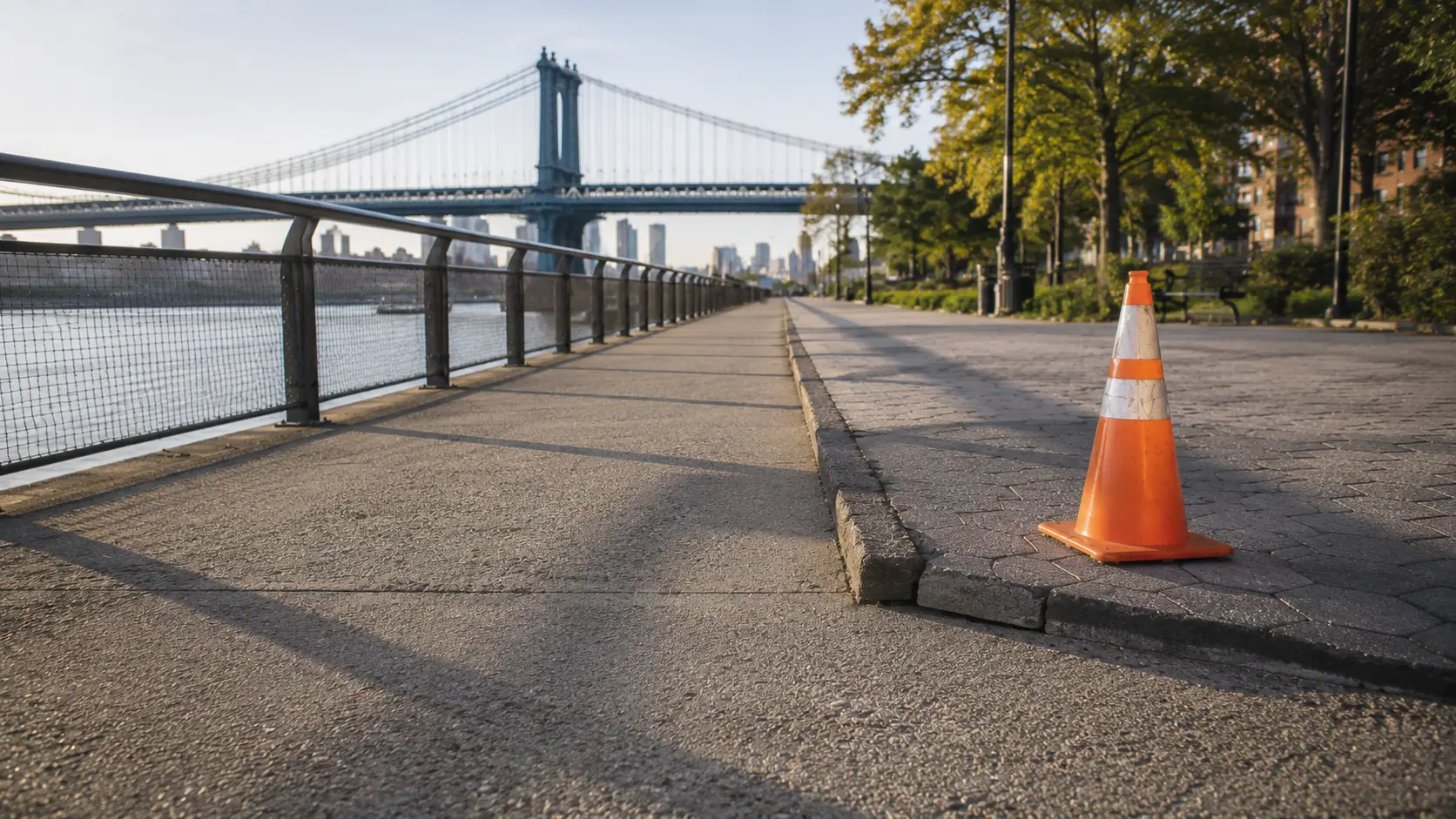
A trip and fall at the Empire Fulton Ferry Area raises several important questions. Who controlled the specific surface? Was the defect visible long enough to be fixed? Did a public agency, park operator, contractor, or nearby property owner have responsibility for the condition? These questions matter because claims involving public park property can follow stricter rules than claims against private businesses.
For questions about evidence, deadlines, or who may be responsible, call Law Office of Irene H. Gabo, P.C. at 800-560-0214.
How Trip and Fall Accidents Happen at the Empire Fulton Ferry Area
The Empire Fulton Ferry Area is not a boardwalk, but it functions like a busy waterfront gathering place. Heavy foot traffic, stroller traffic, cyclists crossing nearby routes, tour groups, delivery activity, and weather exposure can all affect walking surfaces. A small raised edge may become more dangerous when crowds limit a visitor’s view of the ground.
Common tripping hazards in this part of DUMBO may include cracked pavement, uneven transitions between surfaces, raised utility covers, loose pavers, poorly marked steps, temporary cords, construction plates, and tree-root movement near paths. Waterfront moisture can also worsen surface wear, especially after rain, snow, or freeze-thaw cycles. When the same condition remains for days or weeks, the issue becomes less about bad luck and more about inspection and repair practices.
Tourist-heavy areas create a stronger argument that hazards should be anticipated. A property owner or public entity that knows thousands of pedestrians use the same paths should have reasonable systems for checking dangerous conditions. You can learn more about broader Brooklyn fall claims on our Brooklyn trip and fall accident lawyers page.
Common Injuries After a Fall on the DUMBO Waterfront
Trip and fall injuries often begin with a sudden forward motion. People commonly try to break the fall with their hands, knees, or shoulders. That can cause wrist fractures, elbow injuries, torn ligaments, knee damage, shoulder injuries, facial injuries, and back or neck pain.
Older adults and visitors carrying bags, pushing strollers, or walking in crowded conditions may be at higher risk of serious harm. A fall onto stone, concrete, brick, or hard park surfaces can also cause head injuries. The legal importance of the injury is not only the diagnosis, but how it affects daily life.
Medical records help show timing and severity. Emergency treatment, imaging, orthopedic follow-up, physical therapy, and work restrictions can all support the connection between the fall and the injury. In a DUMBO waterfront case, lawyers also look at whether the medical timeline matches the reported location and the type of surface defect.
Who May Be Legally Responsible for an Empire Fulton Ferry Trip and Fall
New York premises liability law requires more than proof that a person fell. A successful claim usually requires showing that a dangerous condition existed, that the responsible party created it or had notice of it, and that the condition caused the injury. In trip and fall cases, the details of the surface matter.
Responsibility may fall on different parties depending on the exact location. The Empire Fulton Ferry Area sits within Brooklyn Bridge Park, so a public park entity or government-related operator may control some areas. Nearby commercial tenants, maintenance contractors, construction contractors, event vendors, or adjacent property owners may also share responsibility if their work or property created the hazard.
Notice is often the central dispute. Actual notice means the responsible party knew about the defect. Constructive notice means the condition was visible and existed long enough that reasonable inspections should have found it. If a contractor, maintenance crew, or property employee created the tripping hazard, separate proof of notice may not be required.
NYC sidewalk rules may also matter near park entrances or adjoining streets. NYC Admin Code §7-210 generally places sidewalk maintenance responsibility on adjacent property owners, with an exception for certain one-, two-, or three-family owner-occupied homes. For city-owned or public park property, prior written notice rules may become important. Our NY sidewalk slip and fall lawyers resource explains how public walkway cases can differ from private property claims.
What Usually Happens After a Waterfront Trip and Fall
Events move quickly after a fall at a busy location like the Empire Fulton Ferry Area. Park staff may clean or repair the area. Rain can wash away surface clues. Temporary barriers may be moved. A contractor may remove equipment before anyone documents how the area looked at the time of the fall.
Surveillance footage is another urgent issue. Cameras from park areas, nearby buildings, restaurants, shops, and the surrounding DUMBO streets may capture the fall or the condition before it happened. In New York City, footage can be overwritten in 30 days or less. Waiting too long can leave the case dependent only on memory.
Reports also matter. A park incident report, 911 call, EMS record, witness statement, or photo taken shortly after the fall can help confirm the location and timing. These records are especially useful when a defendant later argues the defect was trivial, open and obvious, newly created, or not present at all.
Early decisions can affect leverage. Giving an unclear statement, failing to identify the exact spot, or repairing footwear before photos are taken can create avoidable problems. A careful investigation focuses on the height difference, lighting, weather, crowd conditions, prior complaints, repair history, and who controlled the area.
Special New York Rules That May Apply in DUMBO Park Claims
Most New York personal injury cases have a three-year statute of limitations. That general rule can change when a public entity controls the accident location. Because the Empire Fulton Ferry Area is part of Brooklyn Bridge Park, a trip and fall claim may require public-entity analysis from the beginning.
Claims against New York City, NYC agencies, public authorities, or government-controlled property often require a Notice of Claim within 90 days. The lawsuit deadline may be only one year and 90 days. These deadlines are much shorter than the standard three-year deadline, and missing them can end an otherwise valid case.
Public property claims may also require FOIL requests for maintenance logs, inspection records, work permits, complaints, prior incident reports, and video. In a park setting, the legal strategy often depends on identifying the exact controlling entity. The responsible party may not be obvious from the appearance of the walkway.
New York’s pure comparative negligence rule also applies. A defendant may argue the visitor should have watched the ground, avoided the area, or noticed the height difference. Even if a person is partly at fault, recovery is not automatically barred. Damages are reduced by the person’s percentage of fault. For a fuller explanation, see our guide to comparative negligence in New York.
What To Do After a Trip and Fall at the Empire Fulton Ferry Area
The first step is to protect your health. Seek medical treatment and explain how the fall happened. If pain worsens later, follow up promptly. Delayed care gives insurance companies room to argue that the injury came from something else.
Next, document the exact location. Photos should show the defect close up and from a distance, with landmarks such as paths, fences, entrances, benches, or nearby buildings. A measurement reference is helpful because trip and fall cases often turn on the size and visibility of the defect. NYC guidance often treats surface height differences over one-half inch as important in sidewalk defect analysis.
Report the fall to park staff, security, a nearby business, or the appropriate agency if possible. Get witness names and phone numbers before people leave the waterfront. If a tourist saw the fall, that person may be difficult to find later unless contact information is preserved immediately.
Do not rely only on the property owner to preserve evidence. Ask for the incident report number. Save your shoes. Keep photos, medical papers, receipts, and any communications. Our guide on what to do after a trip and fall accident explains practical steps that can protect your claim.
How Our Lawyers at Law Office of Irene H. Gabo, P.C. Can Help You
A trip and fall case near the DUMBO waterfront requires more than sending a claim letter. Our lawyers work to identify who controlled the walkway, whether public-entity deadlines apply, and what evidence must be preserved quickly. That may include notices, FOIL requests, preservation letters, and investigation of nearby cameras.
We also examine whether the defect was recurring or known. Prior complaints, maintenance records, inspection schedules, repair requests, and earlier incidents can show that the dangerous condition should have been addressed. In a tourist-heavy park area, the volume of visitors can help prove that regular inspections were necessary.
When defendants dispute fault, we review the scene carefully. Lighting, crowd movement, weather, surface color, shadows, warning signs, and walking direction can all affect how visible the defect was. We also prepare for common defenses, including claims that the hazard was open and obvious or too small to be actionable.
A strong claim often depends on early evidence preservation. Call Law Office of Irene H. Gabo, P.C. at 800-560-0214 to discuss what records, photos, or deadlines may matter in your case.
Compensation You May Recover After a DUMBO Trip and Fall
The damages available depend on the nature of your injuries and how they have affected your life. Medical expenses, lost income, and pain and suffering are common categories. Future care may also be recoverable when an injury causes ongoing limitations.
Economic damages can include emergency care, doctor visits, imaging, surgery, therapy, medication, transportation to appointments, and lost wages. If the injury affects your ability to work long term, reduced earning capacity may also be part of the claim.
Non-economic damages address the human impact. A wrist fracture may limit basic tasks. A knee injury may make stairs difficult. A back injury may affect sleep, walking, childcare, and daily activities. In these cases, medical documentation and consistent treatment help show how the injury changed your life.
For serious fall injuries, lawyers also consider future damages. Ongoing physical therapy, injections, surgery, mobility limits, or permanent restrictions can change the value of a case. The claim should reflect not only what has already happened, but what the injury is likely to require going forward.
Limits and Case Viability in Empire Fulton Ferry Area Claims
Not every fall leads to a viable legal claim. A case depends on liability, evidence, timing, and damages. If the defect was not visible, had just appeared, or was not under the control of the defendant, the claim may be harder to prove.
Public property cases can be especially sensitive to deadlines. A strong injury claim can still fail if the Notice of Claim deadline is missed. That is why lawyers often investigate municipal control at the start, not after months have passed.
Insurance coverage and responsible-party identification also matter. A nearby business, contractor, park operator, or public entity may each point to another party. Sorting that out early helps prevent the case from being filed against the wrong defendant.
Contact a DUMBO Trip and Fall Lawyer
A fall at the Empire Fulton Ferry Area can involve public park rules, maintenance records, surveillance footage, and disputed responsibility. Speaking with a lawyer early can help preserve evidence and protect strict deadlines.
To discuss your case, call Law Office of Irene H. Gabo, P.C. at 800-560-0214.
Frequently Asked Questions About Empire Fulton Ferry Area Trip and Fall Claims
Does a Fall Inside Brooklyn Bridge Park Have a Shorter Deadline?
It may. If a public entity or government-controlled park operator is responsible, a Notice of Claim may be required within 90 days. The lawsuit deadline may also be shortened to one year and 90 days.
What Proof Is Most Important After a Trip and Fall Near the DUMBO Waterfront?
Photos of the exact defect are often critical. Video, witness information, incident reports, maintenance records, and prior complaints can also show how long the hazard existed. In a busy tourist area, evidence can disappear quickly.
Can I Still Recover If I Was Looking at the View When I Fell?
Possibly. New York follows pure comparative negligence, so partial fault does not automatically bar recovery. The question is how responsibility should be divided between the injured person and the party that allowed the dangerous condition to remain.
Who Is Responsible for a Raised or Uneven Walking Surface at Empire Fulton Ferry?
Responsibility depends on who controlled the specific area where the fall happened. It could involve a public park entity, maintenance contractor, construction contractor, nearby business, or adjacent property owner. Identifying the exact location is often the first step.
What If the Defect Was Small but Still Caused a Serious Injury?
A small defect can still matter depending on its height, shape, lighting, location, and surrounding conditions. Crowds, shadows, surface color, and waterfront wear can make a defect more dangerous. Lawyers often document the defect with measurements and photos from several angles.
Should I Report the Fall If I Did Not Leave by Ambulance?
Yes, reporting the fall can help create a record of when and where it happened. You should still seek medical care if symptoms appear or worsen. Waiting too long can make it harder to connect the injury to the fall.