







Slip and Fall Accidents in Midwood
Places throughout Midwood see steady foot traffic from residents, shoppers, students, delivery workers, and commuters. When wet floors, icy sidewalks, loose mats, or poor lighting are not handled properly, a routine walk can turn into a painful fall.
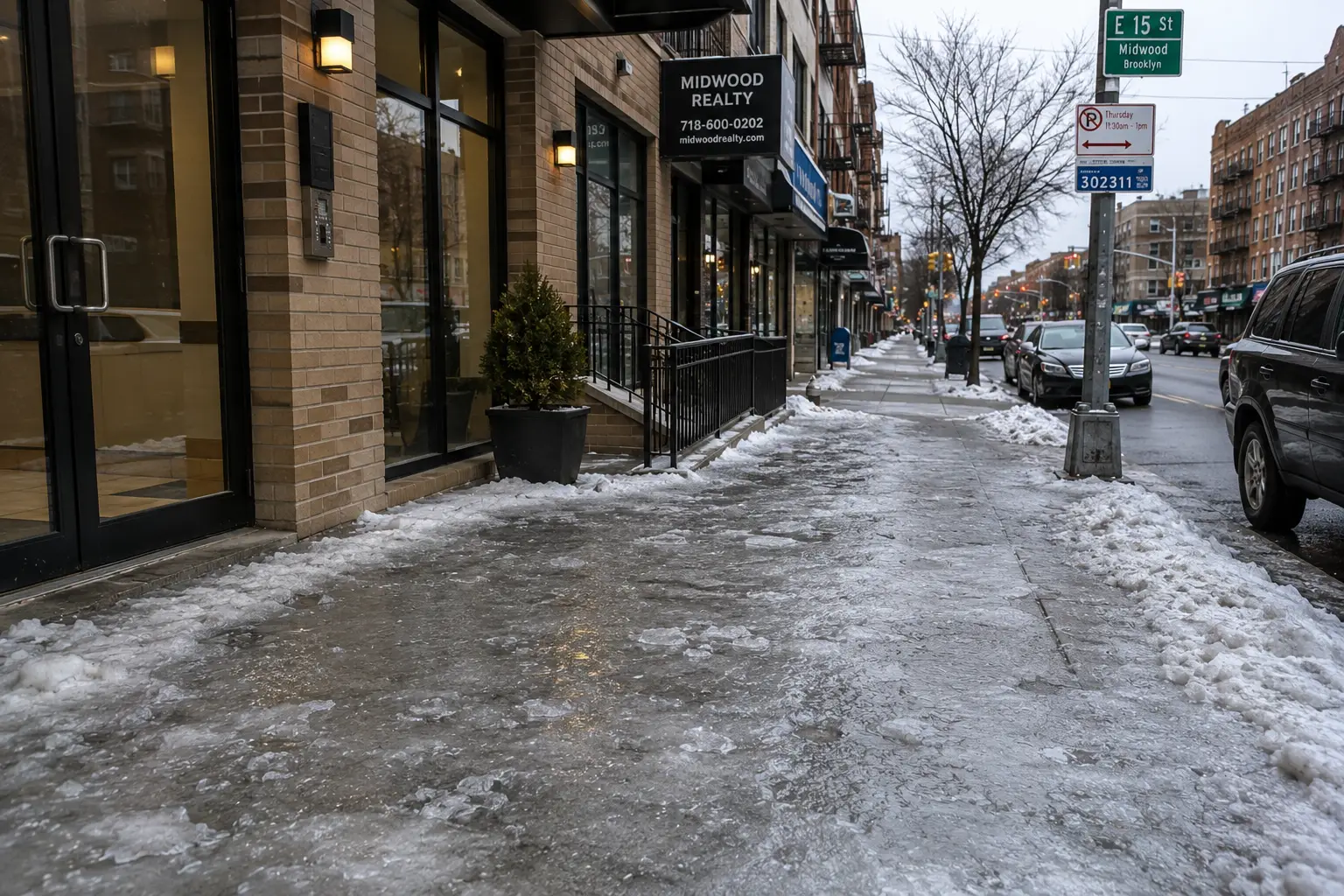
A Midwood slip and fall case is not only about proving that you got hurt. It often depends on showing who controlled the property, how long the dangerous condition existed, and whether the owner had a fair chance to fix it. Important evidence can change or disappear quickly. If you were injured in Midwood, time is critical. Contact the Law Office of Irene H. Gabo, P.C. at 800-560-0214 today for a free consultation to discuss your next steps.
Our firm helps injured people understand how New York premises liability rules apply to falls in neighborhoods like Midwood. This guide explains what property owners must do, what evidence matters, and why timing can affect the strength of your claim.
How Slip and Fall Accidents Happen at Midwood Locations
Slip and fall accidents in Midwood often happen in stores, apartment buildings, medical offices, restaurants, sidewalks, parking areas, and building entrances. Rain, snow, and slush can be tracked inside during cold-weather months. In busy areas, a small amount of water near an entrance can become a serious hazard if staff do not inspect the area or place proper mats.
Common hazards include spilled liquids, freshly mopped floors without warning signs, uneven entrance mats, leaking refrigeration units, icy walkways, and wax buildup on smooth flooring. A customer may slip near a checkout aisle, a tenant may fall in a lobby, or a visitor may lose footing on a poorly maintained stair landing.
Midwood also has many mixed-use buildings, where ground-floor businesses and residential entrances sit close together. This can make responsibility more complicated. A landlord, tenant, property manager, cleaning company, or snow removal contractor may each control part of the area.
For more general information about these cases, you can review our page on Brooklyn slip and fall accident claims.
Common Injuries After a Fall in Midwood
Falls often cause wrist fractures, ankle injuries, hip fractures, back injuries, shoulder damage, knee injuries, and head trauma. Some people feel pain right away. Others notice worsening symptoms after swelling, stiffness, or nerve irritation develops over the next few days.
Medical documentation matters because the defense may argue that the fall did not cause the injury. Emergency room records, imaging studies, orthopedic visits, physical therapy notes, and work restrictions help connect the incident to the harm. In a Midwood case, a clear treatment timeline can make a major difference.
Severity also affects damages. A short-term bruise is different from a torn ligament, herniated disc, fracture, or injury requiring surgery. Lawyers look closely at whether the fall caused permanent limitations, future treatment needs, or a lasting impact on work and daily life.
Who Is Legally Responsible for a Midwood Slip and Fall?
New York law requires property owners and those who control property to keep their premises reasonably safe. In a slip and fall claim, the key question is usually whether the responsible party knew or should have known about the dangerous condition in time to fix it.
There are several ways to prove responsibility. The owner may have created the condition, such as by mopping a floor and leaving it wet without warning signs. The owner may have actual notice because someone reported the hazard. The owner may also have constructive notice if the condition was visible and existed long enough that reasonable inspections should have found it.
Midwood properties can involve several responsible parties. A store may lease space from a building owner. A management company may handle maintenance. A cleaning contractor may inspect floors. A snow removal company may be responsible for clearing ice. Identifying each party matters because insurance coverage and legal duties may differ.
Midwood properties can involve several responsible parties. A store may lease space from a building owner. A management company may handle maintenance. A cleaning contractor may inspect floors. A snow removal company may be responsible for clearing ice. Identifying each party matters because insurance coverage and legal duties may differ.
New York also follows pure comparative negligence. This means you may still recover damages even if the defense claims you were partly at fault. Your recovery is reduced by your percentage of responsibility. Learn more about how comparative negligence works in New York.
What Happens After a Slip and Fall in Midwood
The first days after a fall often shape the entire case. The floor may be cleaned, ice may melt, mats may be moved, and employees may forget details. Security video from stores, apartment buildings, and nearby businesses may be overwritten within days or weeks.
Reporting the fall creates a record. In a store or building, ask for an incident report and write down the name of the person who took the report. If the fall happened on a sidewalk or public area in Midwood, the location should be documented as precisely as possible, including the nearest address, cross street, and photos of the condition.
Insurance companies may contact you early. They may ask for a recorded statement before you know what evidence exists. Statements about where you were looking, what shoes you wore, or whether you saw the condition can later be used to argue comparative fault.
A strong claim often depends on early evidence preservation. Call Law Office of Irene H. Gabo, P.C. at 800-560-0214 to discuss what records, photos, or deadlines may matter in your case.
Special New York Rules That May Apply
Most New York personal injury cases must be filed within three years from the date of the accident. That deadline can be much shorter when a city agency or public authority is involved. Timing should be checked early, especially when a fall happens on a public sidewalk, near a transit area, or on government-controlled property.
Claims against New York City, the MTA, NYCTA, NYCHA, public schools, or other municipal entities generally require a Notice of Claim within 90 days. The lawsuit deadline is usually one year and 90 days. These rules can apply in Midwood if the fall involved city-owned property or a public entity responsible for the area.
Sidewalk cases require careful ownership review. Under NYC Admin Code §7-210, many adjacent property owners are responsible for sidewalk maintenance. One-, two-, or three-family owner-occupied residential properties are treated differently, and the City may remain responsible in some cases. For city-owned defects, prior written notice may become an important issue.
Snow and ice cases have additional rules. NYC property owners generally must clear snow and ice within four hours after snowfall ends, or by 11 a.m. if snow ends overnight. The storm-in-progress doctrine may protect an owner during active precipitation, but it does not excuse failing to address dangerous ice after a reasonable time has passed.
What To Do After a Slip and Fall at a Midwood Property
Start by getting medical care. Even if you think the injury is minor, early treatment creates a record and helps prevent the defense from arguing that your symptoms came from something else. Follow-up care is also important when pain continues.
- Take immediate photos of the hazard, including lighting and floor conditions, before the scene is cleaned or altered.
- Photograph the wider area, including lighting, mats, stairs, signs, or weather conditions.
- Report the fall to the store, landlord, manager, or agency in control.
- Ask for witness names and phone numbers.
- Save the shoes and clothing worn during the fall.
- Write down the exact location, date, time, and what caused you to slip.
If the fall happened outside, weather records, 311 complaints, DOT records, and photos of ice or water patterns may become important. If the fall happened inside a Midwood business, inspection logs, cleaning schedules, and surveillance footage may show whether staff ignored the condition.
You can also review our guide on what to do after a fall accident for practical next steps.
How Our Lawyers at Law Office of Irene H. Gabo, P.C. Can Help You
Our lawyers investigate what happened, who controlled the area, and what evidence may prove notice. In a Midwood slip and fall case, that may include contacting property owners, sending preservation letters, requesting video, reviewing incident reports, and identifying all insurance policies.
We also look at the defense strategy early. Property owners often argue that the hazard was open and obvious, that it appeared moments before the fall, or that the injured person was not paying attention. These arguments can be answered with photos, inspection records, witness statements, and a clear timeline.
When municipal records are involved, FOIL requests may be needed. When private businesses are involved, discovery may be required to obtain cleaning logs, maintenance contracts, employee statements, and prior complaints. Our goal is to build the case before key evidence is lost.
If you were injured at a Midwood property, our lawyers can help identify who controlled the area and what proof may be needed. Contact Law Office of Irene H. Gabo, P.C. at 800-560-0214.
Compensation You May Recover After a Midwood Slip and Fall
The damages available depend on your injuries and how they affect your life. Compensation may include emergency care, hospital bills, orthopedic treatment, diagnostic testing, physical therapy, medication, injections, surgery, and future medical needs.
Lost income may also be recoverable when the injury keeps you from working. If your injuries limit your long-term earning ability, reduced earning capacity can become part of the claim. This is especially important for workers who stand, lift, drive, or walk for their jobs.
Non-economic damages address pain, suffering, emotional distress, and loss of enjoyment of life. A fall that prevents you from walking comfortably, caring for family, using stairs, or participating in normal activities can have a serious impact beyond medical bills.
Limits and Case Viability
Not every fall leads to a viable claim. A case is stronger when the dangerous condition can be identified, tied to the injury, and connected to notice or negligent maintenance. Without photos, witnesses, reports, or video, proving what happened can become harder.
Insurance coverage and responsible-party identification also matter. A fall in a Midwood store may involve different coverage than a fall in an apartment building or on a sidewalk. A lawyer can evaluate whether the facts, evidence, damages, and deadlines support moving forward.
Contact a Midwood Slip and Fall Lawyer
Slip and fall claims require quick attention to evidence, ownership, and deadlines. The sooner the investigation begins, the easier it may be to preserve the facts that show what happened.
To discuss your case, call Law Office of Irene H. Gabo, P.C. at 800-560-0214.
Ready to take action?
If you have been injured in a slip and fall accident in Midwood, do not wait to get the legal help you deserve. Contact the Law Office of Irene H. Gabo, P.C. at 800-560-0214 today to schedule your free, no-obligation consultation.
Frequently Asked Questions About Midwood Slip and Fall Claims
What Makes a Midwood Slip and Fall Case Stronger?
A strong case usually has clear proof of the dangerous condition, timely medical treatment, and evidence showing the owner knew or should have known about the hazard. Photos, video, witness statements, and inspection records can all help. The exact Midwood location also matters because responsibility can change from one property line to the next.
How Soon Should I Report a Fall at a Store or Building?
Report it as soon as you safely can. A prompt report creates a record before the floor is cleaned, mats are moved, or employees forget what they saw. Ask for the name of the manager or employee who took the report.
Can I Bring a Claim if I Slipped on Ice in Midwood?
Possibly. New York rules look at when the snowfall ended, whether the owner had time to clear the area, and whether ice formed from poor drainage or refreezing. The storm-in-progress doctrine may affect the case, so weather records and photos are important.
What if the Property Owner Says I Should Have Seen the Hazard?
The owner may argue that the condition was open and obvious or that you were partly at fault. New York comparative negligence law still allows recovery when you share some responsibility. The amount may be reduced by your percentage of fault.
Do Different Deadlines Apply if the Fall Happened on Public Property?
Yes. If a New York City agency, the MTA, NYCTA, NYCHA, or another public entity is involved, a Notice of Claim may be required within 90 days. The lawsuit deadline may also be shortened to one year and 90 days.
How Is Compensation Calculated After a Slip and Fall?
Compensation depends on medical treatment, lost income, future care needs, pain, limitations, and how the injury affects daily life. More serious injuries usually require deeper review of medical records and long-term prognosis. No lawyer can value the case accurately without reviewing the facts and documentation.