





Premises Liability Help for Injuries at Marine Park
Across Brooklyn, public and private spaces like Marine Park see constant use. When maintenance lapses, visitors and residents face real risks from broken pavement, poor lighting, wet surfaces, unsafe stairs, or other dangerous property conditions.
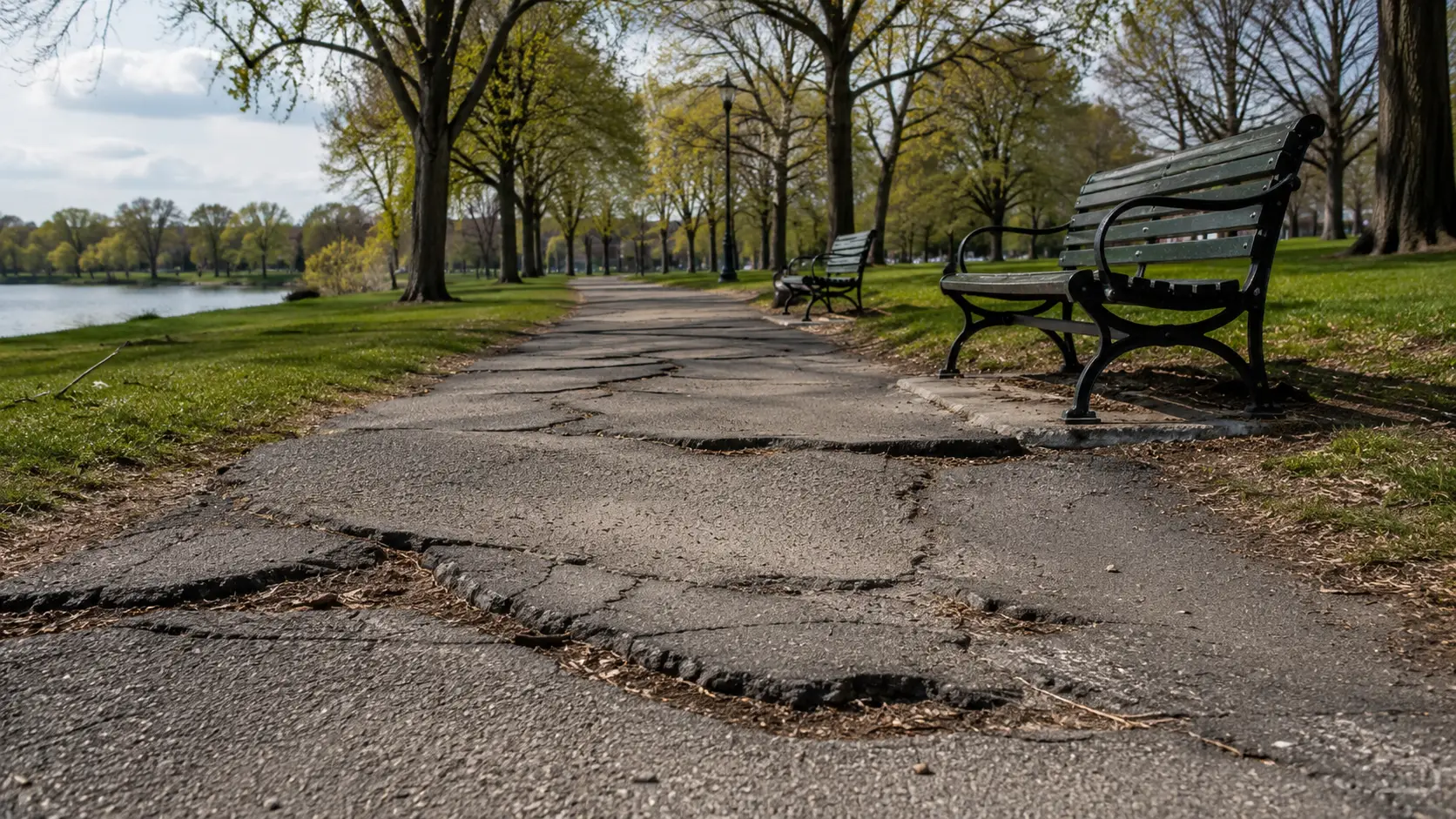
A premises liability claim in Marine Park focuses on whether someone responsible for the property failed to keep the area reasonably safe. The answer often depends on who controlled the location, how long the hazard existed, and whether prior complaints or inspections should have led to repairs.
If the injury happened on public land controlled by New York City or the Parks Department, the deadlines may be much shorter than in a private property case. Contact Law Office of Irene H. Gabo, P.C. at 800-560-0214 for guidance about what steps may matter next.
How Premises Liability Accidents Happen at Marine Park
Marine Park includes walking paths, open outdoor areas, playground access points, sidewalks, parking areas, and nearby commercial corridors. Heavy use can turn a small defect into a serious danger when repairs, cleaning, or warnings are delayed.
Common hazards include cracked pavement, raised walkway edges, standing water after rain, icy patches during freeze-thaw cycles, loose mats near entrances, broken handrails, and poor lighting around paths or parking areas. In a neighborhood park setting, seasonal debris, drainage problems, and uneven transitions between surfaces can also create fall risks.
The legal issue is not simply that a hazard existed. A lawyer looks at whether the property owner, tenant, contractor, or public agency had a fair chance to discover and correct the condition. You can learn more about similar local injury claims on the Marine Park personal injury lawyers page.
Common Injuries in Marine Park Premises Liability Cases
Falls and other property-related incidents often cause wrist fractures, ankle injuries, knee damage, hip injuries, back injuries, shoulder tears, and concussions. Some injuries appear minor at first but become more serious after swelling, imaging, or specialist evaluation.
Medical documentation matters because premises liability cases depend on both responsibility and damages. Emergency room records, orthopedic visits, physical therapy notes, MRI reports, and work restrictions help connect the unsafe condition to the injury.
In Marine Park, outdoor surfaces may change quickly after the incident. A cracked walkway may be repaired, snow may melt, or a wet area may dry before an investigator arrives. That is why photos, measurements, and prompt medical care can affect the strength of the case.
Who Is Legally Responsible for Unsafe Conditions at Marine Park?
New York premises liability law requires property owners and those who control property to maintain reasonably safe conditions. Liability may exist when they created the danger, knew about it, or should have discovered it through reasonable inspection.
For private property in Marine Park, responsible parties may include building owners, management companies, commercial tenants, maintenance contractors, snow removal companies, or security contractors. For public park areas, sidewalks, or city-controlled property, New York City or a municipal agency may be involved.
Notice is often the key dispute. Actual notice means the responsible party knew about the specific hazard. Constructive notice means the condition was visible and present long enough that reasonable inspection should have found it.
Defense lawyers often argue that the condition was open and obvious, too minor to be dangerous, or caused by the injured person not watching where they were going. New York’s pure comparative negligence rule still allows recovery even if the injured person shares fault, but damages are reduced by the assigned percentage. For more on shared fault, see what comparative negligence means in New York.
What Happens After a Premises Liability Accident in Marine Park
The first days after an incident often shape the claim. Property owners may clean the area, repair the defect, remove temporary hazards, or lose track of employees who witnessed what happened. Public agencies may also have separate reporting systems that are not easy for injured people to navigate.
Surveillance footage is especially time-sensitive. Cameras from nearby businesses, apartment buildings, park facilities, or parking areas may be overwritten within weeks, sometimes sooner. A lawyer may send preservation letters quickly so video is not deleted before anyone reviews it.
Incident reports can also matter. A report made to a store, building manager, security guard, park employee, or police officer creates a timeline and may identify witnesses. In Marine Park, where public and private property can sit close together, the report can help determine who controlled the exact location.
Common mistakes include leaving without taking photos, delaying medical treatment, giving a recorded statement without preparation, or assuming a city agency will preserve evidence automatically. Those choices can give insurers room to dispute what happened, where it happened, or whether the injury came from the incident.
Special New York Rules That May Apply
Most New York personal injury cases must be filed within three years from the date of injury. Premises liability claims against private owners usually follow that deadline, but evidence problems can arise long before the statute of limitations expires.
If the Marine Park property is controlled by New York City, the NYC Parks Department, or another public entity and caused the injury, a Notice of Claim generally must be filed within 90 days. The lawsuit deadline is also shortened to one year and 90 days.
Public property cases may require FOIL requests for maintenance records, inspection logs, prior complaints, repair history, and agency reports. These records can show whether the city had notice of a recurring defect, drainage issue, broken surface, lighting problem, or unsafe condition.
Sidewalk cases require careful ownership review. In many NYC sidewalk claims, adjacent property owners are responsible under NYC Admin Code §7-210. There is an exception for certain one-, two-, or three-family owner-occupied homes, where the city may remain responsible.
What To Do After an Injury at Marine Park
Start by getting medical care and reporting the incident to the right person or agency. If the injury happened in a park area, note the nearest entrance, landmark, path, field, playground, or street intersection. Small location details can become important when the city or an insurer disputes control.
- Take photos of the hazard from several angles.
- Include a shoe, coin, ruler, or nearby object for scale when photographing a height difference.
- Get names and phone numbers for witnesses.
- Save footwear and clothing worn at the time.
- Ask whether any cameras covered the area.
- Keep all medical records, discharge papers, and appointment notes.
When the location is public, do not wait to ask about deadlines. A 90-day Notice of Claim can pass quickly while you are still treating. For broader guidance about fall-related steps, review how to respond after a trip and fall accident.
How Our Lawyers at Law Office of Irene H. Gabo, P.C. Can Help You
A premises liability case is built by matching the injury location to the party responsible for safety. Our lawyers review photographs, reports, witness information, property records, agency responsibility, and maintenance practices to identify who may be legally accountable.
When Marine Park or another public location is involved, our team can evaluate whether municipal notice rules apply. That may include preparing a Notice of Claim, pursuing FOIL records, and seeking preservation of footage before it is overwritten.
We also examine defenses early. If an insurer claims the defect was too small, too obvious, or caused by your own inattention, the response may depend on measurements, lighting conditions, prior complaints, and how the hazard blended into the surrounding surface.
Our team can review the facts, explain possible deadlines, and help protect important evidence. Contact Law Office of Irene H. Gabo, P.C. at 800-560-0214.
Compensation You May Recover
The damages available depend on the nature of your injuries and how they affect your life. Common categories include medical expenses, lost wages, pain and suffering, reduced earning capacity, and future care needs.
Economic damages may include emergency treatment, surgery, rehabilitation, medication, transportation to appointments, and income lost while recovering. If the injury limits your long-term work ability, future lost earnings may also be part of the claim.
Non-economic damages address the human impact of the injury. These may include pain, loss of enjoyment of life, emotional distress tied to the injury, and the daily limits caused by reduced mobility or chronic symptoms.
Premises liability compensation depends on proof. Strong medical records, clear scene documentation, and evidence showing the responsible party had notice often make the difference between a disputed claim and a stronger settlement position. For related fall injury information, visit the Brooklyn slip and fall premises liability lawyers page.
Limits and Case Viability
Not every injury at Marine Park creates a viable legal claim. A case usually requires a dangerous condition, a responsible party, notice or creation of the hazard, causation, and documented damages.
Some cases are limited because the defect was temporary, the wrong party was notified, the location cannot be identified, or the deadline passed. Others become stronger when prior complaints, photos, repair records, or witness statements show the danger should have been fixed sooner.
The practical question is whether the facts, evidence, and legal rules align. A careful review can show whether the claim belongs against a private owner, a contractor, New York City, or another responsible party.
Frequently Asked Questions About Marine Park Premises Liability Claims
Does a Marine Park Premises Liability Case Require Proof That Someone Knew About the Hazard?
Usually, yes. You often need to show the owner or controlling party knew about the danger, should have found it through reasonable inspection, or created it. The proof may come from photos, inspection logs, complaints, repair records, or witness statements.
What Makes a Public Park Injury Different From a Private Property Injury?
Public park claims may involve New York City or the Parks Department. That can trigger a 90-day Notice of Claim and a lawsuit deadline of one year and 90 days. Private property cases usually follow the three-year personal injury statute of limitations.
What If I Took Photos After the Condition Was Changed or Repaired?
Later photos may still help, especially if they show the layout, lighting, surface type, or repair work. Earlier photos are usually stronger because they show the condition as it existed at the time. A lawyer may also look for camera footage, work orders, or witnesses who saw the original hazard.
Can I Still Recover If I Was Distracted When I Fell?
Possibly. New York follows pure comparative negligence, so partial fault does not automatically bar recovery. Your compensation may be reduced if a jury finds you share responsibility.
How Quickly Should I Speak With a Lawyer After an Injury at Marine Park?
Early review is important because evidence can disappear and municipal deadlines may apply. Video may be overwritten, repairs may be made, and witnesses may become harder to locate. Speaking with a lawyer soon helps identify the correct defendant and preserve proof.
Speak With a Marine Park Premises Liability Lawyer
Premises liability claims in Marine Park require careful attention to location, control, notice, evidence, and deadlines. If you have questions about your rights, contact Law Office of Irene H. Gabo, P.C. at 800-560-0214.