







Trip and Fall Help in Coney Island
Imagine visiting Coney Island expecting a normal day near the boardwalk, stores, apartment buildings, or transit areas, only for an uneven surface to change everything. A raised sidewalk edge, broken curb, loose mat, cracked walkway, or poorly lit step can cause injuries that affect work, mobility, and daily life.
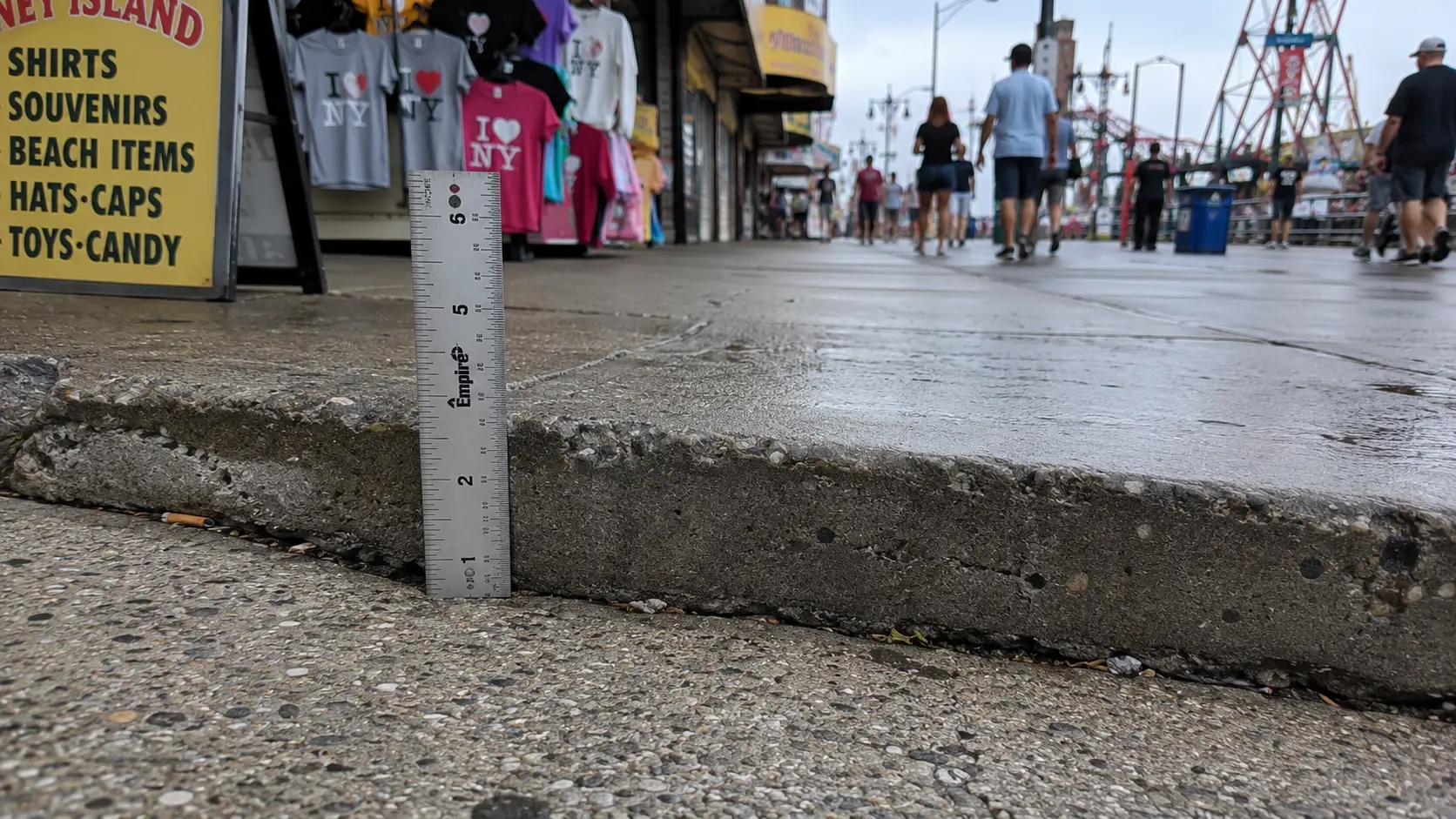
Trip and fall cases in Coney Island often hinge on small details. The height of a pavement defect, the lighting at the time, prior complaints, and who controlled the area can all affect whether a claim is viable. Important evidence can change or disappear quickly. If you were injured at Coney Island, call Law Office of Irene H. Gabo, P.C. at 800-560-0214 to ask what steps may matter next.
New York law gives injured people a path to compensation when a property owner, business, contractor, or public entity failed to keep an area reasonably safe. The challenge is proving what happened before the condition was repaired, cleaned, measured, or forgotten.
How Trip and Fall Accidents Happen at Coney Island
Coney Island has a mix of beach traffic, amusement areas, restaurants, apartment buildings, subway access, sidewalks, parking areas, and commercial corridors. Heavy seasonal crowds can make small defects more dangerous because people may have less room to walk around them.
Common tripping hazards include cracked pavement, raised sidewalk slabs, broken curbs, uneven cellar doors, loose floor mats, bunched carpeting, exposed wires, and poor lighting. Around outdoor areas, rain, sand, salt air, freeze-thaw cycles, and repeated foot traffic can worsen existing defects.
These cases are different from simple slip cases. A trip and fall usually involves a defect or uneven surface rather than a slippery substance. In New York City, sidewalk cases may involve NYC Administrative Code §7-210, which often assigns liability to the adjacent property owner, with an exception for certain owner-occupied one-, two-, or three-family homes.
These cases are different from simple slip cases. A trip and fall usually involves a defect or uneven surface rather than a slippery substance. In New York City, sidewalk cases may involve NYC Administrative Code §7-210, which often places responsibility on the adjacent property owner, with an exception for certain owner-occupied one-, two-, or three-family homes.
For broader information about sidewalk hazards, you can review our page on NY sidewalk slip and fall lawyers. In Coney Island, identifying the exact location of the defect is especially important because responsibility can change from one side of a walkway to another.
Common Injuries After a Trip and Fall in Coney Island
Trip and fall injuries often happen fast because the foot catches while the body keeps moving forward. People commonly land on hands, knees, shoulders, hips, or the head. Hard concrete, stairs, tile, and boardwalk-adjacent surfaces can make the impact worse.
Common injuries include wrist fractures, ankle injuries, knee damage, torn ligaments, shoulder injuries, hip fractures, back injuries, herniated discs, dental injuries, and concussions. Older adults may face longer recoveries after a fall near Coney Island because a fracture or head injury can limit independence.
Medical records matter because they connect the fall to the injury. Emergency room notes, imaging results, orthopedic evaluations, physical therapy records, and work restriction notes help show severity. Delays in treatment can give an insurance company room to argue the injury came from something else.
In serious cases, the impact of a trip and fall extends beyond initial medical expenses. A person may need surgery, assistive devices, ongoing therapy, or help with daily tasks. Those details help show how the injury changed the person’s life after the incident.
Who Is Legally Responsible for a Coney Island Trip and Fall?
Responsibility depends on who controlled the area and what they knew or should have known before the fall. A property owner, tenant, management company, maintenance contractor, construction contractor, or city agency may be involved depending on where the defect was located.
New York premises liability law generally requires proof that a dangerous condition existed, that the responsible party created it or had notice of it, and that the condition caused the injury. Actual notice means the owner knew about the specific defect. Constructive notice means the defect was visible and existed long enough that it should have been found and fixed.
In Coney Island, this can require careful location work. A cracked sidewalk outside a storefront may point to one defendant. A defect near a subway entrance, public park area, or city-controlled walkway may point to a municipal entity and shorter deadlines.
Photographs with measurements are often critical. New York City recognizes sidewalk height differentials as important evidence, and a variation over one-half inch may support a claim when it creates a dangerous tripping condition. Learn more about how fall liability is evaluated on our page about who is responsible for slip and fall injuries in Brooklyn.
What Happens After a Trip and Fall in Coney Island
The first days after a fall can shape the entire case. A store may clean the area, a building may repair a defect, or a contractor may replace a broken surface. Once that happens, it becomes harder to prove what the hazard looked like at the time of the fall.
Incident reports are also important. If the fall occurred inside a business, apartment building, restaurant, store, or amusement-related property, management may prepare a report. Injured people should ask for the report number or the name of the person who took the report, even if the business refuses to provide a copy.
Surveillance footage may exist from nearby businesses, building entrances, security cameras, subway areas, or street-facing cameras. In busy Coney Island locations, video can show how long a defect was present, whether employees walked past it, whether lighting was poor, or whether other pedestrians avoided the same hazard.
When a city agency may be involved, the process becomes more urgent. A Notice of Claim may be required within 90 days, and agency records may need to be requested through FOIL. Waiting too long can leave a lawyer without the photos, measurements, witness names, or records needed to prove the case.
Special New York Rules That May Apply
Most New York personal injury cases have a three-year statute of limitations. Trip and fall claims follow that general deadline when the defendant is a private property owner or business. That does not mean waiting is safe, because evidence in Coney Island can disappear much sooner.
Claims against New York City, the MTA, NYCTA, NYC Parks, NYCHA, public schools, or other municipal entities are different. A Notice of Claim must usually be filed within 90 days, and the lawsuit deadline is generally one year and 90 days. These rules can apply if the fall happened on city-controlled property, at a transit location, or on certain public areas.
New York also follows pure comparative negligence under CPLR §1411. This means a person can still recover damages even if they were partly at fault. The recovery is reduced by the person’s percentage of responsibility.
Insurance companies often argue that the defect was open and obvious, that the injured person was not watching where they were walking, or that footwear contributed to the fall. Those arguments do not automatically defeat a claim. The key question is whether the dangerous condition was unreasonable and whether the defendant failed to address it.
What To Do After a Trip and Fall at Coney Island
Start by getting medical care. Pain may increase after the adrenaline fades, and early treatment creates a clear timeline. Tell the provider exactly how the fall happened and what body parts were injured.
Take photos as soon as possible. Include close-up images, wide shots showing the surrounding area, and a measurement reference such as a ruler, coin, or shoe. In Coney Island, also capture nearby storefronts, building numbers, subway entrances, landmarks, lighting, weather conditions, and any construction equipment.
Report the incident to the property owner, manager, business, building superintendent, or agency staff. Ask for the names and contact information of witnesses. If someone helped you up, saw the defect, or said the hazard had been there before, that person may become important later.
Keep the shoes you wore and do not repair or discard damaged personal items. Save medical records, receipts, missed-work notes, and photos of bruising or swelling. For practical next steps, our guide on what to do after a trip and fall accident explains how early action can protect a claim.
How Our Lawyers at Law Office of Irene H. Gabo, P.C. Can Help You
A trip and fall case requires more than saying the surface was unsafe. Our lawyers look at who controlled the area, how long the defect existed, whether prior complaints were made, and whether repairs happened after the fall. In Coney Island, that often means checking private property boundaries, sidewalk responsibility, transit-adjacent areas, and possible city involvement.
We work to preserve evidence before it disappears. That may include sending preservation letters, seeking surveillance footage, requesting maintenance logs, reviewing 311 or DOT history, and investigating prior complaints. When municipal records are needed, FOIL requests may help uncover inspection records, permits, or repair history.
We also prepare cases for the defenses that commonly arise. The property owner may argue the defect was too small, the injured person should have seen it, or the condition appeared shortly before the fall. Strong measurements, medical documentation, witness statements, and photographs help answer those arguments.
A strong claim often depends on early evidence preservation. Call Law Office of Irene H. Gabo, P.C. at 800-560-0214 to discuss what records, photos, or deadlines may matter in your case.
Compensation You May Recover
The damages available depend on the nature of your injuries and how they have affected your life. Common categories include medical expenses, lost wages, pain and suffering, and reduced earning capacity. More serious injuries may also involve future medical care and long-term limitations.
Economic damages can include ambulance bills, emergency room care, surgery, physical therapy, medication, diagnostic testing, and out-of-pocket costs. If the fall caused missed work, reduced hours, or difficulty returning to your job, wage losses may also be part of the claim.
Non-economic damages address the human impact of the injury. A Coney Island trip and fall may leave someone unable to walk comfortably, use stairs, carry groceries, care for family, or enjoy normal activities. These losses are proven through medical records, personal testimony, and the practical limits caused by the injury.
Future damages may apply when the injury is permanent or likely to require ongoing treatment. Doctors’ opinions, therapy records, and work restrictions help show whether the condition will affect the person beyond the initial recovery period.
Limits and Case Viability
Not every fall creates a viable claim. A case usually depends on the size and nature of the defect, how visible it was, how long it existed, who controlled the area, and whether the injury can be linked to the fall. These facts must work together.
Some Coney Island claims are limited by missing evidence. If there are no photos, no measurements, no witnesses, and no report, the defense may argue the dangerous condition cannot be proven. That is why early documentation matters so much.
Other cases involve timing issues. If a public entity may be responsible, the 90-day Notice of Claim deadline can become the central issue. A lawyer should review the facts quickly when the fall happened near public sidewalks, transit areas, parks, schools, or government-controlled property.
Frequently Asked Questions About Coney Island Trip and Fall Claims
How Quickly Should I Act After Tripping on a Coney Island Sidewalk?
You should act as soon as you can safely do so. Photos, measurements, witness names, and video requests are strongest when gathered early. If a city agency may be involved, a 90-day Notice of Claim deadline may apply.
Does a Property Owner Have To Know About the Exact Defect?
Usually, you must show the owner created the condition, had actual notice, or had constructive notice. Constructive notice means the defect was visible and existed long enough that a reasonable owner should have found it. Maintenance records and prior complaints can be important proof.
What if I Was Looking at My Phone or Distracted When I Fell?
Distraction may be raised as comparative negligence, but it does not automatically bar recovery in New York. Your damages may be reduced if you share fault. The unsafe condition and the defendant’s conduct still need to be evaluated.
Can I Bring a Claim for a Fall Near a Subway Entrance in Coney Island?
Possibly. Transit-adjacent areas can involve the MTA, NYCTA, New York City, a private owner, or more than one responsible party. These cases require fast review because public-entity deadlines and video retention issues may apply.
What Evidence Helps Prove a Trip and Fall Case?
Helpful evidence includes photos with measurements, incident reports, surveillance video, witness statements, maintenance records, 311 complaints, DOT records, and medical documentation. The goal is to show what the defect looked like and why the responsible party should have addressed it.
How Much Is a Coney Island Trip and Fall Case Worth?
Value depends on liability, injury severity, medical treatment, permanency, lost income, and available insurance coverage. A minor injury with weak proof has a different value than a fracture with strong photographs and clear notice. A lawyer can estimate value only after reviewing the facts.
Contact a Coney Island Trip and Fall Lawyer
A trip and fall in Coney Island can raise questions about property control, sidewalk law, municipal deadlines, and evidence preservation. Getting answers early can help protect your ability to bring a claim.
To discuss your case, call Law Office of Irene H. Gabo, P.C. at 800-560-0214.