







Pedestrian Accidents in Coney Island
Walking through Coney Island means sharing crowded streets with cars, buses, delivery vehicles, rideshare drivers, cyclists, and heavy foot traffic. The area can become especially busy near the boardwalk, subway stations, amusement areas, beach entrances, and commercial blocks. When a driver fails to yield, turns without looking, or speeds through a crosswalk, a pedestrian can suffer serious harm in seconds.
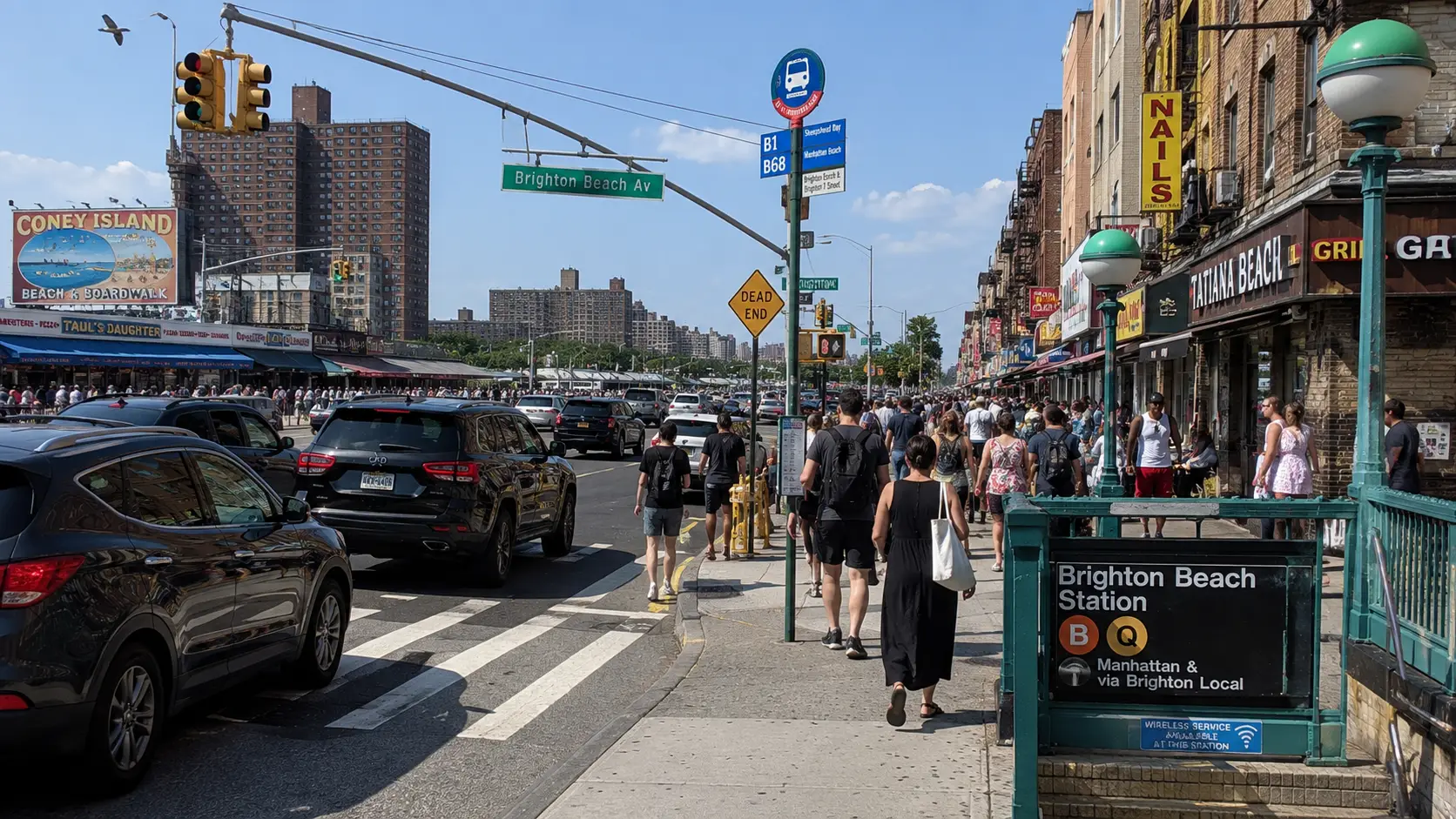
A pedestrian accident in Coney Island often raises fast questions about medical care, no-fault insurance, fault, and video evidence. The answers depend on where the impact happened, what the traffic signal showed, whether the pedestrian was in a crosswalk, and whether any city-controlled roadway issue contributed to the crash. For questions about evidence, deadlines, or who may be responsible, call Law Office of Irene H. Gabo, P.C. at 800-560-0214.
How Pedestrian Accidents Happen in Coney Island
Coney Island has a mix of beach traffic, residential blocks, commercial corridors, bus stops, subway entrances, and seasonal visitor activity. That mix creates frequent points of conflict between people on foot and vehicles. A driver making a turn near a busy crossing may focus on traffic and miss a pedestrian already in the crosswalk.
Common pedestrian accident patterns in Coney Island include left-turn crashes, right-turn impacts, backing vehicles near loading areas, drivers running red lights, and vehicles failing to yield at marked crosswalks. Poor visibility can also matter when parked cars, delivery trucks, construction fencing, or crowding block sightlines. These facts help show whether the driver had enough time and space to see the pedestrian.
Local street conditions can also affect the legal strategy. If a city vehicle was involved, or if a claim concerns defective traffic control, roadway design, or a dangerous city-maintained condition, municipal deadlines may apply. For broader guidance on neighborhood injury claims, see our page for Coney Island accident lawyers.
Common Injuries After a Pedestrian Crash in Coney Island
Pedestrians have no seatbelt, airbag, or vehicle frame to absorb the force of a crash. Even a low-speed impact near a Coney Island crosswalk can cause fractures, knee injuries, shoulder injuries, spinal injuries, concussions, and soft tissue damage. Older adults and children may face more severe outcomes because they are less able to brace for impact.
Injury documentation matters because New York motor vehicle claims are shaped by the seriousness of the harm. Emergency room records, imaging studies, orthopedic evaluations, physical therapy notes, and follow-up visits can show how the crash affected the person over time. Gaps in treatment may give insurers room to argue the injuries were minor or unrelated.
The legal value of a case is not based only on the first diagnosis. Lawyers also look at whether the injury caused lasting pain, limited walking, missed work, surgery, scarring, or permanent loss of function. In a busy neighborhood like Coney Island, those limits may affect daily tasks such as commuting, shopping, working, or caring for family.
Who Is Legally Responsible for a Coney Island Pedestrian Accident?
Responsibility usually starts with the driver. Under New York law, drivers must use reasonable care and must yield to pedestrians in crosswalks under Vehicle and Traffic Law §1151. A driver may be liable for speeding, distraction, failure to yield, unsafe turning, failure to obey a signal, or careless backing.
Other parties may also be responsible. A rideshare company, delivery company, bus operator, vehicle owner, or employer may become part of the case depending on who controlled the vehicle and why it was being driven. If a commercial driver struck a pedestrian while making deliveries near Coney Island businesses, insurance coverage and employer responsibility should be reviewed early.
New York also follows pure comparative negligence. That means a pedestrian may still recover damages even if the defense claims the pedestrian crossed outside a crosswalk, looked at a phone, or entered the street against a signal. Any recovery can be reduced by the pedestrian’s percentage of fault, but partial fault does not automatically end the claim.
Evidence often decides these disputes. A police report may describe the crash, but it may not capture every camera angle, witness statement, or signal timing issue. To learn more about shared fault in New York injury cases, review our resource on comparative negligence.
What Happens After a Pedestrian Accident in Coney Island
The first days after a pedestrian crash are often confusing. The injured person may be taken to a hospital, the driver may speak with police, and witnesses may leave before their names are recorded. In Coney Island, nearby businesses, apartment buildings, buses, dash cameras, and transit areas may have video, but that footage may not be saved for long.
Insurance issues can start quickly. Because New York is a no-fault state, the vehicle’s Personal Injury Protection coverage usually pays initial medical expenses and 80% of lost earnings up to statutory limits, regardless of who caused the crash. The injured pedestrian should avoid giving broad recorded statements before understanding how the facts may affect both no-fault benefits and a bodily injury claim.
Early decisions can also affect leverage. Photos of the intersection, damaged clothing, vehicle damage, skid marks, traffic signals, and sightline obstructions may help prove how the impact happened. If those details are not preserved, the defense may later argue the pedestrian was hard to see, crossed suddenly, or was outside the protected area.
Special New York Rules That May Apply
New York’s no-fault system applies to pedestrians struck by motor vehicles. The injured person usually seeks initial medical benefits through the vehicle’s PIP coverage. These benefits are separate from a lawsuit for pain and suffering.
To sue the at-fault driver for pain and suffering, the pedestrian generally must meet New York’s serious injury threshold under Insurance Law §5102(d). Qualifying injuries may include fractures, significant disfigurement, permanent consequential limitation, significant limitation of a body function or system, or a 90/180-day impairment. Many pedestrian injuries meet this threshold, but medical proof is still needed.
Most New York personal injury cases have a three-year statute of limitations. Claims involving New York City, the MTA, NYCTA, public buses, city vehicles, public roadways, or other municipal entities may require a Notice of Claim within 90 days and a lawsuit within one year and 90 days. This is especially important in Coney Island if the crash involved a city-owned vehicle, a public transit vehicle, or a claim about roadway design or maintenance.
Municipal claims also require different evidence steps. FOIL requests may be needed to obtain agency records, camera footage, complaint history, maintenance logs, or traffic control records. Surveillance footage may be overwritten in 30 days or less, so timing can change the strength of the case.
What To Do After a Pedestrian Accident in Coney Island
Start with medical care, even if you think you can walk away from the scene. Pain from head, neck, back, knee, and shoulder injuries may worsen after the adrenaline fades. Prompt treatment also creates a record connecting the injury to the crash.
Report the collision and try to obtain the police accident report information. If you can do so safely, take photos of the vehicle, license plate, crosswalk, traffic signal, intersection, weather conditions, and any blocked sightlines. In Coney Island, it may also help to photograph nearby businesses or buildings that could have cameras facing the street.
Get witness names and phone numbers before people leave the area. Preserve damaged clothing, shoes, bags, phones, or mobility devices because they may show the force and direction of impact. Avoid social media posts about the crash or your injuries because insurers may take statements out of context.
A strong claim often depends on early evidence preservation. Call Law Office of Irene H. Gabo, P.C. at 800-560-0214 to discuss what records, photos, or deadlines may matter in your case.
For more information about pedestrian injury claims in Brooklyn, visit our Brooklyn pedestrian accident lawyer page.
How Our Lawyers at Law Office of Irene H. Gabo, P.C. Can Help You
Our lawyers begin by identifying the location, vehicles, drivers, insurance policies, and available evidence. In a Coney Island pedestrian accident, that may include nearby video, police records, 911 information, vehicle damage, medical records, witness statements, and signal timing. The goal is to understand what happened before the defense builds its own version of events.
We also look for parties beyond the driver. A delivery company, rideshare operator, vehicle owner, employer, municipality, or transit entity may affect coverage and deadlines. If a public entity may be involved, the 90-day Notice of Claim deadline must be addressed quickly.
Once the facts are developed, the case may involve negotiations with no-fault insurers, liability carriers, and defense lawyers. If the insurer disputes fault or injury severity, litigation may be necessary. Preparing the case from the beginning as if it may go to court helps protect credibility and negotiation strength.
Compensation You May Recover
The damages available depend on the nature of your injuries and how they have affected your life. Economic damages may include medical bills, rehabilitation, lost income, reduced earning capacity, transportation costs for treatment, and future care needs. These losses are often proven through records, pay documentation, medical opinions, and expert analysis.
Non-economic damages may include pain and suffering, emotional distress, scarring, loss of enjoyment of life, and limits on daily activities. For a pedestrian injured in Coney Island, this may include difficulty walking, fear of crossing streets, inability to work regular hours, or reduced independence. The more clearly these effects are documented, the stronger the claim may become.
Future damages require careful proof. A treating doctor may need to explain whether the injury is permanent, whether surgery may be needed, or whether the person will have long-term limits. Insurers often challenge future damages, so medical consistency and credible documentation are important.
Limits and Case Viability
Not every pedestrian accident leads to a viable lawsuit. Liability, injury severity, insurance coverage, and evidence must line up. A case may be harder if there is no serious injury, no available proof of fault, or major uncertainty about how the crash happened.
That does not mean a disputed case should be ignored. New York’s comparative negligence rule allows recovery even when fault is shared. The practical question is whether the evidence can show that the driver’s conduct, or another responsible party’s failure, caused the injury.
Timing can also limit a claim. Waiting too long may cause missed deadlines, lost video, unavailable witnesses, or incomplete medical records. In Coney Island, where street conditions and crowds can change quickly, early documentation often makes a meaningful difference.
Speak With a Coney Island Pedestrian Accident Lawyer
If you have questions about your rights after a pedestrian accident in Coney Island, contact Law Office of Irene H. Gabo, P.C. at 800-560-0214.
Frequently Asked Questions
What Makes a Coney Island Pedestrian Accident Claim Strong?
A strong claim usually has clear evidence of driver negligence, consistent medical records, and proof that the crash caused a serious injury. Video, witness statements, vehicle damage, and signal information can be especially useful in Coney Island because traffic and pedestrian patterns are often disputed.
Does No-Fault Insurance Cover Me If I Was Walking?
Yes. In New York, a pedestrian struck by a motor vehicle is usually covered by the vehicle’s no-fault insurance for initial medical bills and part of lost earnings. A separate injury claim may be possible if the injuries meet the serious injury threshold.
Can I Still Recover If I Crossed Outside the Crosswalk?
Possibly. New York uses pure comparative negligence, so crossing outside a crosswalk does not automatically prevent recovery. Your compensation may be reduced if you share fault, but the driver’s speed, attention, visibility, and ability to avoid the crash still matter.
How Fast Should I Act If a City Vehicle or Public Bus Was Involved?
You should act quickly because claims against New York City, the MTA, NYCTA, or another public entity may require a Notice of Claim within 90 days. The lawsuit deadline may also be one year and 90 days, which is shorter than the usual personal injury deadline.
What Evidence Should I Try to Preserve After the Crash?
Save photos, medical records, witness information, damaged clothing, and any communication from insurers. Also write down the exact location, time, weather, traffic signal, and nearby cameras. Video can disappear quickly, so identifying possible camera sources early is important.
How Is Compensation Calculated in a Pedestrian Injury Case?
Compensation depends on medical expenses, lost income, pain and suffering, future care, and long-term limits. The seriousness of the injury and the strength of the fault evidence both affect value. No lawyer can promise an amount before reviewing the facts and records.