







Brooklyn Heights Promenade Trip and Fall Claims
Imagine visiting Brooklyn Heights Promenade expecting a calm walk above the East River, only for a raised walking surface, uneven stair edge, loose paver, or poorly marked transition to change the day. The Promenade is not a boardwalk. It is a well-known elevated public walkway where surface conditions, stairs, railings, lighting, and maintenance history can all matter after a trip and fall.
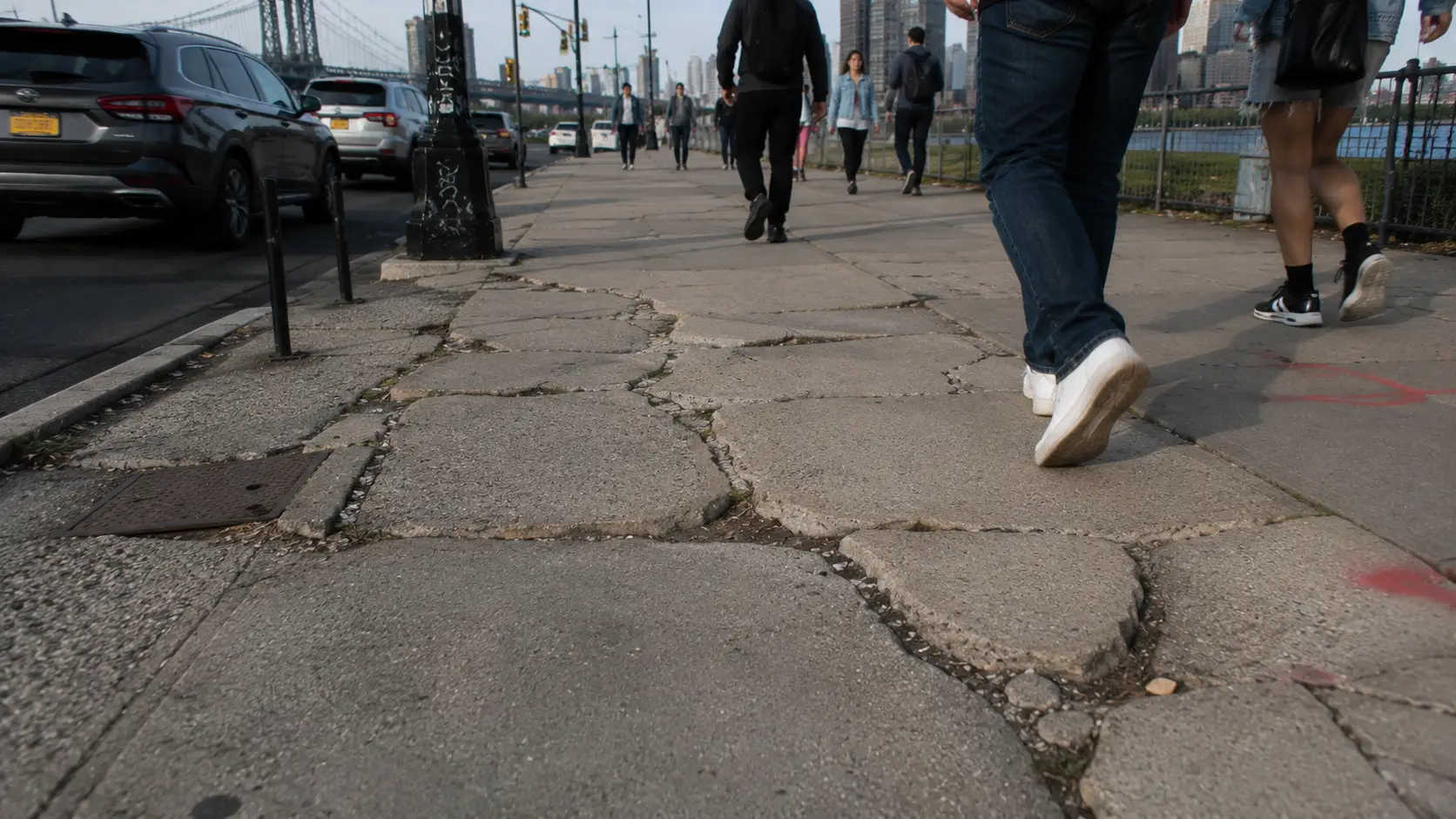
A Brooklyn Heights Promenade trip and fall case often turns on details that are easy to miss at first. The location of the defect, whether the area was city-controlled, how long the condition existed, and whether prior complaints were made can affect the claim. Important evidence can change or disappear quickly. If you were injured at Brooklyn Heights Promenade, call Law Office of Irene H. Gabo, P.C. at 800-560-0214 to ask what steps may matter next.
These cases require more than showing that someone fell. New York law requires proof that a dangerous condition existed, that the proper party was legally responsible for the area, and that the condition caused the injury. For broader information about local fall claims, you can review our page on Brooklyn Heights trip and fall accident lawyers.
How Trip and Fall Accidents Happen at Brooklyn Heights Promenade
Brooklyn Heights Promenade attracts residents, commuters, tourists, runners, parents with strollers, and visitors walking between nearby streets and waterfront views. Heavy foot traffic can make a small height difference more dangerous, especially when people are moving around benches, stair landings, viewing areas, or narrow walking paths.
Trip hazards on the Promenade may involve cracked pavement, raised edges, uneven expansion joints, deteriorated stair treads, loose surface materials, or sudden changes in elevation. Because this is an elevated public space, railings and stairs also matter. A person who trips near a railing or on steps may suffer a worse injury if the surrounding area does not give them room to regain balance.
Weather can also play a role in Brooklyn Heights. Rain, ice, leaves, and freeze-thaw cycles can worsen existing defects. A surface that already has a raised edge may become harder to see when wet or covered with debris. In winter, snow and ice issues may overlap with maintenance duties and the storm-in-progress doctrine, which can affect whether a property controller had a fair chance to correct the condition.
Local procedure matters because Brooklyn Heights Promenade may involve public control, city agencies, or overlapping maintenance responsibilities. That changes the strategy. A lawyer may need to determine whether the claim belongs against New York City, a city agency, a contractor, or another entity. Our discussion of trip and fall accidents on public walkways in Brooklyn explains why public-space claims require close review.
Common Injuries After a Fall on the Promenade
Falls often cause fractures, especially to wrists, hips, ankles, and shoulders. A person may extend an arm to break the fall, twist a knee on uneven pavement, or strike a hard surface. Head injuries can also happen when there is no time to react.
Back and neck injuries are common in trip and fall cases because the body often twists before impact. Herniated discs, nerve pain, and soft tissue injuries may not fully appear on the first day. That is why prompt medical care and follow-up treatment can become important evidence, not just health care.
In a Brooklyn Heights Promenade claim, the injury pattern can help explain the fall mechanics. For example, a fractured wrist may match a forward fall caused by a raised edge. Knee trauma may support a claim involving a sudden toe catch on uneven pavement. Medical records, diagnostic imaging, and notes about functional limits help connect the unsafe surface to the injury.
Severity also affects case value. A minor bruise with no treatment will be evaluated differently from a fracture, surgery, long-term physical therapy, or permanent limitation. Our page on common injuries sustained in trip and fall accidents in Brooklyn discusses why documentation can matter from the beginning.
Who Is Legally Responsible for a Promenade Trip and Fall?
Responsibility depends on who controlled the exact area where the fall occurred. In many private premises cases, the injured person must show that the owner or occupier knew or should have known about the dangerous condition. For public property, the analysis may involve city control, agency maintenance, prior written notice, and whether a contractor created the defect.
New York trip and fall law focuses on the condition that caused the fall. A raised surface, broken stair, missing warning, loose metal edge, or poor lighting must be tied to the incident. Courts also look at whether the defect was significant enough to be dangerous. In New York City, sidewalk surface variation greater than one-half inch is an important measurement issue, but every case still depends on the full condition and context.
Actual notice means the responsible party knew about the condition. Constructive notice means the defect was visible and existed long enough that a reasonable inspection should have found it. If a city worker, contractor, or maintenance crew created the dangerous condition, that can change the proof needed.
The Brooklyn Heights Promenade creates special questions because it is a public, elevated pedestrian space rather than a typical storefront sidewalk. A lawyer may review agency records, 311 complaints, inspection logs, work permits, repair history, and prior incidents. To understand related premises concepts, see our page on who may be responsible for a fall in Brooklyn.
What Happens After a Trip and Fall at Brooklyn Heights Promenade
The first days after a Promenade fall are often confusing. The injured person may leave the area for medical care before taking detailed photographs. A witness may walk away without giving contact information. Rain, cleaning, repairs, or regular public use may change the scene before anyone documents it.
Evidence can disappear fast. Surveillance footage from nearby buildings, public areas, or adjacent locations may be overwritten. If a city agency has relevant records, a FOIL request may be needed. If the claim involves New York City or another public entity, a Notice of Claim may need to be filed within 90 days.
Early decisions can affect leverage. Reporting the incident, identifying the exact location, photographing the defect with a ruler or familiar object, and preserving shoes can help show how the trip happened. Waiting too long may allow the defense to argue that the defect was repaired, exaggerated, or unrelated to the fall.
Common mistakes include giving vague statements, assuming the Promenade is treated like a private business, failing to get medical care, or posting about the fall online. A careful review should identify the precise defect, the controlling entity, the timeline of complaints or repairs, and any comparative fault arguments likely to be raised.
Special New York Rules That May Apply
Most New York personal injury cases have a three-year statute of limitations. But claims involving New York City, a city agency, or another public entity follow shorter rules. A Notice of Claim generally must be filed within 90 days, and the lawsuit deadline is usually one year and 90 days.
Those municipal rules may be central for a Brooklyn Heights Promenade fall because the site is a public pedestrian space. The correct defendant must be identified early. Filing against the wrong party or missing the Notice of Claim deadline can create serious problems even when the injury is significant.
New York also follows pure comparative negligence under CPLR §1411. That means an injured person can still recover even if partly at fault, but damages are reduced by the percentage of responsibility assigned to them. In Promenade cases, the defense may argue that the person should have watched the walkway, used a handrail, avoided an obvious defect, or walked more carefully in crowded or wet conditions.
These arguments do not automatically defeat a claim. The question is whether the dangerous condition should have been repaired or warned about, and whether it contributed to the injury. Our resource on comparative negligence in New York injury claims explains how shared fault can affect recovery.
What To Do After a Trip and Fall at Brooklyn Heights Promenade
Start by getting medical care. Even if pain feels manageable, some injuries worsen after swelling develops. Medical records also create a timeline that helps connect the fall to the injury.
If possible, photograph the exact defect from several angles. Include a close-up and a wider photo showing where the condition sits on the Promenade. Use a ruler, coin, shoe, or other reference object to show height difference, crack width, or stair deterioration.
Report the incident to the proper authority if one can be identified. Get names and contact information for witnesses. Preserve the shoes worn during the fall, because the defense may later ask about footwear, traction, and walking conditions.
For a public-space claim in Brooklyn Heights, timing is critical. A lawyer may need to send preservation letters, request video, check 311 and DOT records, investigate maintenance responsibilities, and prepare a Notice of Claim. For practical steps after a fall, review our guide on how to respond after a trip and fall accident.
How Our Lawyers at Law Office of Irene H. Gabo, P.C. Can Help You
Trip and fall cases require careful fact development. Our lawyers look at the exact location, the type of surface defect, who controlled the area, and whether records show prior notice. On the Brooklyn Heights Promenade, that may include reviewing public agency records, nearby camera sources, repair history, and maintenance practices.
We also evaluate how the defense may respond. The city or another defendant may argue that the defect was trivial, open and obvious, recently created, or not the cause of the fall. The best response usually comes from strong photographs, measurements, medical proof, witness accounts, and records showing the condition existed before the incident.
Litigation readiness matters from the start. That means preserving evidence, identifying deadlines, preparing for discovery, and understanding whether private contractors or public agencies may share responsibility. If the facts support a claim, a well-built case can place pressure on defendants and insurers to evaluate it seriously.
A strong claim often depends on early evidence preservation. Call Law Office of Irene H. Gabo, P.C. at 800-560-0214 to discuss what records, photos, or deadlines may matter in your case.
Compensation You May Recover
The damages available depend on the nature of your injuries and how they have affected your life. Common categories include medical expenses, lost wages, pain and suffering, and reduced earning capacity. Future care may also be part of the claim when the injury causes lasting limitations.
Economic damages can include emergency care, diagnostic testing, surgery, physical therapy, medication, mobility devices, and transportation to medical appointments. Lost income may include missed work during recovery or reduced earning ability if the injury affects your job long term.
Non-economic damages address the human impact. A Promenade fall may interfere with walking, climbing stairs, caring for family, exercising, or enjoying daily life. Pain, sleep disruption, emotional stress, and loss of independence can all matter when supported by the evidence.
Future damages require careful proof. Doctors may need to explain whether pain, weakness, arthritis, scarring, or mobility limits are expected to continue. The stronger the medical and functional documentation, the clearer the long-term impact becomes.
Limits and Case Viability
Not every fall on the Brooklyn Heights Promenade creates a viable claim. A case depends on liability, evidence, damages, and timing. A serious injury alone does not prove that the city, a contractor, or another party was legally responsible.
Some claims are limited by lack of photographs, missing witness information, unclear location details, or inability to prove notice. Others may be affected by comparative fault, weather conditions, or questions about whether the defect was large enough to be dangerous.
That does not mean the claim should be dismissed without review. Public-space cases often depend on records the injured person cannot access alone. Maintenance logs, prior complaints, repair orders, and agency documents may change the evaluation.
Speak With a Brooklyn Heights Promenade Trip and Fall Lawyer
A Brooklyn Heights Promenade trip and fall claim should be reviewed with attention to location, evidence, public-property deadlines, and the condition that caused the fall. The sooner those facts are preserved, the easier it may be to understand your options.
To discuss your case, call Law Office of Irene H. Gabo, P.C. at 800-560-0214.
Frequently Asked Questions
Does a Brooklyn Heights Promenade Fall Involve a City Deadline?
It may. If New York City or a city agency controlled the area where the fall happened, a Notice of Claim generally must be filed within 90 days. The lawsuit deadline may also be shortened to one year and 90 days.
What Makes a Walking-Surface Defect Legally Important?
A defect matters when it is dangerous enough to cause a foreseeable fall and can be tied to the injury. Measurements, photos, lighting, location, and prior complaints can all affect whether the condition is treated as actionable.
What If I Tripped Near Stairs or a Railing on the Promenade?
Stairs and railings can make the case more fact-specific. A lawyer may review whether the stair edge, handrail, lighting, or walking transition created or worsened the hazard. The exact location should be photographed and documented as soon as possible.
Can I Still Recover If I Was Looking at the View When I Fell?
Possibly. New York comparative negligence rules allow recovery even when the injured person shares some fault. Any award may be reduced by your percentage of responsibility, but shared fault does not automatically end the case.
What Evidence Is Most Useful After a Promenade Trip and Fall?
Photos with measurements are often very helpful. Witness names, medical records, incident reports, footwear, weather details, surveillance footage, 311 complaints, and agency maintenance records may also support the claim.
How Long Does a Trip and Fall Case Like This Take?
The timeline depends on the defendants, evidence, injuries, and whether a municipal claim is involved. Public-entity cases can require notices, records requests, and agency investigation before litigation moves forward. Early evidence preservation can help avoid delays later.