







Trip and Fall Injuries Around the Red Hook Waterfront Area
Across the Red Hook Waterfront Area, visitors, workers, residents, cyclists, delivery drivers, and pedestrians move through a mix of sidewalks, piers, parking areas, industrial edges, and public waterfront paths. That variety makes trip and fall cases in Red Hook more fact-specific than a fall at one clearly defined store or building.
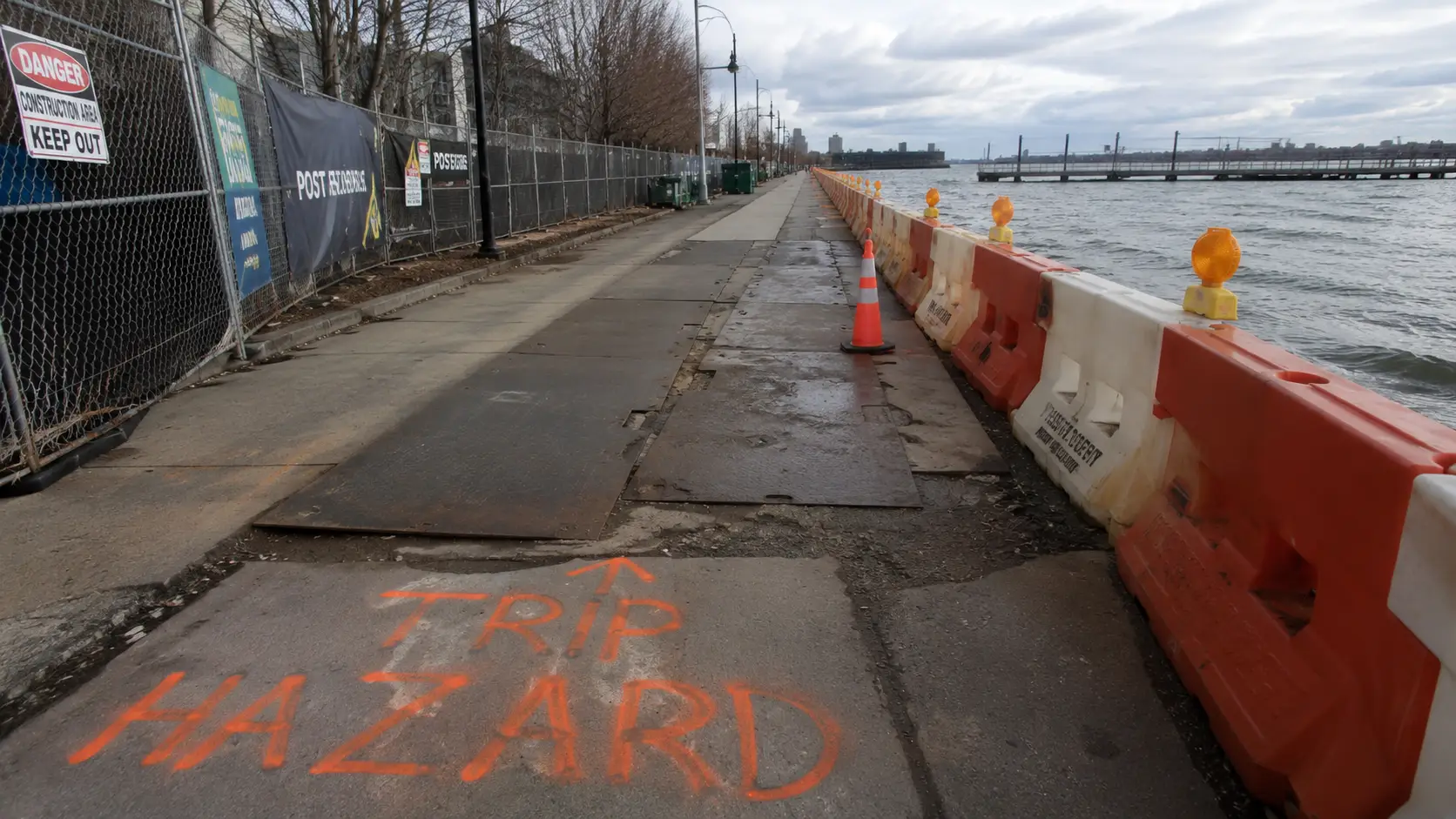
A raised sidewalk flag, broken curb, uneven utility plate, loose paver, poorly marked transition, or construction-related defect can cause serious harm. The legal question is not only where the fall happened, but who controlled that exact area and how long the dangerous condition existed.
You do not need to know every legal answer before calling. If you were hurt in Red Hook, Law Office of Irene H. Gabo, P.C. can help you sort out the next steps. Call 800-560-0214 to discuss what happened.
How Trip and Fall Accidents Happen Near the Red Hook Waterfront Area
The Red Hook waterfront is not one single boardwalk or one controlled venue. It includes public streets, waterfront walkways, pier areas, commercial spaces, parking lots, construction zones, and industrial properties. A fall may occur near a public path, outside a private business, near a curb cut, or along a sidewalk that appears public but may be maintained by an adjacent property owner.
Trip hazards often develop where different surfaces meet. Concrete can lift near tree roots. Asphalt patches can sink around utility covers. Metal plates can shift after road work. In cold weather, freeze-thaw cycles can worsen cracks along waterfront routes, while rain and salt air can affect older surfaces and railings.
These details matter because premises liability cases depend on control, maintenance, and notice. A lawyer may compare photographs, DOT records, 311 complaints, and property ownership information to determine whether the City, a private owner, a tenant, a contractor, or another party had responsibility for the location. For broader background on these claims, see our page on Brooklyn trip and fall accident claims.
Common Injuries After a Waterfront Trip and Fall
Falls on hard waterfront surfaces often cause wrist fractures, ankle injuries, knee damage, shoulder injuries, facial trauma, back injuries, and head injuries. Many people try to walk away from the scene because they feel embarrassed or want to get home. That can create problems later if symptoms worsen and there is no early medical record.
Diagnostic testing can become important when pain continues after the first visit. X-rays may show fractures. MRIs may identify ligament damage, herniated discs, or soft tissue injuries. Medical records also help connect the injury to the fall, especially when the defense claims the condition was minor or unrelated.
The legal value of a trip and fall case depends on more than the first diagnosis. Permanency, treatment history, work restrictions, surgery, physical therapy, and daily limitations all affect how damages are evaluated. In Red Hook, where many people walk through mixed commercial and waterfront areas, the exact fall mechanics can also affect whether the injury pattern matches the defect.
Who May Be Legally Responsible for a Red Hook Waterfront Fall?
New York law requires property owners and those who control property to keep areas reasonably safe. In a trip and fall case, the injured person generally must show that a tripping hazard existed, that the responsible party knew or should have known about it, and that the hazard caused the injury.
Responsibility around the Red Hook Waterfront Area may involve several possible parties. A private building owner may be responsible for a sidewalk under NYC Administrative Code §7-210. A commercial tenant may have maintenance duties under a lease. A contractor may be responsible if road work, utility work, or construction created the defect. A city agency may be involved if the fall happened on city-owned property or a location maintained by the City.
Notice is often the key dispute. Actual notice means the owner knew about the specific defect. Constructive notice means the condition was visible and existed long enough that a reasonable owner should have found and fixed it. If the owner or contractor created the dangerous condition, a separate notice showing may not be required.
These issues are rarely obvious from standing at the scene. A lawyer may investigate deeds, sidewalk maps, permits, prior repairs, maintenance contracts, and prior complaints. For additional discussion of responsibility in fall cases, review our guide on who may be responsible for a slip and fall in Brooklyn.
What Usually Happens After a Trip and Fall in Red Hook
The first days after a waterfront fall can shape the entire case. The defect may be repaired. A temporary construction plate may be removed. Weather can change the surface. A nearby business may overwrite security video. Witnesses may be difficult to find once foot traffic moves on.
Practical steps matter. Reporting the fall creates a record. Photographs show the exact hazard before it changes. Measurements help show whether a height difference was significant. In NYC, a surface height differential can matter, and sidewalk variations greater than one-half inch may support a defect argument depending on the facts.
Local procedure can also affect strategy. If the fall occurred on city-owned property, public waterfront infrastructure, or a city-maintained sidewalk, a Notice of Claim may be required within 90 days. If the condition involved a city sidewalk or roadway defect, prior written notice rules may also become important. That means records from DOT, 311, permits, and agency files can become central evidence.
Insurance companies and property owners often ask for statements before the injured person knows the full picture. A statement that guesses about the cause of the fall can create problems later. It is better to preserve facts, identify witnesses, and avoid speculation until the location and defect are fully investigated.
Special New York Rules That May Apply
Most New York personal injury cases must be filed within three years from the date of injury. Trip and fall claims against private owners usually follow that deadline. Still, waiting can weaken the claim because repairs, surveillance footage, and witness memories may disappear long before the filing deadline.
Claims involving New York City, NYC DOT, NYC Parks, public waterfront property, or another municipal entity have shorter rules. A Notice of Claim must usually be filed within 90 days. The lawsuit deadline is generally one year and 90 days. These rules can replace the normal three-year deadline.
New York also follows pure comparative negligence under CPLR §1411. This means you may still recover damages even if you were partly at fault, but your recovery is reduced by your percentage of responsibility. In Red Hook waterfront cases, defendants may argue that the defect was open and obvious, that lighting was adequate, or that the injured person should have watched the ground more carefully.
Comparative fault arguments do not end the case by themselves. The real question is whether the condition was unsafe, foreseeable, and connected to the fall. Photographs, measurements, prior complaints, and witness statements can help answer that question. To learn more about shared fault, see our resource on comparative negligence in New York injury claims.
What to Do After a Trip and Fall Near the Red Hook Waterfront Area
Start by getting medical care. Even if you think the injury is minor, early treatment creates a record and helps identify problems that may worsen later. Tell the medical provider how the fall happened and where you felt pain immediately afterward.
If you can do so safely, photograph the exact defect from several angles. Include a shoe, coin, ruler, or another object for scale. Take wider photos showing nearby landmarks, storefronts, signs, curb cuts, waterfront features, or intersections. This matters in Red Hook because a broad waterfront description may not identify the exact legal location.
Report the incident to the property owner, business, manager, security office, or city agency when appropriate. Ask for a copy or reference number for any incident report. If witnesses saw the fall, collect their names and contact information before they leave the area.
Preserve footwear and clothing. Do not repair or discard damaged shoes. If the condition involved a city location, a lawyer may need to send FOIL requests and investigate 311 or DOT records. For a practical checklist, review our guide on what to do after a trip and fall accident.
How Our Lawyers Can Help With a Red Hook Trip and Fall Claim
Law Office of Irene H. Gabo, P.C. approaches trip and fall cases by first identifying the precise location and the party responsible for it. Around the Red Hook Waterfront Area, that step can require more than a simple property search because public and private maintenance duties may overlap.
Our lawyers can send preservation letters, request surveillance footage, investigate ownership, review permits, and look for prior complaints. We also evaluate the defect itself. A small surface change may not be enough in every case, but a poorly maintained or long-standing hazard in a high-foot-traffic waterfront area can support liability.
We also prepare cases for litigation from the beginning. That includes gathering medical records, documenting lost income, reviewing inspection practices, and anticipating defense arguments. In broader waterfront cases, the defense may try to shift blame by saying the area was not controlled by their client. Early investigation helps prevent that tactic from controlling the case.
A strong claim often depends on early evidence preservation. Call Law Office of Irene H. Gabo, P.C. at 800-560-0214 to discuss what records, photos, or deadlines may matter in your case.
Compensation Available in a Trip and Fall Case
The damages available depend on the nature of your injuries and how they have affected your life. Common categories include medical expenses, lost wages, pain and suffering, and reduced earning capacity. Future medical care may also be included if doctors expect ongoing treatment.
Economic damages cover measurable losses. These may include emergency care, imaging, surgery, physical therapy, medication, transportation to appointments, missed work, and reduced future earnings. In a serious fall, even a short interruption from work can create financial pressure.
Non-economic damages address the human impact of the injury. Pain, reduced mobility, sleep disruption, loss of independence, and inability to enjoy normal activities may all matter. A waterfront fall that causes a lasting ankle, knee, or spine injury can affect work, family responsibilities, and daily movement.
Case value also depends on proof of liability. A severe injury alone does not establish a claim. The evidence must connect the dangerous condition to the fall and show that the responsible party created it, knew about it, or should have discovered it through reasonable inspections.
Limits and Case Viability
Not every trip and fall near the Red Hook waterfront leads to a viable legal claim. Some defects are too small, too temporary, or impossible to connect to a responsible party. Other cases may be limited because photos were not taken, the location is unclear, or key evidence disappeared before it could be preserved.
Timing can also limit a claim. Municipal cases require fast action, and private property cases still depend on evidence that may vanish quickly. A prompt investigation can help determine whether the case has enough proof to move forward.
Insurance coverage and ownership issues may also affect strategy. A claim against a small private property owner may look different from a claim involving a city agency, contractor, or commercial tenant. The best approach depends on matching the facts, the defect, the injuries, and the responsible parties.
Contact a Red Hook Waterfront Trip and Fall Lawyer
A fall around the Red Hook Waterfront Area can raise difficult questions about property control, sidewalk responsibility, city deadlines, and proof of notice. Getting clear advice early can help protect evidence and avoid missed procedural steps.
To discuss your case, call Law Office of Irene H. Gabo, P.C. at 800-560-0214.
Frequently Asked Questions About Red Hook Waterfront Trip and Fall Claims
Does It Matter That the Red Hook Waterfront Area Is Not One Single Property?
Yes. A broader waterfront area may include city property, private buildings, sidewalks, parking areas, and commercial spaces. Identifying the exact fall location is one of the first steps in determining who may be legally responsible.
What If I Tripped on a Sidewalk Near the Water?
Sidewalk responsibility in New York City often falls on the adjacent property owner under NYC Administrative Code §7-210. There are exceptions, including certain owner-occupied residential properties and city-controlled areas. Photos, address records, and ownership research help clarify who had the duty to maintain the sidewalk.
How Fast Should I Act If the Fall May Involve City Property?
You should act quickly because claims against New York City or another municipal entity usually require a Notice of Claim within 90 days. The lawsuit deadline is also shorter than in most private injury cases. Waiting can also make it harder to obtain video, complaints, and maintenance records.
Can I Still Bring a Claim If I Was Looking at My Phone or the View?
Possibly. New York uses pure comparative negligence, so partial fault does not automatically prevent recovery. Your compensation may be reduced if you share responsibility, but the property owner may still be liable if an unsafe condition caused the fall.
What Proof Is Most Helpful in a Red Hook Trip and Fall Case?
Clear photographs of the defect, measurements, witness information, medical records, incident reports, and surveillance footage can all be important. In waterfront cases, wide photos showing nearby landmarks are especially useful. They help identify the exact location and the party responsible for maintenance.
What If the Defect Was Fixed Before I Took Pictures?
A repair does not automatically end the case, but it can make proof harder. Other evidence may still exist, including witness statements, 311 complaints, DOT records, permits, or nearby video. A lawyer can investigate whether records show the condition existed before the repair.
How Is Compensation Calculated After a Trip and Fall?
Compensation depends on medical expenses, lost income, pain, disability, future care needs, and the strength of the liability evidence. The seriousness of the injury matters, but so does proof that the dangerous condition caused the fall. Strong documentation usually leads to a clearer evaluation.
Will My Case Have to Go to Court?
Many trip and fall cases settle, but some require litigation when liability, notice, or damages are disputed. Preparing the case as if it may go to court often improves negotiation leverage. This is especially important when multiple property owners, contractors, or city agencies may be involved.