







Red Hook Waterfront and Coffey Park Trip and Fall Claims
A trip and fall near Coffey Park or along the broader Red Hook waterfront can raise more than one question about who controlled the area, how long the defect existed, and whether public property rules apply. Red Hook has a mix of park paths, sidewalks, curb cuts, older pavement, construction activity, loading areas, and waterfront walkways. Those details matter because New York trip and fall cases often turn on control, notice, and proof.
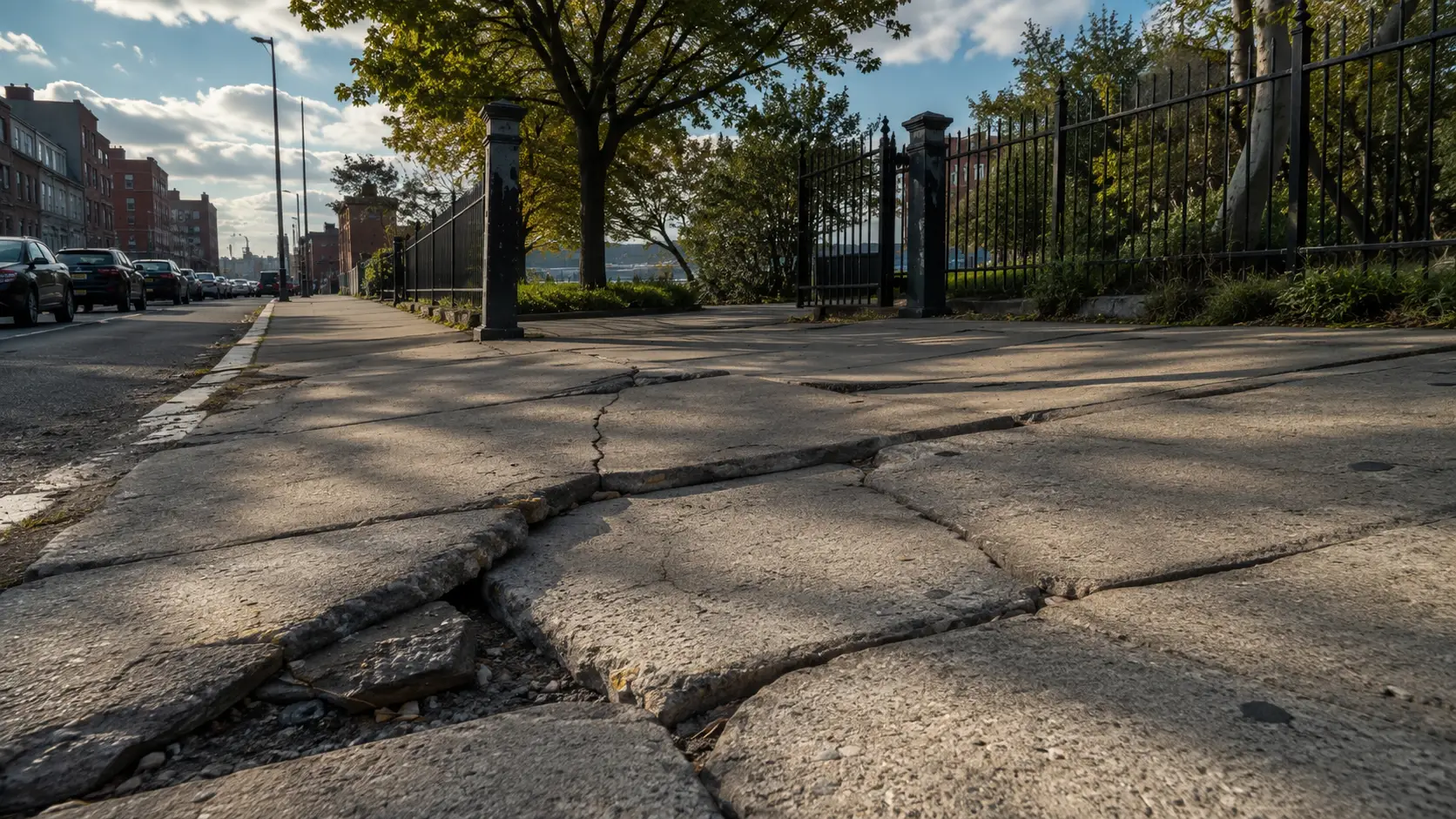
Coffey Park is not the same as a single private storefront or one clearly defined boardwalk. A fall in this part of Red Hook may involve NYC Parks, an adjacent property owner, a contractor, or another entity responsible for maintenance. Important evidence can change quickly. If you were hurt near Coffey Park or the Red Hook waterfront, call Law Office of Irene H. Gabo, P.C. at 800-560-0214 to discuss what steps may matter next.
This page explains how a Red Hook trip and fall claim is usually evaluated, what evidence should be preserved, and how New York law treats dangerous walking surfaces. For broader guidance, you can also review our page for Brooklyn trip and fall accident lawyers.
How Trip and Fall Accidents Happen Around Coffey Park
Trip and fall accidents around Coffey Park often involve uneven pavement, raised sidewalk flags, broken curbs, tree root upheaval, poorly maintained paths, or temporary hazards from nearby work. Red Hook’s waterfront character also affects walking conditions. Moisture, freeze-thaw cycles, heavy foot traffic, delivery vehicles, and construction repairs can worsen existing surface defects.
A person may fall while walking near a park entrance, crossing from a sidewalk to a curb, moving around a construction barrier, or navigating a cracked path after dark. The exact spot matters. A few feet can change the potential defendant from a private property owner to New York City, NYC Parks, or a contractor that performed work in the area.
New York trip and fall claims often focus on whether the defect was visible, measurable, and present long enough to be corrected. In New York City, surface height differences can become important, especially where a raised edge exceeds about one-half inch or creates a trap-like condition. Photos with a ruler, coin, or other measurement reference can be more useful than general statements that the ground was uneven.
The broader Red Hook waterfront also has pedestrian conditions that differ from busier commercial neighborhoods. Some areas have lower lighting, wider industrial blocks, uneven curb transitions, and intermittent maintenance patterns. These local facts can affect foreseeability, notice, and whether the hazard should have been discovered during reasonable inspections.
Common Injuries After a Red Hook Trip and Fall
Falls often cause injuries to wrists, shoulders, knees, ankles, hips, backs, and heads. A person may instinctively reach out to break the fall and suffer a fracture, ligament tear, or nerve injury. When the fall occurs on concrete, stone, or asphalt near Coffey Park, even a short fall can cause lasting harm.
Medical documentation matters because the defense may argue that the injury was minor, preexisting, or unrelated to the fall. Emergency room records, orthopedic evaluations, imaging studies, physical therapy notes, and surgical recommendations help connect the incident to the injury. They also show whether the injury caused real limits in walking, lifting, working, or caring for family.
Some symptoms do not fully appear right away. Back pain, neck pain, concussion symptoms, and knee injuries can worsen over the first days after a fall. Delayed treatment can give insurers an argument that the fall was not the cause. Prompt medical care protects your health and helps preserve the timeline of the claim.
For more detail on injury patterns in fall cases, see our discussion of common injuries sustained in Brooklyn trip and fall accidents.
Who May Be Legally Responsible for a Coffey Park Trip and Fall
Responsibility depends on who owned, controlled, maintained, or created the dangerous condition. Around Coffey Park, that question can be more complex than it first appears. The park itself may involve NYC Parks, while sidewalks, curbs, utility covers, nearby waterfront paths, or construction zones may involve different entities.
In a typical premises liability claim, the injured person must show that a dangerous condition existed, that the responsible party knew or should have known about it, and that the condition caused the fall. This is called actual or constructive notice. Actual notice means the owner or agency knew about the specific defect. Constructive notice means the defect was visible and existed long enough that reasonable inspection should have found it.
Notice is not always required in the same way when the defendant created the hazard. For example, if a contractor performed work and left a raised edge, loose plate, missing barricade, or uneven patch, the case may focus on the work itself. If a maintenance crew made a repair that created a tripping hazard, the proof may come from permits, work orders, photographs, and witness accounts.
New York City sidewalk cases also require careful analysis under NYC Admin Code §7-210. Many adjacent property owners are responsible for maintaining sidewalks next to their buildings. There is an exception for certain one-, two-, or three-family owner-occupied residential properties. City-owned property may also require proof of prior written notice unless an exception applies.
These distinctions are why a Red Hook trip and fall lawyer will not look only at the defect. The legal review also includes maps, property records, agency responsibility, prior complaints, repair history, and whether any work was recently performed near the fall location. You can learn more about sidewalk-related claims on our page for New York sidewalk slip and fall lawyers.
What Happens After a Trip and Fall in Red Hook
The first days after a fall often determine whether the case can be proven months later. The surface may be repaired, covered, cleaned, or changed. Construction barriers may move. Weather may erase markings or make the area look different. Witnesses may be hard to locate once they leave the park or waterfront area.
When a fall happens near Coffey Park, reporting the incident to the correct entity can be difficult. A nearby business may not control the exact location. A park employee may not prepare the same type of report that a private store would create. If the area involves a city agency, a formal Notice of Claim may be required before a lawsuit can proceed.
Surveillance footage is another time-sensitive issue. Cameras may exist on nearby buildings, businesses, city facilities, construction sites, or vehicles. Footage is often overwritten within 30 days or less. A lawyer may send preservation letters, identify camera angles, request agency records, and pursue FOIL requests when public records are involved.
Early mistakes can weaken an otherwise valid case. These include failing to photograph the exact defect, not measuring the height difference, giving unclear statements to insurance representatives, waiting too long for medical care, or assuming the City is automatically responsible. The stronger approach is to preserve the scene, document the injury, and identify all parties that may have controlled the area.
Special New York Rules for Coffey Park and Public Property Claims
Because Coffey Park is a public park, claims involving park property may require a Notice of Claim within 90 days. This rule applies to many claims against New York City, NYC Parks, and other municipal entities. The lawsuit deadline is also shorter than the normal personal injury deadline. Municipal lawsuits generally must be filed within one year and 90 days.
These deadlines are different from the standard New York personal injury statute of limitations, which is generally three years from the accident date. The shorter municipal timeline can control even when the injury is serious. Missing the 90-day notice deadline can prevent recovery before the case is ever heard on the facts.
Public property claims may also involve prior written notice rules. In some city defect cases, the injured person must show that the City had written notice of the specific dangerous condition before the fall. Prior 311 complaints, DOT records, park maintenance reports, inspection records, repair orders, and prior incident reports may become important.
New York’s pure comparative negligence rule also applies. The defense may argue that the defect was open and obvious, that the person should have watched where they were walking, or that footwear, lighting, phone use, or route choice contributed to the fall. Even if the injured person shares some fault, recovery is not automatically barred. Damages are reduced by the percentage of responsibility. For more on this rule, read our guide explaining comparative negligence in New York injury cases.
What To Do After a Trip and Fall Near Coffey Park
Start by getting medical care. Then document the exact location as soon as possible. Take wide photos showing the surrounding Red Hook landmarks, park entrance, sidewalk, curb, or waterfront path. Take close photos showing the defect from several angles. If safe, include a measurement reference.
Report the fall to the entity that appears responsible, but be careful with assumptions. If the fall happened inside Coffey Park, NYC Parks may be involved. If it happened on an adjacent sidewalk, nearby property ownership may matter. If a utility cover, construction plate, or temporary repair caused the fall, a contractor or utility company may need to be identified.
Write down names and contact information for witnesses. A person who saw the fall, noticed the defect before, or knows that complaints were made can help prove notice. Also preserve your shoes, clothing, medical discharge papers, and any photos taken before repairs were made.
Because city claims can require fast action, keep a record of dates. Save any 311 complaint numbers, emails, incident reports, medical appointments, and insurance communications. For a practical checklist, review our page on what to do after a trip and fall accident.
A strong claim often depends on early evidence preservation. Call Law Office of Irene H. Gabo, P.C. at 800-560-0214 to discuss what records, photos, or deadlines may matter in your case.
How Our Lawyers at Law Office of Irene H. Gabo, P.C. Can Help You
Our lawyers begin by identifying the exact location and control of the area. In a Red Hook waterfront case, this may require reviewing maps, public records, property boundaries, agency responsibility, work permits, and maintenance obligations. A fall near Coffey Park may look simple, but liability may depend on details that are not visible at the scene.
We also focus on preserving evidence before it disappears. That may include sending preservation letters, requesting surveillance footage, checking 311 and DOT history, seeking park or agency records, and obtaining photographs before repairs occur. When a municipal entity may be involved, we evaluate Notice of Claim deadlines immediately.
Once the evidence is preserved, the case must be developed for negotiation or litigation. That means gathering medical records, documenting lost income, reviewing prior complaints, questioning maintenance practices, and preparing for defense arguments about comparative fault. A case becomes stronger when the facts show not only that a defect existed, but also why the responsible party should have addressed it earlier.
The firm handles Brooklyn injury matters across many settings. You can learn more about the firm’s broader work on the Brooklyn personal injury lawyers page.
Compensation You May Recover in a Red Hook Trip and Fall Case
The damages available depend on the injury, the proof, and how the fall affected daily life. Compensation may include medical bills, physical therapy, surgery costs, medication, assistive devices, lost wages, and reduced earning capacity. If the injury causes lasting pain or limits, future medical care may also be part of the claim.
Non-economic damages may address pain and suffering, loss of enjoyment of life, emotional distress, and the inconvenience of living with physical limits. These damages are not measured by receipts alone. They depend on how the injury changed your work, family responsibilities, mobility, sleep, and independence.
In a case involving public property near Coffey Park, compensation is still based on the harm suffered, but procedural rules can affect whether the claim survives. A strong damages presentation does not cure a missed Notice of Claim. That is why liability, medical proof, and timing must be handled together.
Limits and Case Viability in Coffey Park Trip and Fall Claims
Not every fall creates a viable legal claim. A case may be limited if the defect was too small, recently created, not visible, or impossible to connect to a responsible party. A claim may also be difficult if the location cannot be identified, if photos were not taken, or if medical treatment was delayed for too long.
Public property cases add another layer. If prior written notice is required and no notice exists, the case may depend on whether an exception applies, such as an affirmative act that created the defect. If the fall happened outside the park on an adjacent sidewalk, the legal focus may shift to the neighboring property owner instead of the City.
Insurance coverage can also affect recovery. A private property owner, contractor, maintenance company, or public entity may each have different coverage and defenses. A careful review helps determine whether the evidence, legal responsibility, and damages align well enough to pursue the claim.
Talk With a Red Hook Trip and Fall Lawyer
A trip and fall near Coffey Park or the Red Hook waterfront should be reviewed with attention to location, ownership, notice, and deadlines. The right steps early can protect evidence and clarify who may be responsible.
To discuss your case, call Law Office of Irene H. Gabo, P.C. at 800-560-0214.
Frequently Asked Questions About Coffey Park Trip and Fall Claims
Does a Fall Near Coffey Park Automatically Mean New York City Is Responsible?
No. The responsible party depends on the exact location and who controlled or maintained that area. A fall inside Coffey Park may involve NYC Parks, while a nearby sidewalk, curb, construction area, or waterfront path may involve another party.
How Fast Do I Need To Act After a Trip and Fall on Public Property in Red Hook?
If a New York City agency may be responsible, a Notice of Claim may be required within 90 days. The lawsuit deadline may be one year and 90 days. Acting quickly also helps preserve photos, camera footage, and witness information.
What Proof Helps Show That an Uneven Surface Was Dangerous?
Useful proof includes close photos, wide location photos, measurements, witness statements, repair history, 311 complaints, and maintenance records. Photos taken before the defect is fixed are especially helpful because the surface may change quickly.
Can I Still Recover Compensation If I Was Looking at My Phone When I Fell?
Possibly. New York follows pure comparative negligence, so partial fault does not automatically bar recovery. Your compensation may be reduced by your percentage of responsibility if the evidence shows you contributed to the fall.
What If the Hazard Was on a Sidewalk Near the Park Instead of Inside Coffey Park?
That distinction matters. Sidewalk responsibility in New York City may fall on an adjacent property owner, the City, or another entity depending on ownership and use. A lawyer will usually review property records, maps, and maintenance responsibility before identifying defendants.
How Much Is a Red Hook Trip and Fall Case Worth?
Case value depends on liability, injury severity, medical treatment, lost income, permanency, and available insurance or public-entity responsibility. A fractured wrist with surgery may be valued differently from a soft tissue injury that resolves quickly. The strength of notice evidence also affects settlement leverage.
Will My Case Require a Lawsuit?
Some claims resolve through negotiation, but many trip and fall cases require litigation because defendants dispute notice or fault. Public property claims can also involve formal procedures before suit. Preparing the case as if litigation may be needed often improves the overall strategy.