







Trip and Fall Injuries at Louis Valentino Jr. Park and Pier
Louis Valentino Jr. Park and Pier is one of Red Hook’s most recognizable waterfront spaces. People visit for harbor views, pier access, walking paths, benches, and open-air recreation. When a raised surface, broken pavement, uneven transition, loose board, or poorly maintained walkway causes a trip and fall, the setting matters as much as the injury.
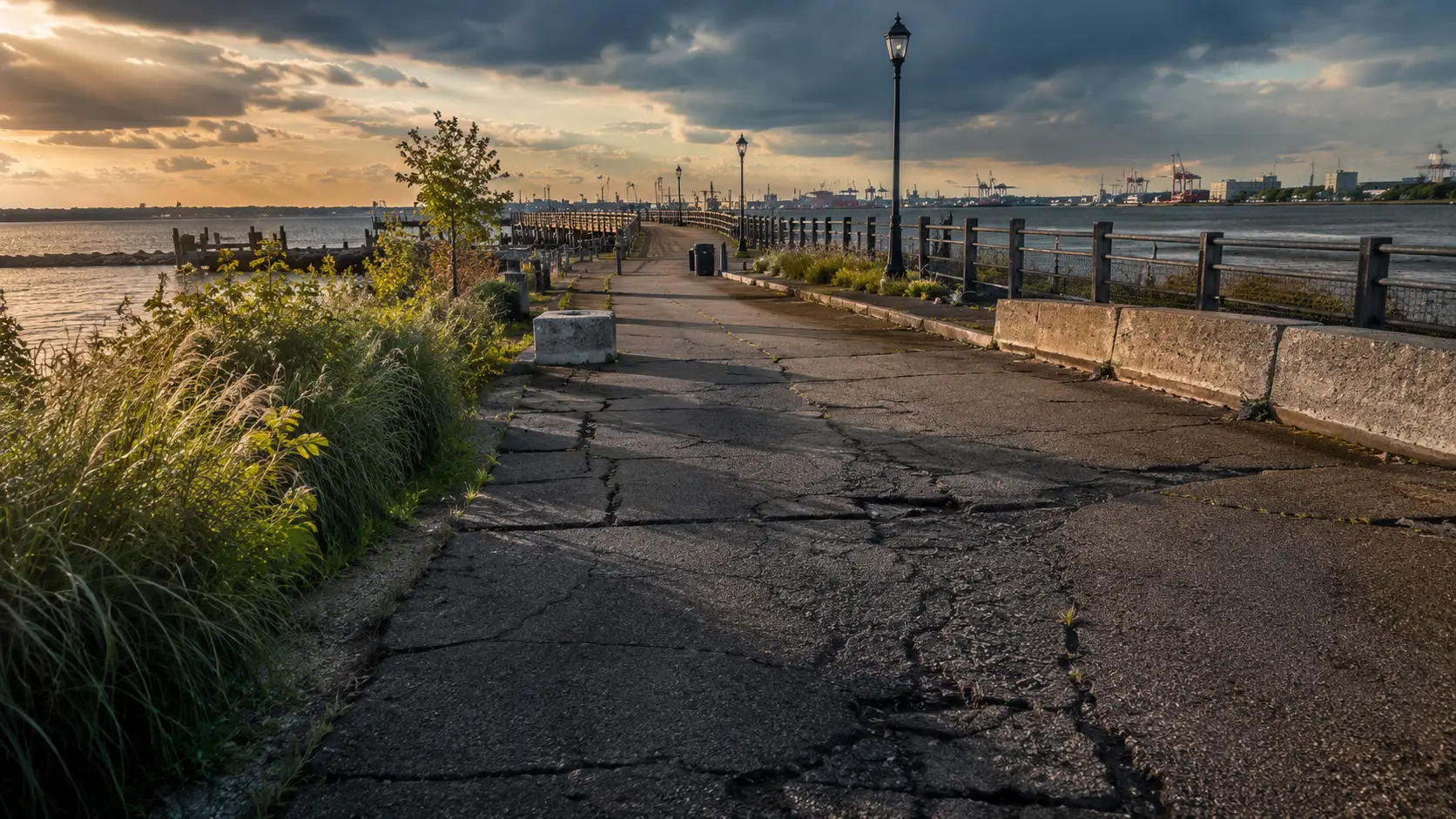
A trip and fall at Louis Valentino Jr. Park and Pier can involve both premises liability law and special rules for claims against New York City or a public agency. The key questions include who controlled the area, whether the dangerous condition existed long enough to be addressed, and whether the City had legally sufficient notice. Important evidence can change or disappear quickly. If you were injured at Louis Valentino Jr. Park and Pier, call Law Office of Irene H. Gabo, P.C. at 800-560-0214 to ask what steps may matter next.
This page explains how a New York trip and fall lawyer evaluates injuries at a Red Hook waterfront pier, what evidence matters, and why timing is especially important when public property may be involved.
How Trip and Fall Accidents Happen at Louis Valentino Jr. Park and Pier
Trip and fall hazards at Louis Valentino Jr. Park and Pier can develop in several ways. Waterfront conditions expose walking surfaces to rain, salt air, freeze-thaw cycles, and heavy seasonal foot traffic. Even small defects can become dangerous when people are walking toward the pier, looking at the harbor, or moving through crowded paths near the water.
Common hazards may include cracked pavement, raised edges, uneven stone or concrete, loose boards, damaged ramps, poor lighting, or sudden height changes between surfaces. A visitor may also trip where a walkway meets a curb, where a utility cover sits above the walking surface, or where repairs were done unevenly.
These details matter because a New York premises liability claim is not based only on the fact that someone fell. The proof must connect the dangerous condition to the fall and show why the responsible party should be held legally accountable. For more background on this type of claim, see our page on Brooklyn trip and fall accident lawyers.
At a public waterfront location in Red Hook, the investigation should also consider public maintenance practices. City-controlled parks and piers often involve inspection records, repair requests, 311 complaints, and agency work orders. Those records can show whether the defect was known before the fall or whether similar problems had been reported nearby.
Common Injuries After a Trip and Fall in Red Hook
Falls often cause injuries to the wrists, shoulders, knees, ankles, hips, back, and head. A person who trips on a raised edge may fall forward with little time to brace. That can lead to fractures, torn ligaments, herniated discs, facial injuries, dental trauma, or concussion symptoms.
The legal value of the injury depends on medical proof, not just pain complaints. Emergency room records, imaging studies, orthopedic exams, physical therapy notes, and surgical recommendations can help show the severity of the harm. In a Red Hook pier case, the medical timeline should match the accident timeline as closely as possible.
Delays in treatment can create disputes. Insurance carriers and defense lawyers may argue that the injury came from something else or was not as serious as claimed. Prompt care helps document how the fall affected mobility, work, daily tasks, and long-term function.
Some injuries become clearer over time. A person may walk away from Louis Valentino Jr. Park and Pier thinking the injury is minor, only to develop swelling, numbness, reduced range of motion, or worsening back pain. Follow-up care matters because permanency, limitations, and future treatment can all affect compensation.
Who May Be Legally Responsible for a Pier Fall
Responsibility in a trip and fall case depends on control, notice, and causation. The party responsible for maintaining the area must have owed a duty to keep it reasonably safe. Then the injured person must show that a dangerous condition caused the fall and that the responsible party knew, should have known, or created the condition.
At Louis Valentino Jr. Park and Pier, the analysis often begins with ownership and maintenance responsibility. Public parks and piers in New York City may involve NYC Parks, another City agency, contractors, maintenance vendors, or entities responsible for repairs. Identifying the correct party is essential because suing the wrong defendant can waste valuable time.
Notice is often the hardest issue. Actual notice may exist if the City or a contractor received complaints or inspected the defect before the incident. Constructive notice may exist if the defect was visible and present long enough that reasonable maintenance should have discovered it. If the responsible party created the raised edge, broken surface, or unsafe repair, separate notice may not be required.
New York City trip and fall cases may also involve prior written notice rules for certain public property defects. That makes records especially important. A lawyer may look for 311 complaints, repair orders, maps, inspection logs, photographs, and prior incident reports. Our discussion of trip and fall accidents on sidewalks explains how surface defects are often evaluated in New York.
What Happens After a Trip and Fall at Louis Valentino Jr. Park and Pier
The first days after a fall can shape the entire case. Conditions at a busy waterfront park can change quickly. A defect may be repaired, temporary barriers may be moved, lighting conditions may differ, or nearby witnesses may become difficult to locate.
Reporting the incident is important, but public property reporting can be confusing. A park worker, NYPD officer, EMS provider, or agency representative may create different records. Those records may not contain the same details. A lawyer often compares reports against photographs, medical records, witness statements, and the injured person’s account.
Photographs should show both close-up and wide-angle views. A close photo may prove the height differential or broken surface. A wider photo can show where the defect sits in relation to the pier entrance, benches, railings, lighting, or walking path. Measurements are helpful because NYC trip and fall cases often turn on whether the defect was large enough to be considered dangerous.
Public agency records may require a FOIL request. That request can seek inspection logs, maintenance records, complaints, work orders, permits, and incident reports. Video may exist near park entrances or nearby businesses, but it may not be kept long. Early requests can prevent the loss of evidence that later becomes central to proving notice.
Special New York Rules for Red Hook Public Property Claims
Most New York personal injury cases have a three-year statute of limitations. Public property claims are different. When New York City, NYC Parks, or another government entity may be responsible, a Notice of Claim must usually be filed within 90 days.
The lawsuit deadline is also shorter. Claims against municipal entities generally must be filed within one year and 90 days. These deadlines can apply even when the injury is severe and even when the injured person is still receiving medical treatment.
The Notice of Claim is not a simple formality. It gives the City early notice of the claim and the location of the alleged defect. The description must be accurate enough to allow investigation. In a place like Louis Valentino Jr. Park and Pier, that means identifying the specific path, pier area, surface transition, ramp, curb, or walkway involved.
New York also follows pure comparative negligence under CPLR §1411. The City or another defendant may argue that the injured person was looking at the harbor, walking too fast, using a phone, or should have seen the defect. Even if a person is partly at fault, recovery may still be possible. Any award is reduced by the percentage of responsibility assigned to the injured person.
For a broader explanation of shared fault in New York, review our guide on comparative negligence.
What To Do After a Trip and Fall at Louis Valentino Jr. Park and Pier
Start by getting medical care. A waterfront fall can cause injuries that are not obvious right away. Medical documentation also creates a timeline connecting the fall to the diagnosis.
Next, preserve scene evidence. Take photographs of the exact defect, the surrounding area, lighting, weather conditions, and any nearby signs or barriers. Use a coin, ruler, shoe, or other reference point to show the size of the height difference. If the fall happened at dusk or night, return at a similar time to document lighting.
Report the incident to the appropriate person or agency if possible. Ask for the report number or the name of the person who took the report. In a public park, a verbal report alone may not be enough to protect a claim. The 90-day Notice of Claim deadline still applies when the City is involved.
Gather witness information before people leave the pier. Names, phone numbers, and short statements can become important months later. Witnesses may confirm that the defect was hard to see, that no warning was present, or that others had complained about the condition.
Finally, avoid repairing your memory after the fact. Write down what happened while it is fresh. Include where you entered the park, your walking direction, what caused your foot to catch, and what happened immediately afterward. Our guide on how to respond after a trip and fall accident covers additional practical steps.
How Law Office of Irene H. Gabo, P.C. Can Help You
A trip and fall case at Louis Valentino Jr. Park and Pier requires more than a general claim that the walkway was unsafe. The investigation must identify the exact defect, the controlling entity, the maintenance history, and the records that may prove notice. This is especially important when public property rules apply.
Law Office of Irene H. Gabo, P.C. can investigate who controlled the pier area, request public records, evaluate photographs, preserve witness accounts, and review medical documentation. The goal is to build a clear connection between the unsafe condition, the fall, and the injuries.
Our lawyers also look for defense arguments early. In a Red Hook waterfront case, defendants may argue that the condition was open and obvious, that the height difference was trivial, that the injured person was distracted, or that the City lacked prior written notice. Addressing those arguments before litigation improves the strength of the claim.
A strong claim often depends on early evidence preservation. Call Law Office of Irene H. Gabo, P.C. at 800-560-0214 to discuss what records, photos, or deadlines may matter in your case.
Compensation You May Recover After a Red Hook Pier Fall
The damages available depend on the nature of your injuries and how they have affected your life. Common categories include medical expenses, lost wages, pain and suffering, and reduced earning capacity. Future damages may also apply when the injury causes long-term limitations.
Economic damages may include emergency care, orthopedic treatment, physical therapy, surgery, medication, medical devices, transportation to appointments, and lost income. If the injury affects your ability to return to your job, reduced earning capacity may become part of the claim.
Non-economic damages address the human impact of the injury. This can include pain, loss of mobility, sleep disruption, anxiety about walking, and reduced enjoyment of daily activities. In a Red Hook trip and fall case, the evidence should show how the injury changed ordinary routines, not just what diagnosis appears in the chart.
Future damages require careful support. A doctor may need to explain whether the injury is permanent, whether more treatment is likely, and whether work restrictions will continue. These details help value the claim realistically.
Limits and Case Viability in Public Pier Claims
Not every fall at Louis Valentino Jr. Park and Pier creates a viable legal claim. A case usually needs a dangerous condition, proof that the condition caused the fall, evidence tying responsibility to a defendant, and damages serious enough to justify legal action.
Public property cases can be limited by notice issues. If there were no prior complaints, no inspection problems, no visible long-standing defect, and no proof that the City created the condition, liability may be harder to establish. That does not mean the case fails automatically, but it means the evidence must be reviewed carefully.
Comparative fault can also affect value. Defendants may focus on footwear, lighting, distractions, weather, or whether the condition was visible. A complete investigation helps separate fair issues from assumptions designed to reduce compensation.
Insurance and collectability also matter. When contractors, vendors, or private entities are involved in maintenance, additional insurance may be available. Identifying every potentially responsible party can make a major difference in the practical outcome.
Talk With a Red Hook Trip and Fall Lawyer
Louis Valentino Jr. Park and Pier is a valued public space, but public property still must be kept reasonably safe. When a dangerous walking surface causes serious harm, the legal process should begin with careful evidence preservation and deadline review.
Don’t let your legal rights expire. Call the Law Office of Irene H. Gabo, P.C. at 800-560-0214 for a free, no-obligation consultation today to protect your claim.
Frequently Asked Questions About Louis Valentino Jr. Park and Pier Trip and Fall Claims
Does a Fall at Louis Valentino Jr. Park and Pier Involve a City Deadline?
It may. If New York City, NYC Parks, or another public entity controlled the area, a Notice of Claim generally must be filed within 90 days. The lawsuit deadline is usually one year and 90 days.
What Proof Helps Show the City Knew About a Defect?
Useful proof may include 311 complaints, inspection records, repair orders, prior incident reports, photographs, and witness statements. In some public property cases, prior written notice may be important. A lawyer can request agency records through FOIL and compare them to the accident location.
What if I Tripped While Looking at the Harbor View?
The defense may argue that you were distracted, but that does not automatically defeat the claim. New York uses comparative negligence, so fault can be divided between the parties. The key issue is whether a dangerous condition still contributed to the fall.
Should I Photograph the Defect Even if the Fall Already Happened?
Yes. Photographs can be valuable if they show the exact condition that caused the fall. Try to capture both close-up measurements and wider views showing where the defect sits on the pier or walkway.
Can a Small Height Difference Support a Trip and Fall Claim?
Sometimes. The size of the defect matters, but courts also consider location, visibility, surrounding conditions, lighting, and whether the defect created a real tripping hazard. A small raised edge in a busy waterfront walkway may still require close review.
How Are Damages Calculated in a Red Hook Trip and Fall Case?
Damages depend on medical treatment, lost income, pain, long-term limitations, and future care needs. Documentation is important because the claim must show how the fall affected your life. Serious fractures, surgery, or lasting mobility problems can increase case value.
Do I Need a Lawyer Before Filing a Notice of Claim?
You are not required to have a lawyer, but accuracy matters. The Notice of Claim must identify the incident, location, and legal basis clearly enough for the City to investigate. Mistakes can create problems later in the case.
What Happens if the Pier Surface Is Repaired After My Fall?
A later repair may make photographs and early witness statements even more important. The repair itself does not automatically prove negligence. But it can affect how lawyers investigate maintenance history and preserve proof of the original condition.