







Marine Park Trip and Fall Injury Help
Across Brooklyn, locations like Marine Park experience heavy use from walkers, cyclists, families, and visitors using trails, open paths, and waterfront nature areas. When maintenance lapses, uneven pavement, broken walkways, exposed edges, or poorly marked defects can cause preventable trip and fall injuries.
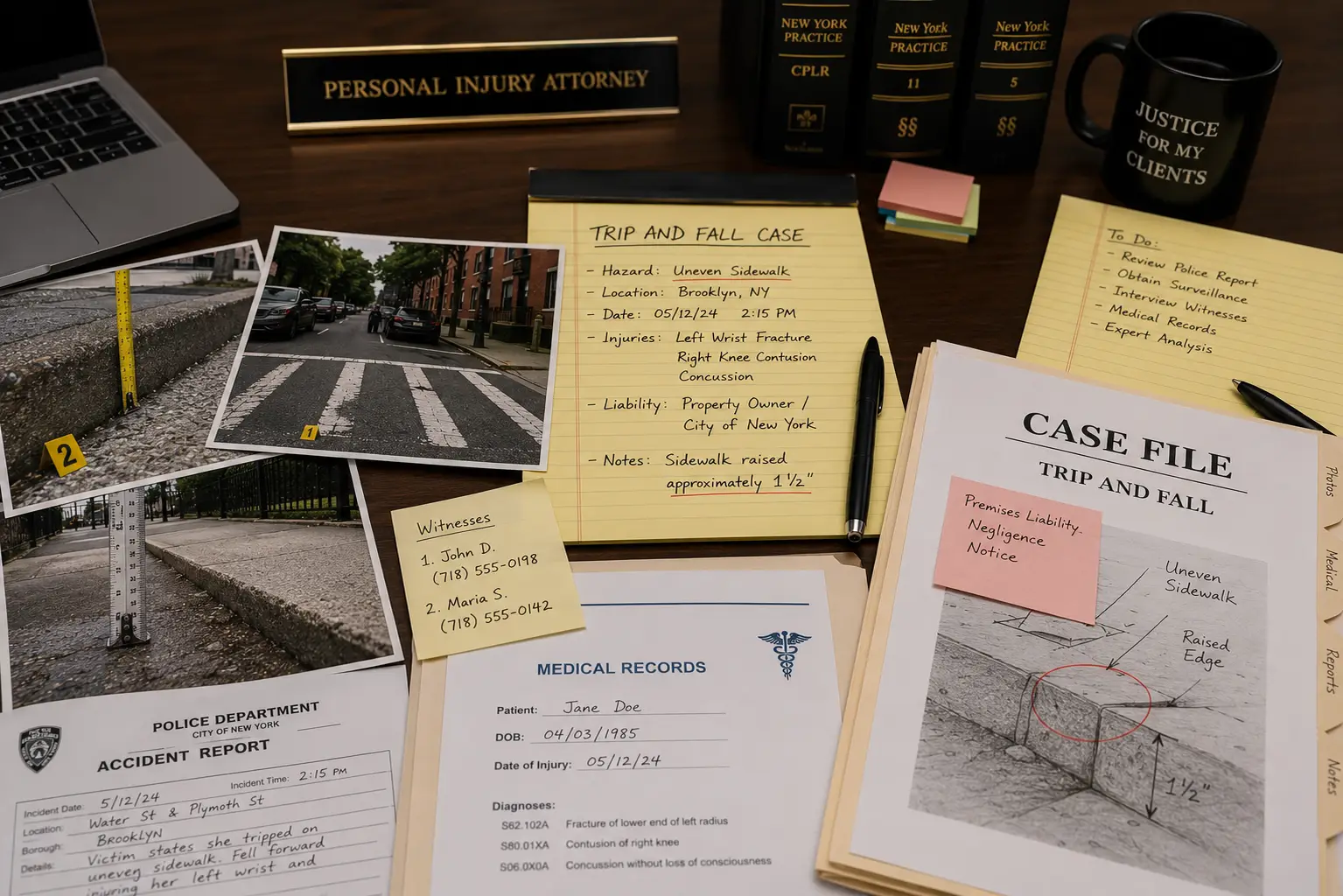
Marine Park is not a boardwalk in the classic sense. It is better understood as a public park, walking trail, and waterfront nature area where surface conditions can change with weather, roots, drainage, and regular foot traffic. A fall there raises different questions than a fall inside a store or apartment building.
If the injury happened in a public place or may involve a city agency, deadlines can be shorter than expected. Contact Law Office of Irene H. Gabo, P.C. at 800-560-0214 for guidance.
A Marine Park trip and fall claim usually turns on who controlled the exact area, how long the hazard existed, whether the City had notice, and what proof can still be preserved. Understanding those issues early helps protect your options.
How Trip and Fall Accidents Happen at Marine Park
Trip and fall accidents in Marine Park often involve walking surfaces that look ordinary until a person catches a foot on a defect. Cracked pavement, raised edges, uneven trail transitions, loose gravel, sunken sections, tree root uplift, and gaps near drainage areas can all create hazards.
The park setting matters. Outdoor paths are exposed to rain, freeze-thaw cycles, salt air, and heavy seasonal use. A defect that starts small can worsen over time, especially where walkers repeatedly use the same trail or waterfront route.
Lighting and visibility also affect these cases. A raised edge may be obvious at noon but difficult to see at dusk, during cloudy weather, or where shadows fall across a path. That difference can matter when the City or another defendant argues that the hazard was open and obvious.
Marine Park visitors may also encounter hazards near entrances, curbs, parking areas, benches, paved walkways, and trail access points. A fall on a city-maintained path may require different proof than a fall beside a privately maintained property line. For broader local injury guidance, see our page for personal injury lawyers in Marine Park.
Common Injuries After a Fall in Marine Park
Falls often result in fractures, especially to wrists, hips, and ankles. Head injuries are also common when a person strikes a hard surface. Back, neck, shoulder, and knee injuries can develop from the twisting motion that happens when someone tries to stop the fall.
The legal significance of an injury is not based only on pain. Medical records, diagnostic tests, specialist findings, and physical therapy notes help show how the fall changed daily life. A person who cannot walk normally, work, lift, sleep, or care for family may have damages that extend beyond the first emergency room visit.
In Marine Park trail cases, footwear, walking speed, weather, and surface conditions may all be questioned. Defense lawyers often argue that the injured person should have seen the defect. Clear medical documentation can keep the focus on the actual harm caused by the unsafe surface.
Some injuries do not show their full impact right away. Swelling, disc problems, nerve symptoms, and concussion signs may become clearer over days or weeks. Prompt treatment creates a timeline that connects the fall to the injury and helps avoid disputes about causation.
Who Is Legally Responsible for a Marine Park Trip and Fall
Property owners and public entities must maintain reasonably safe conditions. In a trip and fall claim, the key question is whether a dangerous condition existed and whether the responsible party knew or should have known about it in time to fix it.
Because Marine Park is a public park in New York City, claims may involve NYC Parks or another municipal agency. That changes the case. Public property claims often require proof of prior written notice, maintenance history, or an affirmative act that created the defect.
New York premises liability law recognizes actual notice, constructive notice, and owner-created hazards. Actual notice means the responsible party knew about the specific defect. Constructive notice means the defect was visible and existed long enough that reasonable inspections should have found it.
Trip and fall cases also focus on measurements. NYC rules often treat surface height differences over 1/2 inch as important evidence, especially on sidewalks and pedestrian surfaces. A photograph without a ruler, tape measure, or clear reference point may not be enough later.
Liability may also depend on whether the fall happened on a park trail, a nearby sidewalk, a curb, a parking area, or a path controlled by a contractor. Under NYC Admin Code §7-210, many sidewalks are the responsibility of adjacent property owners, but city-owned park areas can follow different rules. Our overview of New York sidewalk fall claims explains related issues.
Comparative negligence may be raised if the City or another defendant claims the injured person was distracted, walking off-path, wearing unsafe footwear, or ignoring visible conditions. New York follows pure comparative negligence, so partial fault reduces damages but does not automatically end the claim.
What Happens After a Trip and Fall at Marine Park
What happens in the first few days can shape the entire case. The surface may be repaired, weather may wash away loose material, and witnesses may be hard to find once they leave the park. Photos taken immediately are often more useful than photos taken weeks later.
Reporting the fall matters. For a city park injury, the incident may need to be documented through NYC Parks, 311, NYPD, EMS, or another agency depending on what happened. Reports help create a record, but they do not replace the legal Notice of Claim requirement.
Video is less predictable in a park than inside a store. Some areas may have cameras nearby, while others may rely on nearby buildings, parking areas, traffic cameras, or witnesses. If footage exists, it may be overwritten quickly or become difficult to locate without fast action.
Local procedures also affect strategy. City agencies may maintain inspection records, work orders, repair logs, complaint histories, and photographs. These records often require FOIL requests, and the wording of those requests can matter because the exact location of the defect must be identified clearly.
Common mistakes include leaving without reporting the fall, failing to photograph the defect, discarding shoes, waiting too long for medical care, or giving a recorded statement without understanding the deadlines. Each mistake gives the defense more room to dispute what happened.
Special New York Rules That May Apply
Most New York personal injury cases must be filed within three years, but municipal claims are different. Claims against New York City, NYC Parks, or another city agency require a Notice of Claim within 90 days. The lawsuit deadline is generally 1 year + 90 days.
These deadlines are strict. Missing the 90-day Notice of Claim deadline can prevent an injured person from suing the City, even when the fall caused serious harm. That is why Marine Park cases need early review.
Prior written notice can also become a central issue. In many claims involving city-owned walkways, the injured person must show that the City had written notice of the defect before the fall, unless an exception applies. Prior 311 complaints, agency repair records, maps, work orders, or prior written reports may become important.
The storm in progress doctrine may apply if the fall involved active rain, snow, or ice. Property owners and public entities are not always required to correct conditions while precipitation is ongoing. However, old defects, poor drainage, refreezing, or failure to clear after the required period may still support liability.
New York’s comparative negligence rule, CPLR §1411, also applies. A person can recover even if partly responsible, but the recovery is reduced by that percentage. You can read more about shared fault in our guide to comparative negligence in New York.
What to Do After a Trip and Fall at Marine Park
Start by getting medical attention. Even if you think you can walk it off, a fall on a hard trail or paved surface can cause injuries that worsen. Medical records also help connect the injury to the date and location of the fall.
Photograph the exact defect from several angles. Include a close-up, a wider photo showing the surrounding path, and a measurement reference. If the fall happened near a bench, trail marker, parking area, entrance, curb, or waterfront path, include that in the photos.
Get names and phone numbers for witnesses. Park visitors often leave quickly, and their statements may be needed to confirm lighting, weather, the condition of the path, or how the fall occurred. If someone helped you up, that person may become important later.
Report the fall to the proper agency or authority. In Marine Park, that may involve NYC Parks, 311, NYPD, EMS, or another city channel. Keep confirmation numbers, report copies, and names of anyone you spoke with.
Preserve your shoes and clothing. Defense lawyers sometimes argue that footwear caused the fall. Keeping the shoes in the same condition can help answer those arguments.
For more practical guidance after a fall, review our article on what to do after a trip and fall accident.
A strong claim often depends on early evidence preservation. Call Law Office of Irene H. Gabo, P.C. at 800-560-0214 to discuss what records, photos, or deadlines may matter in your case.
How Our Lawyers at Law Office of Irene H. Gabo, P.C. Can Help You
Our lawyers begin by identifying the exact location and who controlled it. In a park trail case, a few feet can matter. A defect on a city path, adjacent sidewalk, curb, or contractor-controlled work area may involve different defendants and different proof.
We also work to preserve evidence before it disappears. That may include photographs, witness statements, 311 history, NYC Parks records, maintenance logs, repair orders, inspection documents, and FOIL requests. These materials help show whether the hazard was known, recurring, or ignored.
Trip and fall litigation often turns on details. The defense may argue that the defect was trivial, visible, recently created, or not the cause of the fall. We review measurements, lighting, weather, footwear, medical records, and witness accounts to prepare for those arguments.
When a municipal defendant is involved, timing is part of the strategy. The Notice of Claim must be filed correctly and on time. Later, discovery may focus on agency records, prior complaints, repair history, and whether inspections were reasonable for a heavily used public area.
The goal is not to rush a claim before the facts are known. It is to build the record early enough that important proof is not lost. Our firm also handles broader Brooklyn trip and fall accident cases involving sidewalks, stores, apartment buildings, parks, and public areas.
Compensation You May Recover
The damages available depend on the nature of your injuries and how they have affected your life. Common categories include medical expenses, lost wages, pain and suffering, and reduced earning capacity.
Economic damages may include ambulance bills, emergency care, imaging, orthopedic treatment, surgery, physical therapy, medication, and future medical care. If the injury keeps you from working, lost income and reduced earning ability may also be part of the claim.
Non-economic damages address the human impact of the fall. Pain, limited mobility, sleep problems, anxiety about walking, and loss of enjoyment of normal activities can all matter. These losses are proven through medical records, testimony, and the way the injury changed daily life.
Future damages may be important when a fall causes permanent limitations. A person with a lasting knee injury, back condition, or fracture complication may need ongoing care. The claim should account for what is reasonably expected, not only what has already been billed.
In municipal cases, compensation still depends on proof. The City may contest notice, causation, damages, and comparative fault. A careful evidence record gives the claim a stronger foundation.
Limits and Case Viability
Not every fall in Marine Park creates a viable legal claim. Outdoor spaces have natural wear, and the law does not make the City responsible for every uneven surface. The issue is whether a legally dangerous condition existed and whether the responsible party had the required notice or created the hazard.
Some cases are limited by weak photographs, unclear location details, missing witnesses, delayed treatment, or missed deadlines. Others are limited because the defect was too small, too new, or not connected to the injury. These issues should be reviewed before assumptions are made.
Insurance coverage, municipal defenses, and proof of damages also affect value. A strong case usually has clear evidence of the defect, timely medical treatment, reliable location proof, and a deadline-compliant Notice of Claim when the City is involved.
Contact a Marine Park Trip and Fall Lawyer
A fall on a Marine Park trail or public walkway can involve strict city deadlines and disputed facts. Speaking with a lawyer early can help preserve evidence and identify the right defendant.
To discuss your case, call Law Office of Irene H. Gabo, P.C. at 800-560-0214.
Frequently Asked Questions About Marine Park Trip and Fall Claims
Does a Marine Park Fall Require a Notice of Claim?
Yes, if the claim is against New York City, NYC Parks, or another municipal agency. A Notice of Claim must usually be filed within 90 days. This is separate from reporting the incident to 311, EMS, or park staff.
What Makes a Trail Defect Legally Important?
A defect becomes important when it is dangerous enough to cause a foreseeable fall and can be linked to the injury. Measurements, photos, lighting, location, and prior complaints all matter. A lawyer will also look at whether the City had notice or created the condition.
Can I Still Bring a Claim if I Was Looking at the Scenery or Talking While Walking?
Possibly. New York uses pure comparative negligence, so partial fault does not automatically bar recovery. The defense may argue you were distracted, but your damages are reduced only by the percentage of fault assigned to you.
What Proof Should I Save After a Fall in Marine Park?
Save photos of the defect, your shoes, medical records, witness information, and any report or 311 confirmation number. If possible, document the exact location with landmarks. In a large park, precise location proof can be critical.
How Long Does a City Park Trip and Fall Case Take?
The timeline depends on the injuries, the evidence, and whether the City disputes notice or causation. Municipal cases can take time because records may require FOIL requests and formal discovery. Early investigation often prevents avoidable delays.
What Compensation Is Available After a Marine Park Trip and Fall?
Compensation may include medical bills, lost wages, pain and suffering, and future care needs. The value depends on injury severity, permanency, liability proof, and comparative fault. Strong documentation helps connect the fall to the losses claimed.