







Homecrest Slip and Fall Accident Lawsuits
Slip and fall accidents in Homecrest occur on the commercial sidewalks of Kings Highway and Avenue U, inside retail stores and apartment building common areas, and on residential walkways where ice, snow, and cracked pavement create year-round hazards. Under New York premises liability law, property owners have a legal duty to maintain their premises in reasonably safe condition — and in New York City, that duty explicitly extends to the sidewalk adjacent to their property.
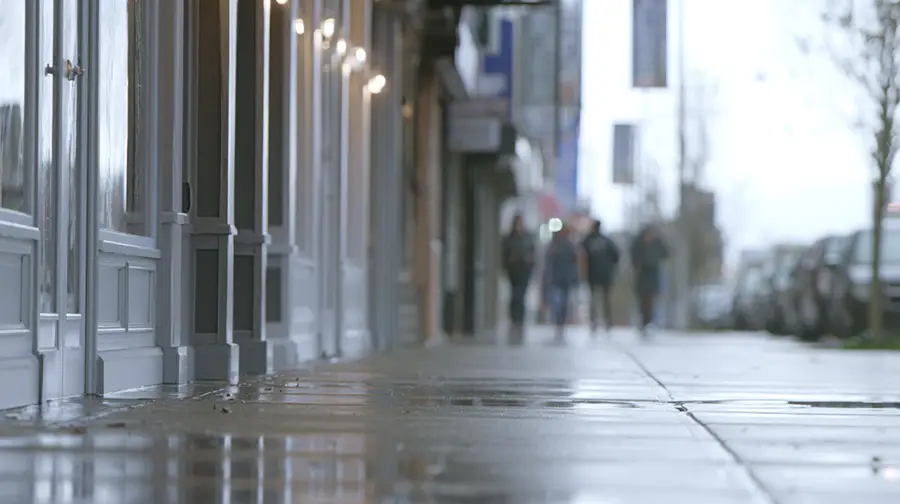
Slip and Fall Hazards in Homecrest
Homecrest’s mix of prewar rowhouses, mid-rise brick apartment buildings, and new condo developments creates varied slip and fall risks. The commercial corridors along Kings Highway and Avenue U carry heavy pedestrian traffic over sidewalks that are subject to spills, produce debris from grocery stores, and runoff from awnings and downspouts. The residential side streets have aging concrete sidewalks where tree root heave, cracked pavement, and uneven slabs create persistent tripping hazards.
Homecrest Sidewalk Conditions
Homecrest’s housing stock dates largely from the early to mid-20th century, and many sidewalks are original concrete that has settled, cracked, or been displaced by mature tree roots. The neighborhood’s street trees — while valued for their character — push up sidewalk slabs and create height differentials that catch pedestrians’ feet. Along Kings Highway and Coney Island Avenue, commercial activity produces additional hazards: wet floors tracked out from stores, produce dropped near grocery displays, and runoff from building maintenance. During winter months, the residential streets of Homecrest are particularly vulnerable to black ice formation in the freeze-thaw cycle.
Who Is Liable
Under NYC Administrative Code § 7-210, property owners in New York City are responsible for maintaining the sidewalk adjacent to their property. This means that in most Homecrest sidewalk fall cases, the abutting property owner — not the city — is the liable party. The one exception is owner-occupied one-, two-, or three-family residences used exclusively for residential purposes, where the city retains liability.
For falls inside buildings — apartment lobbies, stairwells, laundry rooms, retail stores, and restaurants — the property owner, landlord, or business operator who controlled the premises and knew or should have known about the hazardous condition may be liable.
Winter Ice and Snow Rules
Key Fact: Under NYC Administrative Code § 16-123, property owners must clear snow and ice from sidewalks within four hours after snowfall stops (excluding overnight hours between 9 PM and 7 AM). For overnight snowfall, sidewalks must be cleared by 11 AM the following morning. Failure to clear within these timeframes can establish negligence in a slip and fall claim.
New York also recognizes the “storm in progress” doctrine, which provides that property owners are generally not liable for snow and ice accumulation while a storm is still actively depositing precipitation. However, once the storm ends, the clock starts on the clearing obligation. Property owners who attempt to clear snow but do so negligently — creating icy patches from improper drainage or leaving packed ice — can be held liable for making the condition more dangerous.
Common Slip and Fall Injuries
Hip Fractures
Falls onto hard surfaces frequently fracture the hip, particularly in elderly victims. Hip fractures often require surgical repair and extended rehabilitation, and in older adults, they can trigger a cascade of complications including blood clots, pneumonia, and loss of independence.
Traumatic Brain Injury
When a person’s head strikes the ground during a fall, the result can be a concussion, contusion, or more severe traumatic brain injury. TBI symptoms may not appear immediately, making same-day medical evaluation critical.
Spinal Injuries
Falls can fracture vertebrae, herniate discs, and damage the spinal cord. Back injuries from slip and falls may require surgery and can result in chronic pain and permanent mobility limitations.
Wrist and Shoulder Fractures
The instinct to brace against a fall with outstretched hands causes frequent wrist, forearm, and shoulder fractures. Rotator cuff tears and shoulder dislocations are also common results of fall impacts.
What to Do After a Slip and Fall in Homecrest
- Photograph the hazard immediately. The condition that caused your fall — wet floor, ice, cracked sidewalk, uneven slab — may be repaired or change before you can return. Take photos from multiple angles before leaving the scene.
- Report the incident. If the fall occurred in a store or building, report it to the manager and ask for a written incident report. If on a sidewalk, note the exact address and photograph nearby building numbers.
- Get medical attention the same day. Even if you feel only minor pain, get evaluated. Fractures, internal injuries, and TBI symptoms often worsen over the following hours and days.
- Identify witnesses. Get contact information from anyone who saw the fall or who can confirm the hazardous condition existed before your accident.
- Do not give recorded statements to property owners or insurers without consulting an attorney. Anything you say can be used to minimize your claim.
- Contact a slip and fall attorney. An attorney can send preservation notices for surveillance footage and maintenance records, and can investigate whether prior complaints (311 records, building management logs) documented the same hazard before your fall.
Filing Deadlines
Important Deadlines
The statute of limitations for slip and fall claims is three years under CPLR § 214. If the fall occurred on city-owned property (a public sidewalk where the city retains liability, a city building, or a park), a Notice of Claim must be filed within 90 days under General Municipal Law § 50-e.
Injured in a Slip and Fall in Homecrest?
Property owners have a legal duty to maintain safe conditions. If you were injured due to a hazardous condition in Homecrest, the Law Office of Irene H. Gabo, P.C. can help you pursue compensation. Contact us for a free case evaluation – call (800) 560-0214 or click the button below to submit your information.
Get a Free ConsultationFrequently Asked Questions
Under NYC Administrative Code § 7-210, the property owner adjacent to the sidewalk is generally responsible — not the city. The exception is owner-occupied one-, two-, or three-family residences, where the city retains liability.
Yes, if the property owner or landlord failed to clear ice and snow within the timeframes required by NYC Administrative Code § 16-123. The storm in progress doctrine protects owners during active precipitation, but once the storm ends, the clearing obligation begins.
Under New York premises liability law, a property owner can be liable if they created the hazardous condition, had actual knowledge of it, or should have known about it through reasonable inspection. Evidence of how long the condition existed, prior complaints, and the owner’s maintenance practices can establish constructive notice.
Yes. New York is a pure comparative negligence state under CPLR § 1411. Your award is reduced by your percentage of fault, but you can still recover compensation.