






Homecrest Truck Accident Lawsuits
Truck accidents in Homecrest frequently involve the commercial corridors that border the neighborhood — Kings Highway, Coney Island Avenue, and Avenue U — where delivery vehicles, box trucks, and tractor-trailers share narrow lanes with passenger cars, cyclists, and pedestrians. Because commercial truck crashes involve multiple layers of liability, federal regulations, and specialized insurance policies, these cases require a different legal approach than typical car accident claims.
Truck Traffic in Homecrest
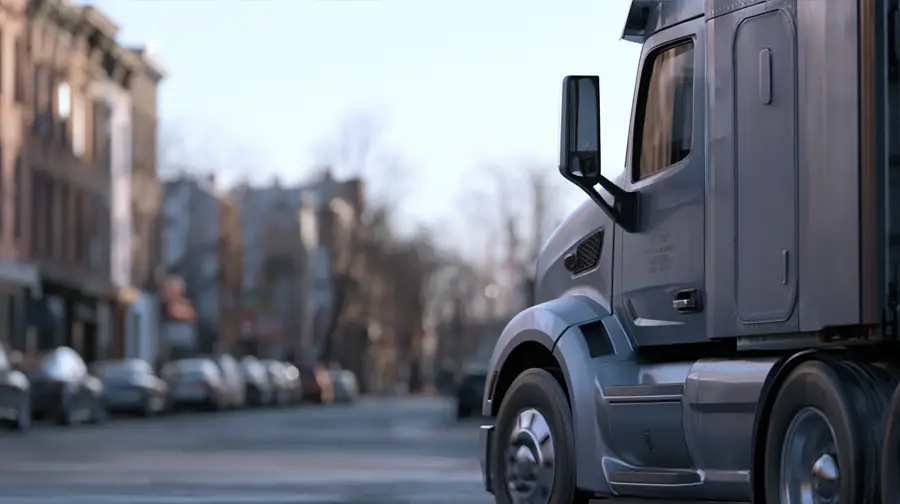
Homecrest’s boundary roads carry substantial commercial vehicle traffic that feeds the neighborhood’s retail corridors and nearby distribution points. Kings Highway, the neighborhood’s northern border, is a dense shopping corridor where delivery trucks must navigate narrow lanes alongside parked cars, buses, and pedestrians. Coney Island Avenue, the western border, is a primary north-south commercial route connecting southern Brooklyn neighborhoods and carrying a steady flow of box trucks, vans, and larger commercial vehicles.
Commercial Vehicle Patterns in Homecrest
Avenue U, which forms part of Homecrest’s commercial landscape, connects to Kings Plaza Mall — a 1.1-million-square-foot facility that serves as a terminus for seven bus lines and generates significant commercial vehicle traffic from deliveries. Trucks traveling to and from the mall, local restaurants, grocery stores (including large markets on Kings Highway), and the Avenue U Chinatown corridor move through Homecrest’s boundary streets daily. The residential interior streets, which were designed for single-family homes and small apartment buildings, are not built for heavy commercial vehicle traffic — yet oversized delivery trucks routinely use these streets as shortcuts.
Multiple Liable Parties
Unlike a typical car accident where liability falls on the at-fault driver, truck accident cases often involve multiple parties who may share responsibility for the crash. Identifying all liable parties is critical because commercial trucking insurance policies and corporate assets significantly expand the potential recovery.
The Truck Driver
Drivers who were fatigued, distracted, impaired, or who violated traffic laws may be directly liable for causing the crash. Hours-of-service violations and logbook falsification are common issues in truck accident litigation.
The Trucking Company
Carriers are liable for the actions of their drivers under the doctrine of respondeat superior. They may also be independently liable for negligent hiring, inadequate training, failure to enforce hours-of-service rules, or failure to maintain vehicles.
Cargo Loaders and Shippers
Improperly loaded or unsecured cargo can shift during transit, causing the truck to become unstable. Overloaded trucks require longer stopping distances and are harder to control. The party responsible for loading the cargo may be liable.
Vehicle and Parts Manufacturers
Defective brakes, tires, steering systems, or other components can cause or contribute to a crash. Product liability claims against manufacturers do not require proof of negligence — only that the product was defective and caused the injury.
Federal Trucking Regulations
Commercial motor vehicles are subject to extensive federal regulations under the Federal Motor Carrier Safety Regulations (FMCSRs) administered by the Federal Motor Carrier Safety Administration (FMCSA). These regulations set mandatory standards for driver qualifications, hours of service, vehicle inspection and maintenance, cargo securement, and insurance requirements. Violations of these regulations can serve as strong evidence of negligence in a truck accident lawsuit.
Key Fact: Federal regulations require most interstate commercial carriers to carry minimum liability insurance of $750,000, and carriers transporting hazardous materials must carry up to $5 million. These higher policy limits mean that truck accident victims may have access to significantly more compensation than in a standard car accident case.
Common Truck Accident Injuries
The massive size and weight disparity between commercial trucks and passenger vehicles means that truck accident injuries tend to be catastrophic. A fully loaded tractor-trailer can weigh 80,000 pounds or more — roughly 20 times the weight of a typical passenger car. Injuries include traumatic brain injuries, spinal cord damage and paralysis, multiple fractures, crush injuries, internal organ damage, severe burns, and amputations. Fatalities are far more common in truck accidents than in collisions between passenger vehicles.
Damages Available
Victims of truck accidents in Homecrest may pursue compensation for medical expenses (past and future), lost wages and loss of earning capacity, pain and suffering, emotional distress, loss of enjoyment of life, and, in wrongful death cases, damages for the family’s pecuniary losses under EPTL § 5-4.1. Because truck accident injuries are typically severe, the medical and economic damages in these cases frequently reach into the millions of dollars.
What to Do After a Truck Crash in Homecrest
- Call 911 immediately. Homecrest is served by the 61st Precinct. A police report is essential — and in truck accidents, the responding officers may call the NYPD Highway Patrol for specialized accident reconstruction.
- Seek emergency medical care. Even if you feel alert, internal injuries from truck crashes can be life-threatening. Go to the nearest emergency room — Coney Island Hospital or Beth Israel Kings Highway Division — without delay.
- Identify the truck and carrier. Note the truck’s license plate, USDOT number (displayed on the cab door), company name, and the driver’s information. This information is critical for identifying the responsible parties and their insurance carriers.
- Photograph everything. The truck, your vehicle, the road, skid marks, traffic signals, cargo, and any visible injuries. If the truck has damage consistent with a mechanical failure (blown tire, fluid leak), photograph that as well.
- Contact an attorney before speaking with insurance adjusters. Trucking companies often send rapid-response investigation teams to the crash scene within hours. An attorney can send immediate preservation notices for the truck’s electronic logging device (ELD) data, black box data, maintenance records, and driver qualification files before they are altered or destroyed.
Evidence Preservation Is Time-Sensitive
Trucking companies are required to maintain ELD data for only six months. Black box (event data recorder) information can be overwritten. Driver logs, maintenance records, and inspection reports may be altered. An attorney should send a spoliation preservation letter to the trucking company and all related parties as quickly as possible after the crash to prevent evidence destruction.
Injured in a Truck Accident in Homecrest?
Truck accident cases involve complex federal regulations and multiple liable parties. The Law Office of Irene H. Gabo, P.C. fights for full compensation for truck crash victims in Homecrest and throughout Brooklyn. Contact us for a free case evaluation. Call (800) 560-0214 today.
Get a Free ConsultationFrequently Asked Questions
Depending on the circumstances, you may have claims against the truck driver, the trucking company, the cargo loading company, the vehicle or parts manufacturer, and the maintenance provider. An attorney experienced in truck accident litigation can investigate to identify all potentially liable parties and their insurance coverage.
Truck accidents typically result in more severe injuries due to the massive size disparity, and commercial carriers are required to carry higher insurance minimums ($750,000 or more). These factors, combined with the availability of multiple liable parties, often result in significantly higher recoveries than standard car accident claims.
The statute of limitations is three years from the date of the accident for personal injury under CPLR § 214. If a government vehicle or road defect was involved, a Notice of Claim must be filed within 90 days under General Municipal Law § 50-e. Evidence in truck cases degrades quickly — ELD data is only retained for six months — so consulting an attorney promptly is critical.
If a delivery truck illegally parked or stopped in a travel lane and caused or contributed to a crash, both the driver and the company that employed or contracted with the driver may be liable. In Homecrest, double-parked delivery vehicles on Kings Highway and Coney Island Avenue are a common hazard. Evidence of the illegal parking — photographs, dashcam footage, witness statements — is critical to establishing liability.