







Construction accidents in Sheepshead Bay often involve tight residential job sites, multiple contractors, and hazards that change daily. New York provides some of the strongest legal protections for injured construction workers in the country — including strict liability under Labor Law § 240(1) — but these protections only help if the right evidence is preserved and the correct deadlines are met.
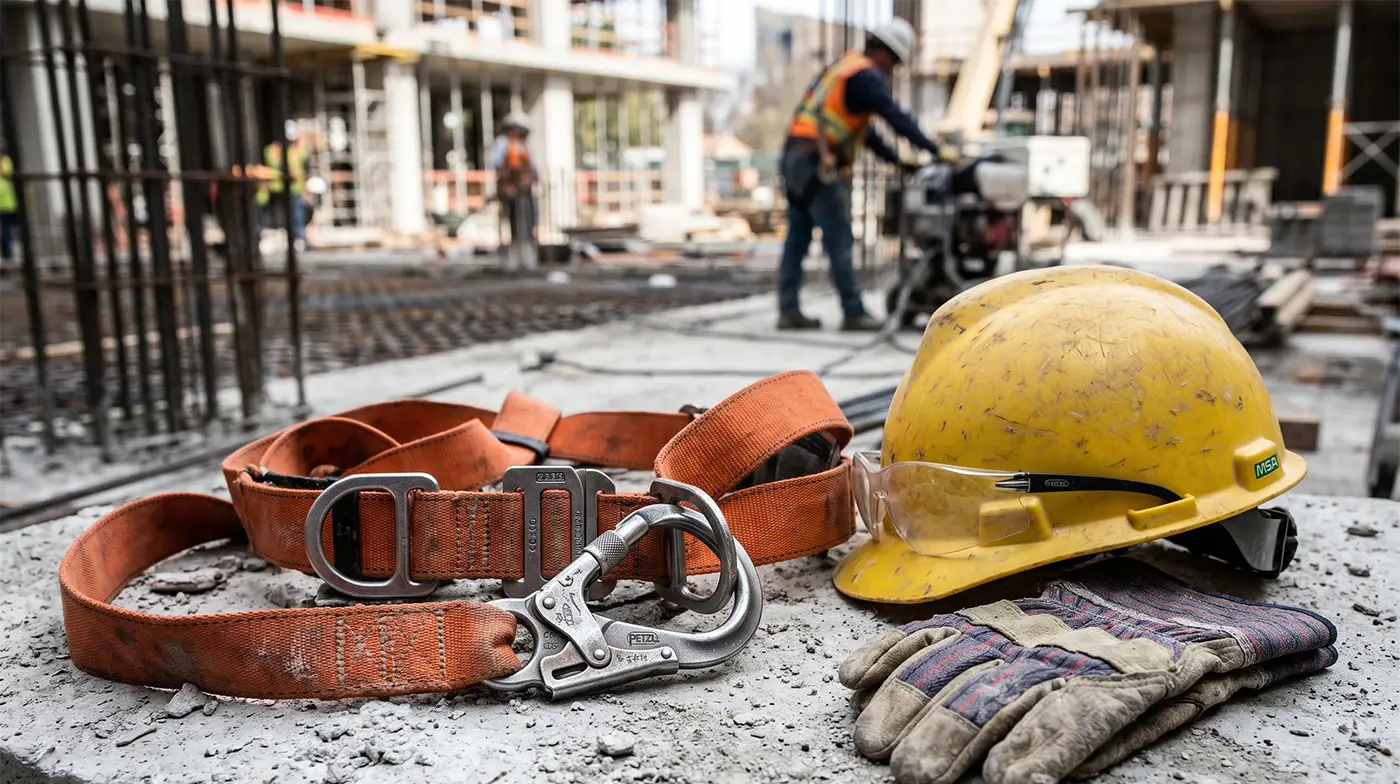
How Construction Accidents Happen in Sheepshead Bay
Sheepshead Bay construction sites typically sit next to busy residential blocks, small commercial corridors, and heavily used sidewalks. Job sites often involve renovation of low-rise buildings, exterior maintenance, new residential construction, and infrastructure work — all in confined footprints where multiple trades work simultaneously with limited staging space.
Construction Activity in Brooklyn
In 2024, Brooklyn recorded 153 construction-related incidents resulting in 155 injuries and 2 fatalities, according to the NYC Department of Buildings. Brooklyn consistently ranks among the boroughs with the highest number of construction site incidents, accounting for roughly one-third of all citywide construction injuries. The DOB conducted a record 416,290 inspections across New York City in 2024, yet fall protection violations remain among the most frequently cited hazards.
Falls From Height
Falls are the leading cause of serious construction injuries in New York. They can involve scaffolds, ladders, roof edges, temporary platforms, or unprotected floor openings. In Sheepshead Bay, renovation work on low-rise residential buildings and exterior maintenance projects create elevated work areas over sidewalks, increasing the risk of both worker and passerby injuries. According to DOB data, worker falls accounted for 269 incidents and 6 fatalities across New York City from January 2024 through January 2025.
Struck-By Incidents
A dropped tool, unsecured building material, shifting load, or falling debris can cause catastrophic harm in seconds. These cases often turn on whether proper protective equipment was provided, whether overhead work was coordinated safely, and whether barriers and warning systems matched the risks on the specific site. For examples of recurring hazards across the borough, see our discussion of dangerous construction accidents in Brooklyn.
Equipment and Structural Failures
Some of the most serious cases involve a scaffold shifting or collapsing, a ladder slipping, a hoist malfunctioning, or a temporary structure giving way. When equipment fails, the legal focus moves quickly to inspection practices, who supplied and maintained the equipment, and who had authority to stop unsafe work. Our page on scaffolding collapse claims explains why equipment condition and safety setup become central issues in these cases.
Common Construction Accident Injuries
Construction accidents frequently produce injuries that are more serious than the worker initially realizes. The combination of heights, heavy materials, power tools, and hard surfaces means that even a “simple” fall can result in injuries requiring surgery, extended rehabilitation, or permanent work restrictions.
Fractures and Orthopedic Injuries
Broken bones in the wrist, arm, ankle, hip, and ribs are common when workers fall or attempt to brace themselves. Hip fractures and comminuted fractures often require surgical repair and extended physical therapy.
Back and Neck Injuries
Herniated discs, nerve compression, and chronic pain conditions develop quickly after falls or impacts. These injuries can worsen over weeks and are frequently challenged by insurance carriers when early documentation is incomplete.
Traumatic Brain Injury (TBI)
Head injuries can occur even without an obvious external sign. Workers may experience headaches, dizziness, memory problems, or difficulty concentrating — symptoms that affect earning capacity and quality of life long after the initial incident.
Crush and Hand Injuries
Crush injuries from falling materials, machinery malfunctions, or collapsing structures can result in amputations, permanent nerve damage, or severe lacerations that end a worker’s ability to perform manual labor.
Shoulder and Knee Injuries
Rotator cuff tears, labrum damage, meniscus tears, and ligament injuries result from falls, twisting motions, and impacts with equipment or surfaces. These injuries often require surgery and months of rehabilitation.
From a legal standpoint, the strength of a construction injury case depends heavily on how early and how clearly the medical records connect the job site incident to the diagnosed injuries. Gaps in treatment, vague descriptions of the mechanism of injury, and missing work restriction documentation are routinely exploited by defense teams.
New York Labor Law Protections for Construction Workers
New York provides stronger legal protections for injured construction workers than most states. Three provisions of the Labor Law are frequently involved in construction injury cases, and each operates under different legal standards.
Labor Law § 240(1) — The “Scaffold Law”
Applies to gravity-related risks: falls from height and injuries caused by falling objects when proper safety devices were not provided. Imposes strict liability on owners and general contractors — meaning the injured worker does not need to prove ordinary negligence. If adequate safety equipment was not furnished and the worker was injured as a result, liability follows. This is one of the strongest worker-protection statutes in the country.
Labor Law § 241(6) — Industrial Code Violations
Allows injured workers to bring claims based on violations of specific safety rules in the New York Industrial Code (12 NYCRR Part 23). The worker must identify a concrete, applicable regulation that was violated — such as guardrail height requirements, trench protection standards, or scaffold inspection rules. This provision can be powerful when paired with a documented code violation.
Labor Law § 200 — General Site Safety
Covers general negligence in construction site supervision, unsafe methods of work, and dangerous site conditions. Unlike § 240(1), this section requires the injured worker to prove that the defendant had notice of and control over the hazardous condition. It applies when the case involves supervision failures or site conditions rather than elevation-related hazards.
Key Fact: Under Labor Law § 240(1), an owner or general contractor can be held strictly liable even if the injured worker was partly at fault — if the root cause was a failure to provide proper safety equipment for elevation-related work. This makes § 240(1) claims fundamentally different from ordinary negligence cases.
For a detailed explanation of how these statutes work in practice, see our pages on construction accidents and labor laws and New York Labor Law for construction workers.
Who Is Legally Responsible for a Sheepshead Bay Construction Accident
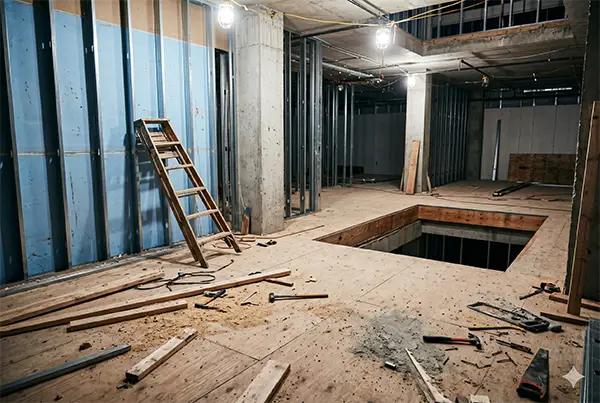
Responsibility on a construction site is rarely limited to one party. In Sheepshead Bay, it is common to have a property owner, a general contractor, multiple subcontractors, and separate companies supplying equipment or performing specialized work. A strong case begins by identifying who had authority over the area where the injury happened and who had the power to correct or prevent the hazard.
Potentially Liable Parties
The property owner bears significant responsibility under New York law. Under Labor Law §§ 240(1) and 241(6), owners face liability regardless of whether they directly supervised the work — with a limited exception for owners of one- and two-family homes who did not direct or control the project.
The general contractor typically controls overall site safety, scheduling, and coordination among trades. When safety equipment is missing, inspections are skipped, or hazardous conditions are ignored, the general contractor is often a primary defendant.
Subcontractors may be responsible for unsafe practices within their specific scope of work. An equipment supplier can be liable when defective scaffolding, malfunctioning hoists, or improperly maintained machinery contributes to an injury.
In practice, defendants in construction cases frequently try to shift blame — the general contractor points to the subcontractor, the subcontractor points to the worker, and the owner claims no involvement. Investigation focuses on contracts, daily logs, site authority records, and testimony about who actually controlled the work area and safety practices.
Filing Deadlines and Special Rules
Construction accident claims in New York are governed by multiple overlapping deadlines that depend on who the defendants are and what type of claim is being pursued.
Municipal Construction Projects
If your injury occurred on a public project — city-owned property, municipal infrastructure, or a site controlled by a government agency — special rules apply. A Notice of Claim must be filed within 90 days, and the lawsuit deadline shortens to one year and 90 days. Identifying property ownership and site control early is critical to avoiding a missed deadline that cannot be corrected later.
Workers’ Compensation and Third-Party Claims
Workers’ compensation is a no-fault system that covers medical care and a portion of lost wages regardless of who was at fault. In New York, workers generally must notify their employer within 30 days of the injury, and a formal claim must be filed with the Workers’ Compensation Board within two years.
Critically, filing for workers’ compensation does not prevent an injured worker from also pursuing a third-party lawsuit against owners, general contractors, or other responsible parties under the Labor Law. These two tracks run in parallel, and the third-party claim can recover damages — including pain and suffering — that workers’ compensation does not cover. However, the workers’ comp carrier may assert a lien against part of the third-party recovery, making coordination between the two claims important. For more on how these overlapping claims work, see our Brooklyn workplace injury lawyers page.
Comparative Negligence
New York follows a pure comparative negligence rule under CPLR § 1411. In negligence-based claims (such as Labor Law § 200), a worker’s damages can be reduced by their percentage of fault but are not eliminated entirely. Importantly, comparative negligence is not a defense to a Labor Law § 240(1) claim — if the owner or contractor failed to provide proper safety equipment for elevation-related work, they face strict liability regardless of the worker’s conduct. For more detail, see our explanation of what comparative negligence means in New York.
What to Do After a Construction Accident in Sheepshead Bay
The most important steps after a construction accident focus on protecting evidence and establishing a clear medical record. Construction sites change rapidly — platforms get moved, ladders get replaced, debris gets cleared, and trades rotate — so conditions that caused the accident may not exist by the next day.
- Seek medical care immediately and describe the mechanism of injury clearly — fall from scaffold, struck by falling object, ladder slipped — so medical records accurately reflect what happened on the site.
- Report the incident through jobsite channels, but keep your description simple and factual. Avoid speculating about what you “must have done wrong.”
- Photograph everything you can — the area where the accident occurred, the equipment involved, any missing safety protections (guardrails, harnesses, netting), and your visible injuries.
- Identify witnesses and the companies they work for. “A guy from another crew” becomes impossible to locate once trades rotate off the project.
- Do not sign anything or give a recorded statement to an insurance adjuster, site safety officer, or claims representative without first consulting counsel.
- Request evidence preservation promptly — security footage, equipment inspection logs, safety plans, and daily work logs can be overwritten, discarded, or altered if not preserved early.
- Contact an attorney quickly — especially if the site involves a public project or municipal entity, where the 90-day Notice of Claim deadline begins running immediately.
For a detailed step-by-step guide, see what to do after a Brooklyn construction accident.
Injured on a Sheepshead Bay Construction Site?
If you were hurt in a fall, struck-by incident, or equipment failure on a construction site, New York’s Labor Law may provide strong protections for your claim. Contact us for a free case evaluation to understand your rights and the deadlines that apply.
Get a Free ConsultationCompensation You May Recover in a Construction Accident Claim
Financial recovery in a Sheepshead Bay construction accident case depends on what you can prove about your losses and how the injury changed your ability to work and live day to day. In addition to workers’ compensation benefits, a third-party lawsuit may allow recovery for categories of damages that workers’ comp does not cover.
Economic damages include medical expenses not covered by workers’ compensation, out-of-pocket costs, and past and future lost earnings — including reduced earning capacity if you cannot return to the same trade or level of physical work.
Non-economic damages address pain and suffering, loss of enjoyment of life, and the psychological impact of living with a serious injury. Construction workers who can no longer perform manual labor often face profound changes in identity, routine, and financial stability. For a detailed explanation, see our guide to what non-economic damages are.
Future damages apply when the injury requires ongoing medical treatment, creates long-term disability, or permanently reduces the worker’s earning capacity. Because construction injuries frequently involve permanent orthopedic limitations, future damages are often a significant component of case value.
How Our Lawyers at the Law Office of Irene H. Gabo, P.C. Can Help
Construction accident cases are built on details that are easy to miss in the first days after an injury. Our role is to identify all potentially responsible parties, secure time-sensitive evidence, and develop a claim that matches the specific Labor Law provisions and negligence theories that apply to your Sheepshead Bay incident.
Site Investigation and Evidence Preservation
We move quickly to document site conditions, identify and preserve equipment, request security footage and daily logs, and photograph or video the accident location before conditions change.
Identifying Responsible Parties and Legal Theories
We review contracts, subcontractor agreements, safety plans, and inspection records to determine which parties had control over the hazard and which Labor Law provisions — § 240(1), § 241(6), § 200 — apply to the facts.
Coordinating Workers’ Comp and Third-Party Claims
We manage the interaction between workers’ compensation benefits and the personal injury lawsuit so that you are not pushed into choices that reduce your long-term recovery options or expose you to unnecessary lien disputes.
Discovery, Negotiation, and Trial Preparation
We obtain contracts, daily logs, training records, OSHA citations, and inspection histories through discovery. We take depositions of foremen, safety officers, and project managers. Every case is prepared as if it will go to trial, even while pursuing a practical resolution through negotiation.
Contact Us Today to Discuss Your Rights and Whether You are Entitled to Compensation
For a broader overview of how we handle these cases across Brooklyn, visit our Brooklyn construction accident lawyers page, or contact us to discuss your case. You can also call (800) 560-0214 for a free consultation.
Frequently Asked Questions
Most personal injury lawsuits in New York must be filed within three years from the date of the accident under CPLR § 214. However, if your injury occurred on a public project or involved a city agency or other municipal entity, you may need to file a Notice of Claim within 90 days under General Municipal Law § 50-e, and the lawsuit deadline shortens to one year and 90 days. Identifying property ownership and site control early is essential to determining which deadline applies.
Yes. Many injured construction workers have both a workers’ compensation case and a third-party personal injury lawsuit running at the same time. Workers’ compensation is filed against your employer’s insurer and covers medical expenses and a portion of lost wages. The third-party lawsuit targets property owners, general contractors, or other responsible parties and can recover additional damages — including pain and suffering — that workers’ comp does not provide. The workers’ comp carrier may assert a lien against part of the third-party recovery, which is why coordinating both claims is important.
Labor Law § 240(1) applies to gravity-related risks during the erection, demolition, repairing, altering, painting, cleaning, or pointing of a building or structure. This includes falls from scaffolds, ladders, roofs, and temporary platforms, as well as injuries caused by falling objects when adequate safety devices were not provided. It imposes strict liability on owners and general contractors, making it one of the strongest worker-protection statutes in the country.
Blame-shifting is common on multi-party construction sites. However, under Labor Law §§ 240(1) and 241(6), the property owner and general contractor face liability regardless of which subcontractor actually controlled the work. Investigation typically focuses on contracts, site authority, daily logs, and testimony about who controlled the area where the injury occurred. In many cases, multiple parties share legal responsibility.
Photographs and video can be extremely valuable, especially because construction sites change rapidly after an incident. However, a case can also be supported by witness statements, medical records, incident reports, OSHA citations, safety plans, daily logs, and documentation of what safety equipment was or was not provided. The earlier evidence is preserved, the more options are available for building a strong claim.
Many construction accident cases resolve through negotiation after evidence is developed through the discovery process. However, filing a lawsuit is often a necessary step to access key documents, depose witnesses, and preserve leverage — even in cases that ultimately settle. Your attorney should prepare the case as if it will be tried, while pursuing a practical resolution when possible.