







Bus accidents in Sheepshead Bay present unique legal challenges because most claims involve government entities like the MTA or NYC Transit, which impose strict filing deadlines far shorter than ordinary personal injury cases. A Sheepshead Bay bus accident lawyer can help you navigate Notice of Claim requirements, preserve critical evidence, and pursue the compensation you may be entitled to under New York law.
Bus Routes Serving Sheepshead Bay
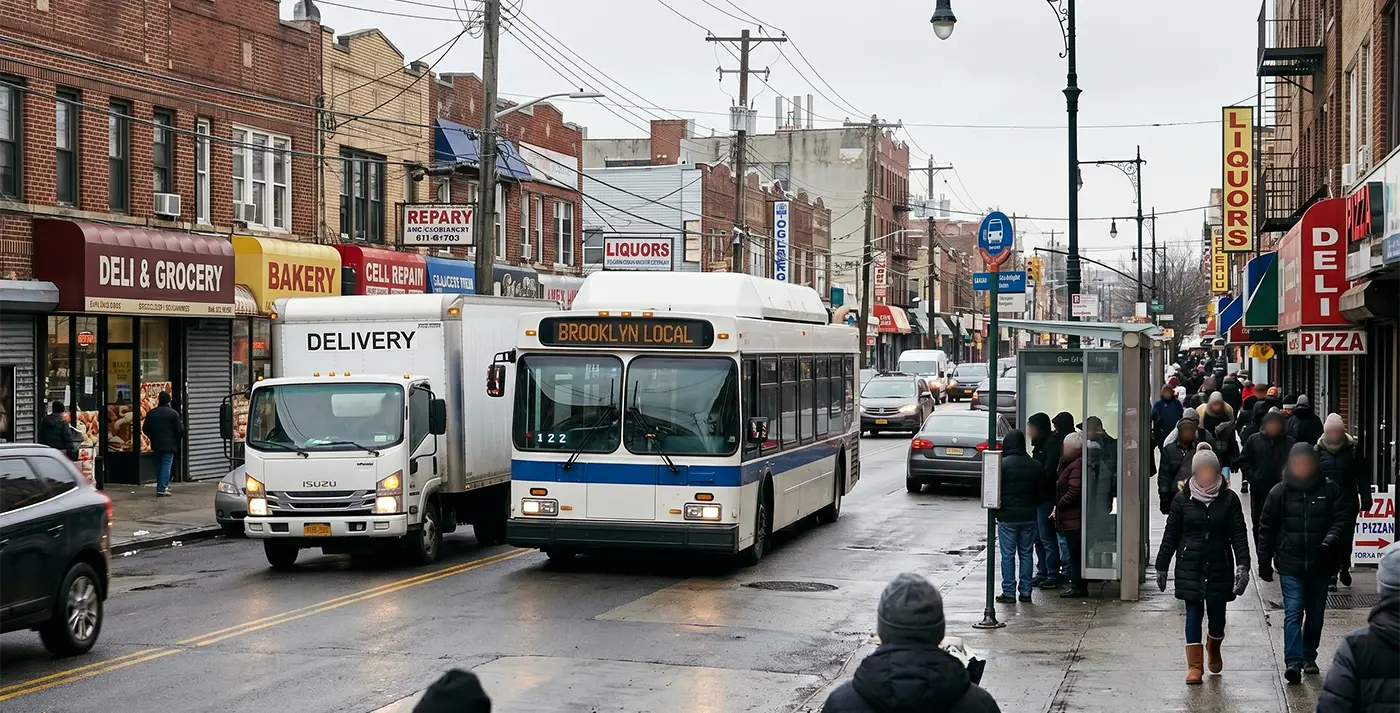
Sheepshead Bay is served by multiple MTA bus routes that connect the neighborhood to the rest of Brooklyn and Manhattan. Local routes including the B4 (Bay Ridge-Sheepshead Bay), B36 (Sheepshead Bay-Coney Island), B44 (Sheepshead Bay-Williamsburg via Nostrand Avenue), and B49 (Manhattan Beach-Bedford-Stuyvesant) run through the neighborhood’s commercial corridors and residential streets. The BM3 express route provides commuter service between Sheepshead Bay and Downtown/Midtown Manhattan.
These routes converge along busy corridors like Sheepshead Bay Road, Avenue Z, Nostrand Avenue, and Emmons Avenue – streets that also carry heavy pedestrian traffic, delivery vehicles, and cars accessing the Belt Parkway. The combination of high bus frequency and congested local streets increases the likelihood of both passenger injuries and pedestrian collisions involving buses.
Sheepshead Bay Bus Traffic Patterns
In 2025, MTA buses carried approximately 1.3 million riders per weekday across New York City. In Sheepshead Bay, bus stops along Sheepshead Bay Road near the B and Q subway station serve as transfer points where passengers move between bus and subway service. The congestion around these stops – particularly during morning and evening commutes – creates conditions where sudden braking, tight turns, and passenger boarding incidents are more likely.
How Bus Accidents Happen in Sheepshead Bay
Bus accidents in Sheepshead Bay often involve circumstances specific to the neighborhood’s street layout and traffic patterns. Congested commercial corridors, double-parked vehicles, tight turns at intersections, and heavy pedestrian activity near the waterfront and transit hubs all contribute to conditions that make sudden braking and collisions more likely.
Sudden Stop and Non-Collision Injuries
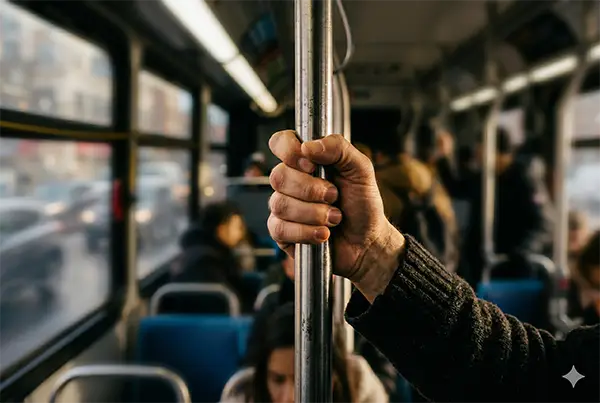
Many bus injury claims do not involve a collision with another vehicle. A “non-collision” event – where the bus brakes suddenly and a passenger is thrown from a seat, loses grip on a handrail, or falls in the aisle – accounts for a significant share of bus injury cases. These incidents often occur when a driver follows too closely, misjudges a traffic signal, or reacts late to congestion ahead.
In Sheepshead Bay, the stop-and-go traffic along Sheepshead Bay Road and the commercial stretch of Emmons Avenue makes sudden braking more predictable. When a hazard is foreseeable, it becomes harder for a transit operator to argue the resulting injury was unavoidable.
Collisions and Multi-Party Accidents
Bus collisions do occur in the neighborhood, and these cases often involve multiple defendants. A third-party driver may cut off a bus or run a red light, while the bus operator’s speed, lane positioning, or following distance may also be questioned. In June 2025, an MTA B36 bus struck a pedestrian in a crosswalk at East 12th Street and Avenue Z in Sheepshead Bay, underscoring the risks that bus operations pose to both passengers and pedestrians in the area.
Boarding and Exiting Injuries
Injuries also happen while passengers are boarding or exiting the bus. A driver who pulls away before a passenger has safely boarded, closes doors on a passenger’s hand or bag, or stops too far from the curb – forcing passengers to step down to the roadway – can create conditions for serious injuries, particularly among elderly riders.
Common Bus Accident Injuries
Bus passengers rarely have seatbelts, and standing riders are exposed to hard interior surfaces – metal poles, plastic seats, and rubber flooring – when a bus lurches or stops suddenly. The injuries that result from these events are often more serious than people initially expect.
Traumatic Brain Injury (TBI)
Falls that cause the head to strike a pole, seat, or floor can result in concussions, contusions, or more severe brain injuries requiring long-term neurological care.
Neck and Back Injuries
Herniated discs, cervical sprains, and nerve compression injuries are common when a passenger’s body is jerked forward or sideways by sudden deceleration. These injuries can worsen over weeks or months.
Fractures
Wrist, arm, ankle, hip, and rib fractures frequently occur when passengers attempt to brace themselves during a fall or collision. Hip fractures in elderly passengers can be life-altering.
Shoulder and Knee Injuries
Rotator cuff tears, meniscus damage, and ligament injuries often result from twisting falls inside the bus or while stepping down from a high curb at a bus stop.
Soft Tissue Injuries
Sprains, strains, and contusions may not appear on imaging but can still cause chronic pain and significant disruption to work and daily life.
From a legal standpoint, the strength of a bus injury case depends on how clearly the medical records connect the bus event to the diagnosed injuries. Objective findings on imaging, consistent treatment records, and documented work restrictions all contribute to a stronger claim. For more detail on injury patterns in transit cases, see our page on injuries in NYCTA bus accidents.
Who Is Legally Responsible for a Sheepshead Bay Bus Accident
Liability in a bus accident case depends on who had control over the risk and who failed to exercise reasonable care. In transit injury cases, that analysis typically involves the bus driver, the transit authority, and sometimes third parties.
Under New York law, common carriers – including MTA and NYC Transit buses – owe passengers a heightened duty of care. This means transit operators must exercise a higher degree of caution than ordinary drivers, and their conduct is judged against a stricter standard when evaluating negligence claims.
Potentially Liable Parties
The bus driver may be liable when unsafe speed, distraction, inadequate following distance, or poor judgment leads to a sudden stop or collision. The MTA or NYC Transit can be held responsible for the conduct of its employees under the doctrine of respondeat superior, and may also face claims based on inadequate training, supervision, or system-level safety failures.
Maintenance contractors can be liable when mechanical issues – faulty brakes, malfunctioning doors, defective steps – contribute to the injury. A third-party driver who caused or contributed to the accident may share responsibility, particularly when that driver cut off the bus or created the emergency the operator reacted to.
In practice, building liability requires concrete evidence: onboard camera footage, operator incident reports, GPS and speed data, passenger witness statements, and documentation of the roadway or stop conditions where the event occurred. For a detailed discussion of transit authority liability, see our page on holding the NYCTA liable for bus accidents.
Filing Deadlines and the Notice of Claim
Bus accident lawsuits involving government entities in New York are governed by strict procedural deadlines that are much shorter than the timelines for ordinary personal injury claims. Missing these deadlines can bar a case entirely, regardless of how serious the injuries are.
Critical: 90-Day Notice of Claim
Under New York General Municipal Law § 50-e, anyone injured in an accident involving the MTA, NYC Transit, or another public entity must file a Notice of Claim within 90 days of the incident. This is a mandatory legal step – not a courtesy filing – and failure to comply can result in permanent dismissal of the case.
Shortened Statute of Limitations
For claims against municipal or transit entities, the deadline to file a lawsuit is typically one year and 90 days from the date of the incident – significantly shorter than the three-year statute of limitations that applies to most personal injury claims against private parties under CPLR § 214.
The 50-h Hearing
After a Notice of Claim is filed, the transit authority or municipality has the right to conduct a 50-h hearing – a formal examination under oath similar to a deposition. This hearing must take place before a lawsuit can proceed, and the testimony given can be used against the claimant later. Careful preparation for this hearing is essential.
Comparative Negligence in New York
New York follows a pure comparative negligence rule, meaning you can still recover damages even if you were partially at fault for the accident. If the defense argues you contributed to your injury – for example, by not holding a handrail – your compensation is reduced by your percentage of fault rather than eliminated entirely. For more detail, see our explanation of what comparative negligence means in New York.
What to Do After a Bus Accident in Sheepshead Bay
The steps taken in the first days after a bus accident often determine whether a case becomes straightforward or turns into an uphill fight. You do not need to “build a case” on day one, but you should protect the facts that cannot be recreated later.
- Report the incident to the bus driver and ask how the event is being recorded. Request an incident number or operator report reference.
- Photograph everything you can – the bus number, the stop or intersection, your visible injuries (bruising, swelling), and the interior of the bus if possible.
- Collect witness contact information before other passengers disperse at the next stop. Names and phone numbers are often impossible to obtain later.
- Seek medical care promptly and describe the mechanism of injury clearly – sudden stop, fall, door incident, or collision – so the medical records accurately reflect what happened.
- Keep a symptom timeline documenting how pain and limitations change over the first weeks. This record supports your medical evidence.
- Do not give a recorded statement to any insurance or transit authority representative before understanding which facts matter and consulting with counsel.
- Contact an attorney before the 90-day Notice of Claim deadline if a government entity may be involved. This deadline cannot be extended in most cases.
Key Fact: Onboard bus cameras and nearby surveillance footage can be overwritten within days. A prompt request to the MTA or building owners to preserve video evidence can be the difference between proving a hard stop and arguing about it later with no objective record.
Injured in a Bus Accident in Sheepshead Bay?
If you or a family member was hurt on an MTA bus or at a bus stop in Sheepshead Bay, critical filing deadlines may be approaching. Contact us for a free case evaluation to understand your options.
Get a Free ConsultationCompensation You May Recover in a Bus Accident Lawsuit
The damages available in a bus accident lawsuit depend on how the injury has affected your life – not just the initial diagnosis. In many transit injury cases, the full impact of the injury emerges over time through ongoing treatment needs, work limitations, and disruption to daily routines.
Medical expenses are recoverable and include emergency room care, diagnostic imaging, follow-up visits, physical therapy, injections, and future treatment that is reasonably expected based on the injury. Lost wages cover income missed during recovery as well as reduced earning capacity if you cannot return to the same work or hours.
Pain and suffering encompasses the daily impact of chronic pain, sleep disruption, anxiety about transit, and restrictions on activities you could do before the accident. Future damages apply when the prognosis includes long-term care, additional procedures, or permanent limitations.
Bus accident cases can also involve multiple insurance layers, particularly when a third-party vehicle caused or contributed to the crash. Identifying every available source of coverage – transit authority self-insurance, third-party auto policies, and supplemental coverages – is part of building a realistic recovery plan. For a broader overview, see our Brooklyn bus accident lawyers page.
How Our Lawyers at the Law Office of Irene H. Gabo, P.C. Can Help
In a Sheepshead Bay bus accident case, the early legal work focuses on proof and timing – not courtroom drama. We build cases by assembling a clean evidentiary record that connects what happened to the evidence decision-makers trust: video footage, operator logs, medical documentation, and witness accounts.
Investigation and Evidence Preservation
We move quickly to identify responsible entities and preserve key materials – requesting bus and street-area footage before it is overwritten, obtaining incident reports, and filing FOIL requests when agency records are involved.
Notice of Claim and Municipal Procedure
We prepare and file the Notice of Claim within the 90-day deadline, handle 50-h hearing preparation, and manage the shortened lawsuit timeline that applies to transit cases.
Building Liability and Damages
Transit and insurance defenses often try to minimize sudden-stop injuries as “just a loss of balance.” We counter that by tying the mechanics of the event to the injury pattern, the treatment course, and the real limitations the client faces at home and at work.
Negotiation and Litigation
We pursue every available source of coverage, negotiate with transit authority claims units and insurers, and take cases to trial when a fair resolution cannot be reached through settlement.
Contact Us to Discuss Your Case and Right to Compensation
To discuss your case, visit our contact page or call (800) 560-0214 for a free consultation.
Frequently Asked Questions
If your claim is against the MTA, NYC Transit, or another public entity, New York law requires a Notice of Claim within 90 days of the incident under General Municipal Law § 50-e. The deadline to file a lawsuit is typically one year and 90 days. These deadlines are significantly shorter than the three-year statute of limitations for claims against private parties. Identifying the correct entity early is critical because the deadline depends on who controls the bus and the location where the accident occurred.
Yes. A collision is not required for a valid bus injury claim. The legal question is whether the sudden stop was caused by preventable operation – such as unsafe speed, following too closely, or poor attention to traffic conditions. Onboard video footage, witness statements, and medical documentation connecting the sudden event to your injuries are typically the key evidence in these cases.
No. Bus accident claims are typically based on negligence – a failure to use reasonable care under the circumstances. Because public carriers owe passengers a heightened duty of care under New York law, the standard for evaluating driver conduct is stricter than for ordinary motorists. You do not need to prove recklessness or intentional misconduct.
This is common in Brooklyn traffic. A third-party driver who cut off the bus, ran a red light, or caused the emergency may share responsibility for your injuries. The transit authority may still be liable depending on how the bus was being operated at the time. Identifying all potentially liable parties is important because it can expand the available insurance coverage and increase the potential recovery.
Yes. The defense may argue comparative negligence, but New York follows a pure comparative negligence rule – meaning your claim is not eliminated even if you share some fault. Any percentage of responsibility assigned to you reduces your damages proportionally rather than barring the case entirely. Clear evidence of how the sudden movement occurred helps keep the focus on the operator’s preventable conduct.
The timeline depends on the severity of injuries, how long treatment continues, and whether liability is disputed. Municipal cases also involve additional procedural steps – including the Notice of Claim, 50-h hearing, and mandatory waiting periods – that can affect the overall timeline. Cases generally move faster when evidence is preserved early, medical documentation is consistent, and the responsible parties are identified promptly.