







Injured in a Trip and Fall at a Brooklyn Hospital or Medical Center?
Hospitals and medical centers are meant to be places of healing-but too often, they become sites of serious injury due to overlooked hazards. Whether you’re a patient, visitor, or staff member, a trip and fall in one of Brooklyn’s busy medical facilities can lead to long-term consequences. At the Law Office of Irene H. Gabo, P.C., we represent those harmed by unsafe conditions inside hospitals, urgent care centers, clinics, and rehab facilities.
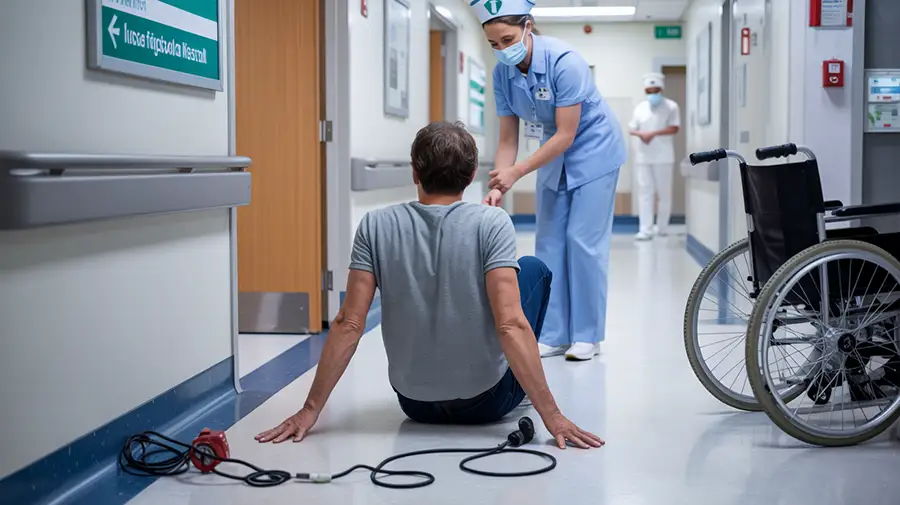
Our attorneys know how overwhelming these cases can be. Victims are often left with painful injuries, growing medical bills, and no clear understanding of what went wrong. If a poorly maintained or cluttered hospital environment caused your fall, you may be entitled to compensation through a Brooklyn slip and fall lawsuit.
These claims are complex, especially when hospitals are operated by city or state agencies. Time limits can be strict, and the need for clear evidence is high. That’s why acting quickly is critical.
We help clients throughout Brooklyn determine who is at fault, gather proof of unsafe conditions, and pursue damages for their pain, lost wages, and ongoing treatment needs. You don’t have to deal with this alone-our legal team is here to fight for your recovery.
How Trip and Fall Accidents Happen Inside Medical Facilities
Trip and fall accidents inside hospitals and healthcare facilities are usually preventable. These buildings see constant foot traffic, heavy equipment movement, and frequent cleaning-but when safety protocols aren’t followed, hazards arise fast. Understanding how these accidents happen is key to proving liability.
Common causes include:
- Extension cords or wires left across walkways
- Uneven or damaged flooring, including tiles, mats, or thresholds
- Improperly placed medical equipment or carts in hallways
- Overflowing laundry bins or supply carts blocking access
- Wet floors without signage after cleaning or spills
- Loose or missing handrails on ramps or stairways
Facilities that fail to address these issues can be held accountable. For example, one patient tripped over an oxygen line left trailing across a patient room doorway. She fractured her pelvis and required multiple surgeries-an incident that could have been prevented with proper cable management protocols.
In another case, a visitor fell in a cluttered corridor outside a treatment area. The hallway was obstructed by an unattended food delivery cart, and the poor lighting made it nearly invisible. Injuries from this fall included a broken wrist and a herniated disc. These are precisely the types of premises liability lawsuits we help our clients bring forward.
Types of Injuries Caused by Hospital Trip and Fall Accidents
The physical toll of a trip and fall in a medical setting can be devastating-particularly for patients who are already vulnerable. These falls often happen suddenly, and the force of the impact can lead to complex injuries that require months, even years, of treatment. Our lawyers routinely handle cases where fall victims suffer life-changing harm that was entirely preventable.
Common injuries from hospital trip and fall accidents include:
- Hip fractures, particularly in older adults
- Skull fractures or traumatic brain injuries (TBIs)
- Broken wrists, elbows, shoulders, and ankles
- Spinal cord injuries, including herniated discs or paralysis
- Internal bleeding or organ damage
- Deep lacerations requiring stitches or reconstructive surgery
- Chronic nerve pain or Complex Regional Pain Syndrome (CRPS)
- Emotional trauma or anxiety about entering medical settings again
For instance, a man visiting his wife at a Brooklyn hospital slipped in a dimly lit stairwell with no working handrail. He fell backward down the steps and suffered a concussion and multiple broken ribs. The hospital later admitted the stairwell lights had been out for two days with no repairs.
Even relatively “minor” injuries like sprains or soft tissue damage can become serious if untreated. For older adults or immunocompromised patients, even a fractured limb can lead to prolonged hospitalization, infections, or permanent loss of mobility.
Where These Injuries Commonly Occur Inside Medical Facilities
Hospitals and clinics have many high-risk areas for trips and falls. These injuries don’t just happen in operating rooms-they often occur in places that should be safe for the public, like waiting areas and main corridors. Medical staff are trained to move quickly, and when safety takes a back seat to speed, the results can be disastrous.
Trip and fall accidents frequently occur in:
- Hospital corridors and emergency room hallways
- Stairwells and elevator areas
- Bathrooms in patient rooms or public areas
- Rehabilitation and physical therapy departments
- Radiology and imaging rooms with equipment cords
- Admissions and reception areas
- Parking garages, loading zones, and hospital entrances
Take, for example, a patient leaving a physical therapy session at a Brooklyn medical center. She tripped over an unsecured therapy band left across a walking path. Her resulting injuries included a torn meniscus and a fractured wrist. In another case, a hospital cafeteria customer slipped on a recently mopped floor with no warning sign posted. These are not just accidents-they’re lapses in basic safety protocol that endanger everyone on the premises.
Brooklyn facilities have a duty to keep every corner of their property safe, from the ER entrance to the surgical suite. When that duty is ignored, our attorneys step in to hold them accountable.
Who Is Liable for a Trip and Fall in a Hospital or Medical Facility?
Determining liability in a hospital fall injury case is one of the most critical-and often most complex-parts of a personal injury claim. Multiple parties may share responsibility, depending on who owns, operates, and maintains the facility where the fall occurred. In Brooklyn, this may include private hospitals, city-owned medical centers, and contracted maintenance companies.
Potentially liable parties include:
- Hospital administration or property owners
- Third-party cleaning or maintenance contractors
- On-site security companies responsible for hazard prevention
- Municipal agencies, if the hospital is city- or state-run
- Medical groups or operators leasing space in larger facilities
Our attorneys conduct a full investigation to determine which entity failed to uphold its duty of care. If the hospital is operated by a government agency, a Notice of Claim must be filed within 90 days under New York’s General Municipal Law § 50-e. Failure to meet that deadline could bar your right to sue entirely.
In one case we reviewed, a patient fell in a Brooklyn public hospital where a janitorial subcontractor had left wet floor areas unmarked. The hospital tried to shift blame to the contractor-but through discovery, it became clear the facility had failed to supervise and enforce its safety policies. Our firm is skilled at untangling these relationships and building a solid foundation for a premises liability lawsuit.
How New York Law Affects Hospital Trip and Fall Claims
Filing a Brooklyn hospital injury claim involves navigating several New York-specific legal rules. These can drastically impact whether a case moves forward and how much a victim can recover. Our attorneys guide clients through each of these rules to protect their rights and maximize their compensation.
Key New York legal considerations include:
- Statute of Limitations: You typically have 3 years from the date of injury to file a lawsuit-but only 1 year and 90 days for claims against public hospitals or city agencies.
- Notice of Claim Requirement: For municipal facilities (like NYC Health + Hospitals), a Notice of Claim must be filed within 90 days of the incident.
- Comparative Negligence: New York law allows you to recover damages even if you were partially at fault, but your compensation is reduced by your percentage of fault.
In practice, these rules mean that if you tripped over a mop bucket in a Brooklyn public clinic and waited four months to report it, you could lose your right to recover any damages. That’s why we urge anyone injured on medical property to speak with our attorneys as soon as possible.
We handle every step, from filing the Notice of Claim to negotiating with hospital attorneys and litigating in court when necessary. Our team knows how to use the law to your advantage-and how to stop defendants from using it against you.
Compensation You May Be Entitled to After a Hospital Trip and Fall
If you’ve suffered a medical facility accident in Brooklyn, you may be eligible for compensation that goes far beyond immediate medical bills. A trip and fall injury can lead to chronic pain, lost income, emotional distress, and long-term medical care. Our lawyers pursue every available type of damages so clients don’t get stuck covering costs that were never their fault to begin with.
Common categories of compensation include:
- Medical expenses: Emergency treatment, hospital stays, surgery, rehabilitation, medications, and follow-up care
- Lost wages: Income lost while recovering, plus lost future earning capacity for long-term disability
- Pain and suffering: Physical pain and reduced quality of life
- Emotional distress: Anxiety, PTSD, or depression resulting from the fall or injuries
- Out-of-pocket costs: Transportation, medical devices, home modifications
We’ve seen cases where victims of hospital negligence required joint replacements, spinal surgery, or lifelong therapy. These aren’t just one-time expenses-they change a person’s ability to work, live independently, and enjoy their life.
For example, a nurse aide who tripped over a broken floor tile in a staff corridor suffered torn ligaments in her knee. She required multiple surgeries and could not return to work for over a year. Her case included damages for retraining in a different field. At the Law Office of Irene H. Gabo, P.C., we work to capture every impact your injury has on your life-now and in the future.
How Our Brooklyn Lawyers Help Trip and Fall Victims in Medical Settings
Handling a premises liability lawsuit against a medical institution requires more than just legal knowledge-it takes a deep understanding of hospital operations, record-keeping practices, and liability defenses. Our firm has extensive experience going up against hospitals and healthcare providers across Brooklyn. We know how to uncover the truth and hold negligent parties accountable.
Our attorneys provide comprehensive help with:
- Preserving and requesting surveillance footage
- Interviewing witnesses and staff members
- Obtaining maintenance logs, cleaning schedules, and incident reports
- Working with medical and safety experts to prove fault and assess damages
- Negotiating with hospital insurers and city legal departments
Hospitals often move quickly to cover up dangerous conditions-replacing mats, fixing flooring, or deleting internal communications. That’s why we act fast to lock in evidence before it disappears. We’ve handled cases where our swift action preserved key footage that proved the fall was caused by negligence, not the victim’s actions.
Don’t let a hospital or clinic intimidate you. We’re here to level the playing field and fight for your right to a full recovery. If you’ve been injured in a Brooklyn medical facility, call our office or complete the form on this page to get started.
What to Do Immediately After a Trip and Fall in a Hospital
If you’ve been injured in a trip and fall inside a Brooklyn hospital, your actions in the hours and days that follow can make or break your case. Hospitals and their insurance providers often move quickly to deny liability, so protecting your rights from the very beginning is crucial.
Here are key steps to take:
- Get medical attention immediately. Even if you’re already in a hospital, make sure your injuries are documented as a new incident-not just part of a current treatment plan.
- Report the fall. Notify hospital administration or the nursing supervisor and ask for a copy of the incident report if possible.
- Take photographs. Use your phone to capture the area where you fell, any hazards present, and your visible injuries.
- Get witness information. If anyone saw what happened-staff or visitors-get their names and contact information.
- Do not sign any forms. Hospitals may try to get you to sign statements or waivers. Don’t sign anything without legal advice.
Hospitals may try to downplay the incident, claim the injury was due to a medical condition, or even alter records. The earlier our team at the Law Office of Irene H. Gabo, P.C. gets involved, the better we can protect you. We can file preservation letters, request footage, and start building your case before vital evidence disappears.
In one Brooklyn case, a man who tripped over an unsecured floor mat was told his dizziness caused the fall. But video later showed the mat curling up in a high-traffic area-something the hospital had been warned about weeks earlier. That footage helped secure a favorable settlement.
Contact Our Brooklyn Lawyers Today if You’ve Been Hurt in a Medical Facility
A hospital should be a place of healing-not harm. When medical facilities in Brooklyn fail to maintain safe environments, and you suffer as a result, you have every right to hold them accountable. These cases are rarely simple, but they are absolutely worth pursuing if your life has been disrupted by someone else’s carelessness.
Our lawyers at the Law Office of Irene H. Gabo, P.C. are ready to listen to your story, evaluate your claim, and guide you every step of the way. We understand how to pursue compensation against private and public hospitals alike, and we’ve built a reputation for tough, compassionate representation across Brooklyn.
Don’t wait-especially if your case involves a city-run facility, where deadlines are short and legal notice is required. Call (800) 560-0214 or fill out the form on this page to schedule a free consultation. We never charge legal fees unless we recover money for you.
You’ve been through enough. Let us take it from here.
Frequently Asked Questions About Trip and Fall Accidents in Hospitals and Medical Facilities
What should I do if I fall inside a Brooklyn hospital?
Seek immediate medical attention, report the incident to hospital staff, take photos of the hazard, and get contact info for any witnesses. Avoid signing any forms and contact our lawyers promptly to protect your claim.
Can I sue a hospital if I tripped and fell?
Yes, if the hospital failed to correct or warn about a hazardous condition that caused your fall, you may be eligible to file a premises liability lawsuit against them or any responsible contractors.
What if the hospital is owned by the City of New York?
You must file a Notice of Claim within 90 days of your injury under General Municipal Law § 50-e. After that, you have just one year and 90 days to file a lawsuit. These rules are strict, so don’t delay speaking with our attorneys.
Do patients have different rights than visitors in trip and fall cases?
Both patients and visitors have legal rights, but hospitals may argue that a patient’s medical condition caused the fall. Our firm gathers evidence to prove the facility’s negligence regardless of your status at the time of the injury.
What if there were no warning signs about the hazard?
Lack of signage-such as “wet floor” warnings-is a common cause of hospital falls. If proper warnings were missing or ignored, the hospital may be liable for your injuries and resulting damages.
What kinds of damages can I recover in a trip and fall case?
You may recover compensation for medical expenses, lost income, pain and suffering, and long-term rehabilitation. We can also pursue damages for emotional distress and permanent disability if applicable.
Can I still sue if I was partially at fault for the fall?
Yes. Under New York’s comparative negligence law, you can still recover damages even if you were partly at fault. Your compensation will be reduced based on your percentage of responsibility.
How long do I have to file a claim?
For most private facilities in New York, you have three years from the date of injury. If the facility is government-run, the deadline is much shorter-only 90 days to file a notice, and 1 year and 90 days to sue.
Will the hospital have surveillance video of my fall?
Many hospitals have cameras, but footage may be deleted within days or weeks. Our lawyers move quickly to send preservation requests and secure video evidence before it’s lost.
How can I get help with my hospital trip and fall injury?
Call (800) 560-0214 or use the contact form on this page to schedule a free consultation with our lawyers. We’ll explain your options and start building your case with no upfront costs to you.