







Injured in a Trip and Fall at a Store in Brooklyn?
Retailers have a legal duty to keep their stores safe for shoppers. When they fail, people can get seriously hurt. Trip and fall accidents in stores are more than just embarrassing-they can lead to long-term medical issues, missed work, and significant pain. If you were hurt in a trip and fall in Brooklyn, our attorneys want to help you understand your rights and what options you may have.
Many store injury accidents happen because someone left a hazard in a walkway-boxes, floor mats, poor lighting, cracked tile, or loose wiring. These hazards are preventable when employees and managers do their jobs. If you’ve been hurt in this type of accident, you may be able to bring a Brooklyn premises liability claim and hold the store accountable.
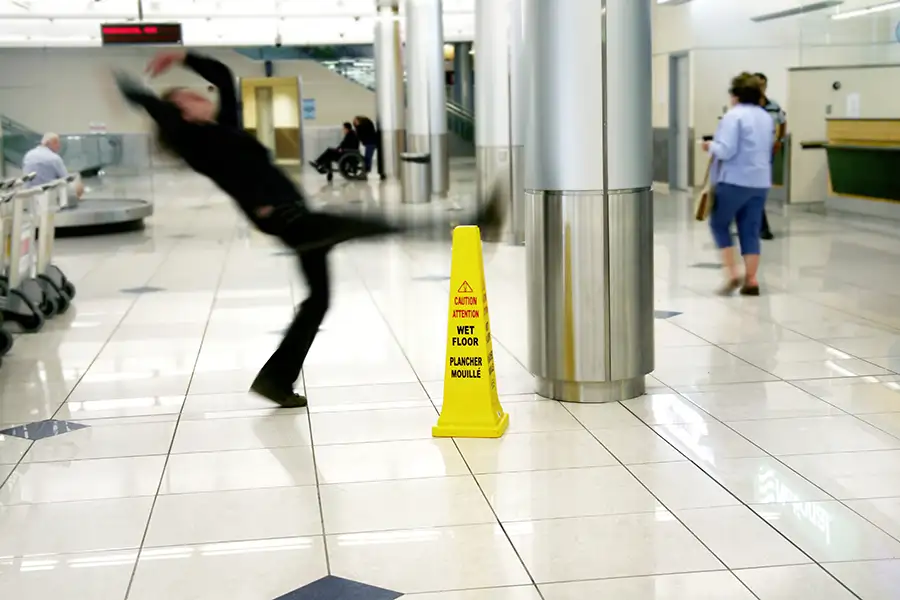
These claims often hinge on proving that the store owner knew, or should have known, about the dangerous condition. That’s where our firm steps in. We gather surveillance footage, eyewitness accounts, and maintenance records to build a strong case for compensation.
Don’t let a corporation or chain store make you feel like your injury isn’t serious. Our team will stand by you and fight for what you’re owed.
Where Trip and Fall Accidents in Stores Happen Most Often
Brooklyn is full of retail spaces where trip and fall hazards lurk. From mom-and-pop shops in Flatbush to big-box stores in Downtown Brooklyn, the risks are everywhere. Knowing where these accidents typically happen helps highlight how widespread the problem is and how store negligence can happen in any setting.
- Grocery stores (e.g., spilled produce, ripped floor mats)
- Department stores (e.g., display racks too close together)
- Pharmacies and convenience stores (e.g., loose tiles or poor lighting)
- Shopping malls (e.g., unsecured rugs, cords across walkways)
- Warehouse clubs and discount stores (e.g., pallets left in aisles)
- Hardware and home goods stores (e.g., dropped tools or merchandise)
- Clothing boutiques and shoe stores (e.g., tripping hazards from merchandise)
These are just a few examples. The key issue is always the same: store negligence claims arise when property owners fail to inspect and maintain the premises in a reasonably safe condition.
For instance, one client tripped on an uneven tile in a local pharmacy aisle, suffering a fractured hip and wrist. Another fell in a warehouse store when an unmarked pallet was left out, leading to a concussion and multiple disc injuries. These are the types of cases we handle-and we know how to push back when store owners try to downplay liability.
To learn more about these types of cases, visit our Brooklyn slip and fall accident lawyer page.
Common Injuries from Trip and Fall Accidents in Brooklyn Stores
Tripping in a store can result in far more than a bruised ego. Victims often suffer real, lasting harm. Some of these injuries can lead to chronic pain, permanent disability, or the need for surgery and rehabilitation. Our lawyers have seen how devastating these injuries can be, and we understand how they affect every aspect of your life.
Here’s a list of injuries commonly reported in retail store fall injury cases:
- Fractures and broken bones (hips, wrists, ankles, arms)
- Concussions and traumatic brain injuries (TBIs)
- Back injuries, including herniated or bulging discs
- Knee injuries such as torn meniscus or ligament damage
- Shoulder injuries including rotator cuff tears or dislocations
- Facial injuries including broken noses, chipped teeth, or eye trauma
- Spinal cord damage
- Severe bruising and soft tissue injuries
- Internal bleeding or organ injuries (from falling onto sharp objects or fixtures)
- Chronic pain conditions resulting from untreated or complex injuries
Even what seems like a minor fall can trigger serious medical problems. For example, one man tripped on an extension cord in a hardware store and suffered a fractured pelvis. He was unable to walk unassisted for months and required extensive physical therapy. These injuries don’t just heal overnight-they interrupt daily life and can affect work, relationships, and financial security.
If you’re dealing with an injury like one of these, our lawyers are ready to listen and help. Midway through your recovery is not too late to reach out. Speak with our firm to explore your options for financial recovery.
How Store Negligence Leads to Preventable Trip and Fall Injuries
At the heart of every store injury accident case is a question of responsibility: did the property owner do enough to prevent harm? In many cases, the answer is no. Business owners and property managers have a legal duty to inspect their premises regularly and fix or warn about hazards in a timely manner.
These are some of the most common examples of negligence that cause people to trip and fall inside stores:
- Failing to remove clutter or boxes in walkways
- Leaving merchandise or tools on the floor
- Improper lighting that makes hazards hard to see
- Damaged flooring like cracked tiles or torn carpeting
- Uneven thresholds between store sections
- Missing or loose handrails in stairwells or entryways
- Failing to post warning signs for temporary hazards
In one case, a woman in Brooklyn tripped on a loose electrical wire at the entrance of a home décor store. No warning sign was posted, and the lighting was dim. She tore ligaments in her knee and needed multiple surgeries. The store argued the hazard was “obvious,” but our team was able to prove they had received multiple customer complaints before the accident and had failed to act.
This is why it’s important to contact our team quickly after a fall. We can act fast to preserve video surveillance, obtain witness statements, and start building the evidence to prove your claim.
Proving Liability in a Trip and Fall Store Accident Case
One of the most critical steps in a trip and fall in Brooklyn case is proving the store was legally at fault. Under New York premises liability law, injured customers must show that the store owner created the hazard, knew about it and failed to correct it, or that the danger existed long enough that they should have discovered and fixed it.
This means liability isn’t automatic just because you got hurt. It takes focused investigation and strategy. Our attorneys build strong cases by gathering evidence such as:
- Surveillance footage capturing the fall or hazardous condition
- Maintenance and cleaning records showing inspection failures
- Incident reports or prior complaints about the hazard
- Photographs of the dangerous condition
- Witness statements from store employees or other customers
Let’s say someone falls over a broken tile near a store’s entrance. If we can show the tile had been broken for days or weeks and no repair was made, that’s powerful evidence. If we uncover an employee report noting the problem that management ignored, the case gets even stronger. This is how we demonstrate negligence and hold businesses accountable under Brooklyn premises liability laws.
Many stores and their insurance companies try to shift blame to the injured person, claiming they “should have watched where they were going.” Our firm knows how to push back and clearly show when the store was at fault.
What to Do After a Trip and Fall Injury in a Store
If you’ve been injured in a store injury accident, what you do in the minutes and days afterward can make a big difference in your ability to recover compensation. Most people are in shock or embarrassed after falling, but taking a few key steps can help preserve evidence and protect your rights.
- Report the incident immediately to store staff and ask for a written report.
- Take photographs of the hazard, your injuries, and the scene-before it’s cleaned up or removed.
- Get names and contact information for any witnesses who saw the fall.
- Seek medical attention the same day, even if you feel okay at first. Some injuries develop slowly.
- Keep all documents related to your treatment, time off work, or communication with the store.
A woman in Park Slope tripped over a rolled-up rug left in a high-traffic aisle at a department store. Store employees removed the rug before she could take photos, but because she reported it immediately and followed up with medical care, we were able to obtain the store’s security footage and prove fault.
As soon as possible, contact our firm. We can step in to preserve video, issue a formal Notice of Claim if the property is city-owned, and begin pursuing your slip and fall accident case.
Compensation You Can Recover After a Store Trip and Fall
When a business’s negligence causes you harm, you have the right to seek compensation for your losses. The value of a retail store fall injury claim depends on the seriousness of your injuries and how your life has been affected. Our team works with doctors, economists, and life care planners to show the full impact of your injuries-now and into the future.
In a successful case, you may be entitled to recover:
- Medical expenses – ER visits, follow-up care, physical therapy, surgeries, medication
- Lost income – wages you missed while recovering and future loss of earning capacity
- Pain and suffering – both physical pain and emotional distress
- Permanent disability or disfigurement
- Loss of enjoyment of life – inability to participate in hobbies, sports, or daily activities
One example involved a client who tripped on exposed wiring near the cashier station of a discount store. She tore ligaments in her ankle, underwent two surgeries, and missed nearly a year of work. Our attorneys documented every expense and loss to ensure her claim reflected the true cost of her injury.
Don’t assume your case is “too small” to pursue. Even a moderate injury can lead to unexpected costs and lasting impacts. If you were hurt because a store didn’t maintain safe conditions, you deserve to be made whole.
Special Rules for Cases Involving City-Owned Properties
In Brooklyn, not all trip and fall cases involve private businesses. Many happen on public property-such as city-run buildings, municipal-owned retail locations, or sidewalks leading into stores. If your fall occurred on a city-owned property or in a place managed by a government entity, your case falls under special rules.
Under New York law, you must file a Notice of Claim within **90 days** of the incident when suing a municipality. This applies to places like:
- Public libraries with attached gift or book shops
- City-run senior centers or recreation centers with retail sections
- Subsidized housing buildings with ground-floor stores
- Stores leasing space from the NYC Housing Authority or other city agencies
Failure to file the Notice of Claim on time can completely bar your case, no matter how severe your injuries. That’s why it’s critical to speak with our attorneys right away after a trip and fall in Brooklyn involving a public building or sidewalk. We handle the filing deadlines and investigate which entity may be responsible.
If your injury happened on a public sidewalk outside a store, the law may still hold the store liable-especially if the sidewalk was within their maintenance zone. Each case is fact-specific, and we will evaluate all angles to pursue every potential source of compensation.
Don’t Wait to Contact Our Brooklyn Attorneys
After a serious fall, it’s natural to focus on healing and try to move on. But waiting too long to act can put your legal rights at risk. Evidence disappears, memories fade, and surveillance footage is often deleted within days or weeks. In New York, the statute of limitations for most personal injury claims is three years-but the sooner we can begin working on your case, the stronger it will be.
Our attorneys at the Law Office of Irene H. Gabo, P.C. are here to take the pressure off you. We’ll manage all communication with the store and their insurance company, gather the proof needed to build your case, and pursue the compensation you deserve. You don’t pay us anything unless we win.
We understand how difficult it is to face medical bills, missed paychecks, and daily pain after a preventable fall. You don’t have to go through it alone. Our team has handled many store negligence claims throughout Brooklyn-from Crown Heights to Bay Ridge-and we’re ready to help you too.
Don’t wait. Reach out now to protect your rights and your future. Visit our Brooklyn personal injury lawyer page to schedule a free consultation or call (800) 560-0214 today.
Frequently Asked Questions About Trip and Fall Accidents in Stores
How long do I have to file a trip and fall claim in Brooklyn?
You generally have three years from the date of your accident to file a personal injury lawsuit. However, if your fall occurred on public property or involved a municipal entity, you must file a Notice of Claim within 90 days.
Can I sue a store if I didn’t report the fall right away?
Yes, but it may be harder to prove your case without immediate documentation. That’s why it’s best to report the incident to store staff and seek medical treatment as soon as possible. Surveillance footage can help fill in the gaps.
What if the store says the fall was my fault?
New York uses a comparative negligence rule, which means you can still recover damages even if you were partially at fault. Your compensation may be reduced based on your share of the blame, but you don’t have to be 100% blameless to win a case.
What types of damages can I recover?
You can seek compensation for medical expenses, lost wages, pain and suffering, emotional distress, and long-term disability if applicable. Each case is unique, and our firm will evaluate all possible damages.
Do I need a lawyer for a trip and fall case?
Stores and their insurers have legal teams working to minimize your claim. To level the playing field, speak with our lawyers at the Law Office of Irene H. Gabo, P.C. We know how to gather evidence, navigate the law, and fight for full compensation.
Can I bring a claim if I fell outside the store on the sidewalk?
Possibly. In Brooklyn, store owners are often responsible for maintaining the sidewalks adjacent to their businesses. We’ll evaluate whether the hazard was within their zone of responsibility.
What if I was injured while shopping in a chain store or national retailer?
Large retailers still have to follow New York’s safety and premises liability laws. In fact, their size and resources can work in your favor-if we can prove they had the resources to prevent the hazard but failed to act.
Is there a difference between slip and fall and trip and fall claims?
Both fall under premises liability law. A slip usually involves a wet or slick surface, while a trip involves a physical object or uneven surface. The legal principles are similar, but evidence and causes vary.
What does it cost to hire your firm?
There’s no upfront cost. We work on a contingency fee basis, which means you only pay if we recover money for you. Contact the Law Office of Irene H. Gabo, P.C. for a free case review to learn more.